
Northeast Europe (1864–1875 CE): Political Realignments, Economic …
Years: 1864 - 1875
Northeast Europe (1864–1875 CE): Political Realignments, Economic Expansion, and Cultural Resilience
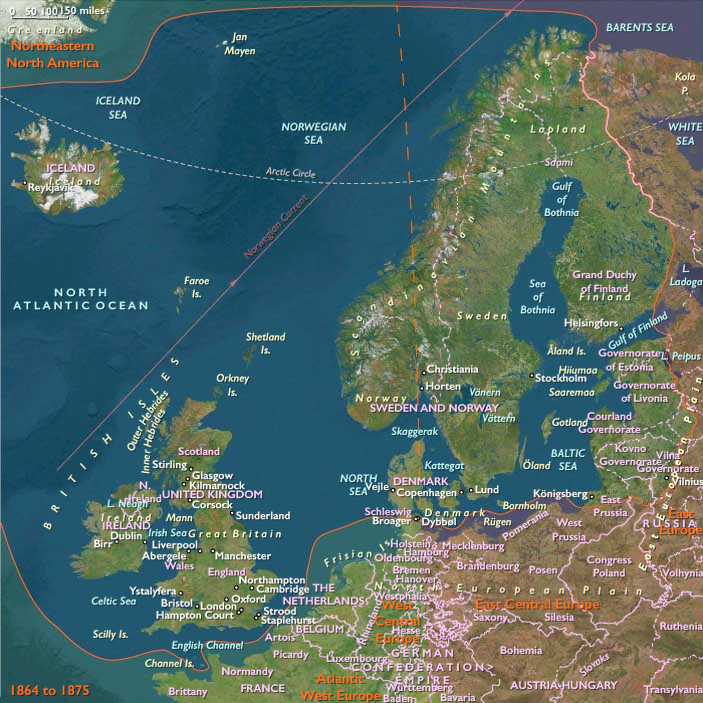
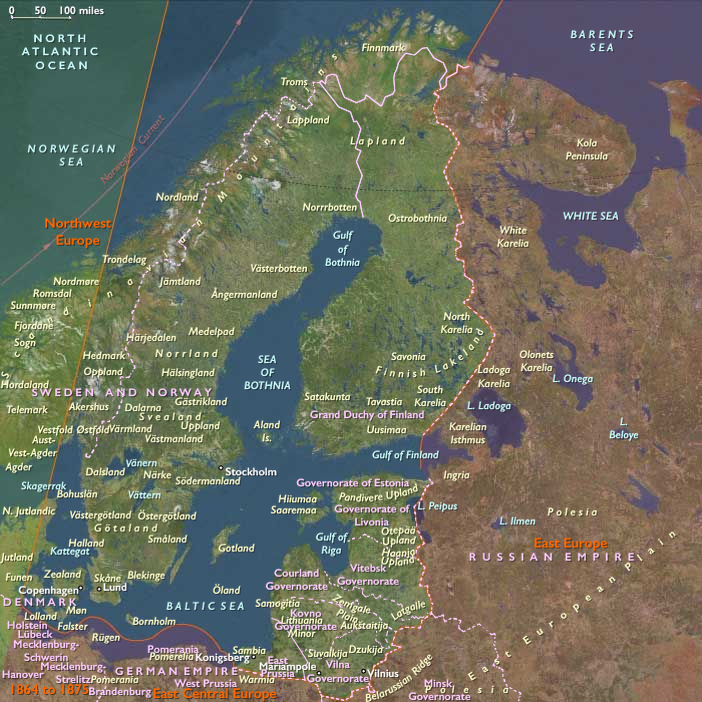
Between 1864 and 1875 CE, Northeast Europe experienced significant national, economic, and social developments. Denmark faced severe territorial losses; Finland's economy surged due to industrial expansion driven by its lumber industry; Lithuania resisted Russian suppression, while Estonia and Latvia intensified national awakenings. Sweden and Norway navigated liberal political reforms amid persistent union tensions, and Prussia solidified its regional dominance through political and economic consolidation. The era thus marked pivotal shifts toward industrialization, political modernization, and heightened national consciousness throughout the region.
Denmark: Territorial Loss and Economic Reorientation
In 1864, Denmark faced war against the combined forces of Prussia and the Austrian Empire in the Second Schleswig War (February–October 1864). Following defeat, Denmark was compelled to cede the strategically and culturally important duchies of Schleswig and Holstein to Prussia. This significant loss marked the latest chapter in Denmark's prolonged history of territorial reduction since the seventeenth century. Consequently, Denmark adopted a pragmatic policy of diplomatic neutrality in Europe, refocusing inwardly on national stability and economic modernization.
The second half of the nineteenth century saw Denmark transition decisively toward industrialization. Initial railway construction in the 1850s significantly improved domestic communication, facilitating urban growth and industrial activity. Despite limited natural resources, Denmark developed industries bolstered by expanded overseas trade, particularly emphasizing agriculture centered on exporting dairy and meat products. From the 1870s onward, Danish trade unions emerged, reflecting growing urban labor movements and societal modernization.
Finland: Lumber-Driven Economic Expansion and National Development
Under the continued benevolent rule of Russian Tsar Alexander II (r. 1855–1881), Finland’s political autonomy supported profound economic and social progress. The booming Finnish lumber industry, beginning in the 1860s and accelerating markedly in the 1870s, became a primary catalyst for Finnish industrialization. Surging European demand for timber, wood pulp, paper, matches, cellulose, and plywood facilitated rapid economic growth. The lumber industry's success also generated capital and infrastructure essential for broader industrial diversification, spawning industries in textiles, cement, and metal products.
By the turn of the century, Finland’s leading trade partners would be Germany, Russia, and Britain, reflecting its successful integration into European markets. Moreover, the lumber trade fostered the growth of a substantial and modern Finnish merchant marine, which after 1900 would carry approximately half of Finland's foreign trade. Despite this success, the global transition from wooden-hulled sailing ships to iron- and steel-hulled steamships began curtailing Finland's traditional exports of naval stores, prompting adjustments in the country’s maritime economy.
Politically, Finland continued implementing the Language Ordinance of 1863, promoting Finnish linguistic equality with Swedish. This significantly enhanced Finnish national consciousness and contributed to the emergence of a vibrant Finnish-speaking educated class.
Lithuania: Cultural Resilience Under Russian Suppression
In Lithuania, the Russian Empire intensified efforts to eliminate Polish influence following unsuccessful Polish insurrections in 1831 and 1863. Under tsarist authority, Lithuanian schools were forcibly closed, Lithuanian publications using the Latin script were outlawed, and the Roman Catholic Church faced severe suppression. Despite these oppressive measures, Lithuanian national identity and indigenous cultural institutions persisted, demonstrating considerable resilience. Secret education networks and underground publishing efforts continued to preserve the Lithuanian language and culture, setting the stage for later national revival.
Latvia and Estonia: Deepening National Awakenings
Latvia and Estonia both continued their cultural and national awakenings. In Latvia, the First Latvian Awakening intensified efforts against Germanization and Russification, strengthening Latvian-language institutions, literature, and education. A new, distinctly Latvian elite emerged, demanding increased local governance and cultural autonomy.
Similarly, Estonia experienced rapid urbanization and demographic shifts toward Estonian majorities in previously German-dominated cities. Industrialization dismantled traditional social structures, accelerating the formation of a modern Estonian society. Estonian-language cultural institutions flourished, significantly deepening Estonian national consciousness.
Sweden-Norway: Liberalization Amid Persistent Tensions
Under kings Charles XV (r. 1859–1872) and subsequently Oscar II (r. 1872–1907), the union between Sweden and Norway continued with underlying national tensions. Sweden pursued liberal political reforms, notably modernizing its parliamentary structure in 1866 by transitioning from the traditional Estates system to a bicameral legislature (Riksdag), enhancing democratic participation and governance.
Norway also continued gradual liberalization, increasingly demanding greater autonomy within the union. Social and political reforms progressed slowly, amid persistent national aspirations for greater self-governance, foreshadowing later independence movements.
Prussia: Regional Dominance and Economic Strengthening
Under King (later Emperor) William I (r. 1861–1888) and Chancellor Otto von Bismarck, Prussia consolidated political and economic dominance. Following victories in the Second Schleswig War (1864), the Austro-Prussian War (1866), and later the Franco-Prussian War (1870–1871), Prussia became the leading power within the newly formed German Empire (1871). Internally, economic modernization, extensive railway development, industrialization, and educational reform significantly strengthened Prussia’s societal fabric. Strategic cities, notably Königsberg (Kaliningrad), benefited greatly from these advances, solidifying their economic and cultural importance.
Baltic Territories: Continued Rural and Urban Evolution
Estonia and Latvia’s rural societies continued incremental improvement following earlier emancipation and modernization. Although Baltic-German aristocratic dominance persisted, gradual social reforms improved rural living conditions, further integrating rural areas with urban economic centers.
Urban prosperity in cities like Reval (Tallinn) and Riga continued robustly, driven by maritime commerce and expanding trade networks. These urban centers became increasingly important as economic and cultural hubs, contributing significantly to regional stability and economic growth.
Economic Expansion and Urban Development
Across Northeast Europe, cities such as Stockholm, Copenhagen, Oslo, Helsinki, Königsberg, Riga, and Reval experienced substantial economic and infrastructural growth. Industrialization accelerated urbanization, with railroads significantly enhancing domestic and international connectivity. Enhanced urban infrastructure and economic activity integrated Northeast Europe more deeply into broader European economic systems.
Cultural, Religious, and Intellectual Flourishing
Educational and cultural institutions remained vibrant, reflecting the region’s growing national consciousness and modernization. Literary and artistic expression flourished, particularly in Finland, Latvia, and Estonia, enhancing national identity. Denmark and Sweden fostered intellectual and artistic growth, reflecting broader European cultural currents, while Lithuania maintained resilience in cultural preservation despite suppression.
Diplomatic Stability and Pragmatism
Diplomatic relations throughout Northeast Europe remained characterized by cautious pragmatism. Finland enjoyed peaceful coexistence under Russian rule, Denmark adopted neutrality following territorial losses, and Sweden-Norway maintained cautious diplomatic positions to manage internal union tensions. Prussia's ascendant political and economic position further influenced regional diplomatic dynamics.
Legacy of the Era
The years 1864 to 1875 CE significantly shaped Northeast Europe's trajectory. Denmark’s territorial loss and subsequent internal recovery set lasting diplomatic precedents. Finland's rapid economic expansion, led by the booming lumber industry, significantly advanced industrialization and economic diversification. Lithuania’s cultural resilience under suppression foreshadowed later national revival. Latvia and Estonia’s intensified national awakenings prepared essential foundations for future political autonomy. Sweden-Norway’s liberal reforms amid union tensions anticipated future political realignments, while Prussia’s solidified regional dominance profoundly influenced subsequent European geopolitics.
Collectively, these developments decisively established Northeast Europe’s modern economic, social, and national identities, preparing the region for substantial political and economic transitions into the late nineteenth and early twentieth centuries.
People
- Alexander II of Russia
- Charles XV of Sweden
- Oscar II of Sweden
- Otto von Bismarck
- William I, German Emperor
Groups
- Polytheism (“paganism”)
- Latvians, or Letts (Eastern Balts)
- Estonians
- Christians, Roman Catholic
- Schleswig, Duchy of
- Holstein, Duchy of
- Lutheranism
- Prussia, Kingdom of
- Russian Empire
- Estonia, Governorate of
- Livonia, Governorate of
- Baltic governorates
- Vilna Governorate
- Courland Governorate
- Austrian Empire
- Finland, Grand Duchy of
- Norway, dependent Swedish kingdom of
- Denmark, Kingdom of
- Sweden and Norway, Union between the Kingdoms of
- France, Second Empire of
- Schleswig-Holstein, Prussian Province of of
Topics
- January Uprising, or Polish Rebellion of 1863-64
- Schleswig War, Second (Danish-Prussian War of 1864)
- Austro-Prussian War (Seven Weeks War)
- Franco-Prussian War
Commodoties
Subjects
- Commerce
- Watercraft
- Labor and Service
- Faith
- Government
- Scholarship
- Custom and Law
- Finance
- religious movement
- political movement
Regions
Subregions
Related Events
Showing 10 events out of 14241 total
Years: 1864 - 1875
People
- Alexander II of Russia
- Charles XV of Sweden
- Oscar II of Sweden
- Otto von Bismarck
- William I, German Emperor
Groups
- Polytheism (“paganism”)
- Latvians, or Letts (Eastern Balts)
- Estonians
- Christians, Roman Catholic
- Schleswig, Duchy of
- Holstein, Duchy of
- Lutheranism
- Prussia, Kingdom of
- Russian Empire
- Estonia, Governorate of
- Livonia, Governorate of
- Baltic governorates
- Vilna Governorate
- Courland Governorate
- Austrian Empire
- Finland, Grand Duchy of
- Norway, dependent Swedish kingdom of
- Denmark, Kingdom of
- Sweden and Norway, Union between the Kingdoms of
- France, Second Empire of
- Schleswig-Holstein, Prussian Province of of
Topics
- January Uprising, or Polish Rebellion of 1863-64
- Schleswig War, Second (Danish-Prussian War of 1864)
- Austro-Prussian War (Seven Weeks War)
- Franco-Prussian War
Commodoties
Subjects
- Commerce
- Watercraft
- Labor and Service
- Faith
- Government
- Scholarship
- Custom and Law
- Finance
- religious movement
- political movement
Regions
Subregions