North Europe (7,821 – 6,094 BCE): Early…
7821 BCE to 6094 BCE
North Europe (7,821 – 6,094 BCE): Early Holocene — Forest Seas, Estuary Villages, and the First Pottery North
Geographic & Environmental Context
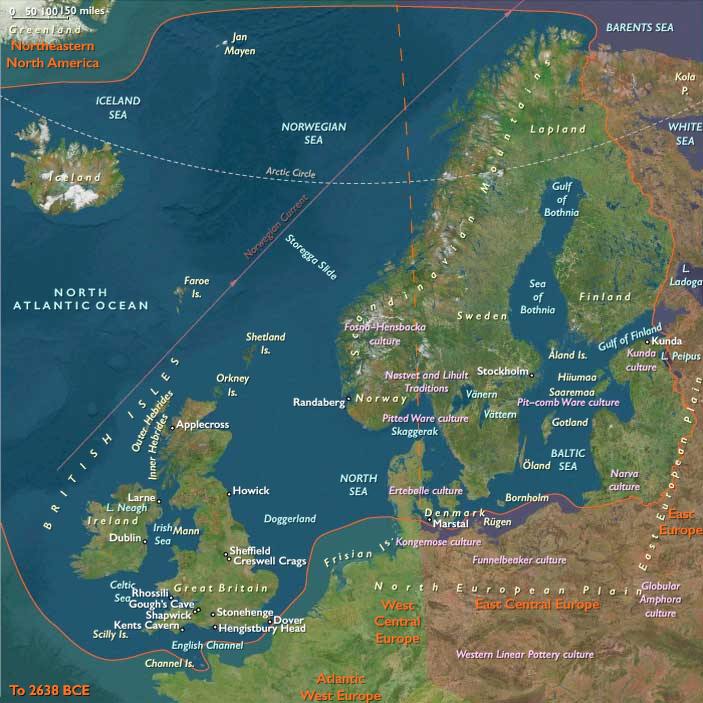
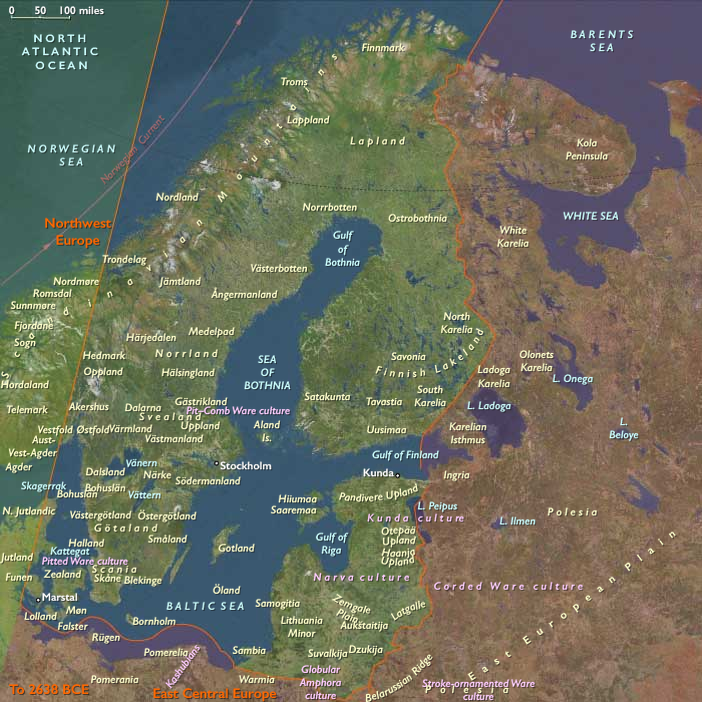
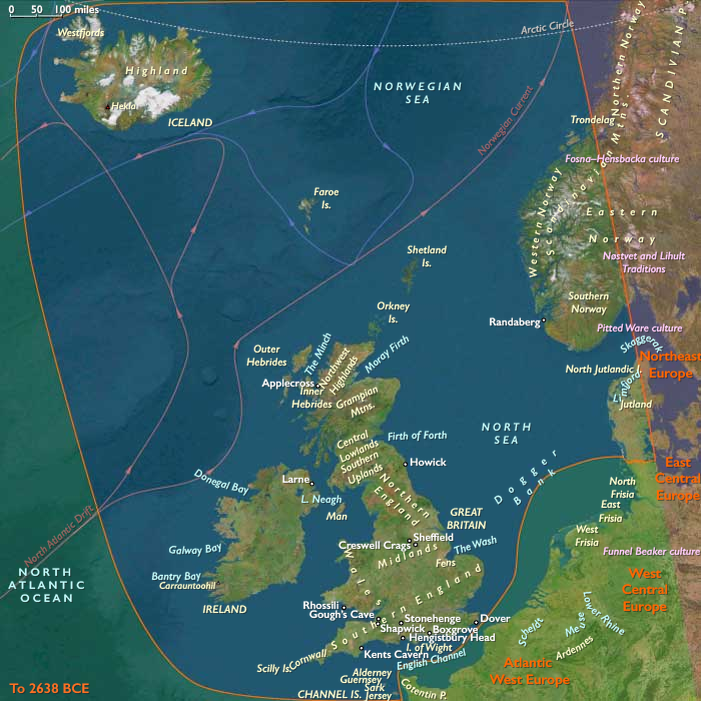
North Europe cohered as a water-linked crescent from the Baltic–Ladoga–Finnish lake districts and Uppland–Mälaren to the North Sea–Channel rias, Irish Sea, and the fjords of western Norway.
Postglacial transgression remade coasts: Doggerland fractured into banks and estuaries; the Irish Sea basin flooded; the Baltic stood in its Ancylus Lake phase with broad, river-fed shorelines. Birch–pine woodlands dominated northward; hazel–oak–elm took hold in southern belts, cloaking low hills and river terraces.
Climate & Environmental Shifts
The Holocene Thermal Maximum brought warm, moist, and seasonally reliable regimes. Lakes stabilized; rivers ran fuller but steadier; coastal wetlands and tidal lagoons expanded. In the northeast, the Ancylus Lake’s high stand created miles of rich strandlines; in the northwest, rising seas sculpted rias and salt-marsh mosaics along the Severn–Thames–Humber and the Armorican and Jutland coasts. Hazel mast peaked across much of the region, underwriting dense autumn stores.
Subsistence & Settlement
Communities across the north organized around semi-sedentary, water-anchored rounds, with seasonal mobility to uplands and outer coasts:
-
Northeast (Baltic–Finnish–Karelian zone):
Lake/river hamlets with pit-houses clustered on terraces and sand ridges. Diets were broad-spectrum—elk, boar, seal, salmon, pike, and cyprinids—balanced by nuts and wetland plants. The earliest northern pottery(Narva–Kunda traditions) appeared by the later centuries, used to boil fish and render fats for storage. -
Northwest (North Sea–Channel–Irish Sea–Norwegian fjords):
Estuary villages grew at the Severn, Thames, and Humber; shell-midden hamlets ringed rias and dune bars. Fjord communities cycled through fish, seal, seabird rookeries, and riverine salmon runs; inland, red deer and boar hunting paired with heavy hazelnut harvests. Long-lived midden terraces and shore platforms marked enduring places in a moving sea.
Across both spheres, households returned to the same levees, spits, and rock shelters, creating place-memory landscapes without abandoning seasonal breadth.
Technology & Material Culture
A shared toolkit reflected water-first economies:
-
Microlithic triangles and trapezes for composite arrows; ground-stone adzes for canoe and house carpentry.
-
Nets, weirs, basket traps, gaffs, and harpoons scaled up mass capture; dugout canoes plied lakes, estuaries, and fjords.
-
In the northeast, fiber-tempered, simply decorated pottery (Narva–Kunda) enabled boiling, fermenting, and fat storage, complementing bone and antler implements.
-
Ornaments of amber, jet, shell, and antler circulated along coasts and river corridors, signaling alliances and route knowledge.
Movement & Interaction Corridors
Waterways were the highways of North Europe:
-
Baltic canoe circuits linked Ladoga–Neva–Gulf of Finland, the Nemunas–Daugava belts, and forest-lake portages; early crossings Estonia ↔ southern Finland appear.
-
North Sea estuaries formed exchange hubs; Irish Sea canoeing stitched western Britain and Ireland; fjord hopping along Norway connected inner valleys to outer skerries.
-
Amber from Jutland and fine flints moved broadly; pottery know-how spread within the eastern lake districts. These braided lanes provided redundancy when local runs or shell banks failed.
Cultural & Symbolic Expressions
A rich symbolic grammar centered on water, animals, and ancestors:
-
Rock art panels across Karelia, Finland, and Alta depict elk, boats, and fishing scenes—myths written in granite.
-
Shell middens served as ancestral monuments on Atlantic–Channel shores; ochre burials with antler and bone tools, and in the northeast with early pots, formalized ties to place.
-
Ritual feasting synchronized with salmon runs and shellfish peaks, renewing inter-household compacts and access rights to weirs, groves, and landing places.
Environmental Adaptation & Resilience
Households engineered stability through storage, scheduling, and multi-ecotone foraging:
-
Smoked/dried fish and seal oils, roasted hazelnuts, and cached meats sustained overwintering.
-
Coastal–inland alternation (estuary/shore ↔ forest/upland) buffered climate pulses; lagoon and lake fallbacks reduced risk.
-
Tenure over weirs, groves, and routes, reinforced by ritual, regulated pressure on key resources and limited conflict.
Long-Term Significance
By 6,094 BCE, North Europe had become a paired maritime–lacustrine heartland: pottery-bearing forest foragers around the Baltic and estuary/fjord villagers along the Atlantic–Channel rim. Canoe logistics, storage economies, and shrine-marked tenure forged durable social fabrics that would absorb—rather than be erased by—the southward drift of farming in the millennia to come.
Here, the forest fed the water and the water fed the forest—a resilient human ecology already fluent in the languages of river, tide, and season.
Topics
Regions