
Northeastern North America (1252 – 1395 CE): …
Years: 1252 - 1395
Northeastern North America (1252 – 1395 CE): Cahokia’s Decline, Iroquoian Ascendancy, and Norse Collapse
Geographic and Environmental Context
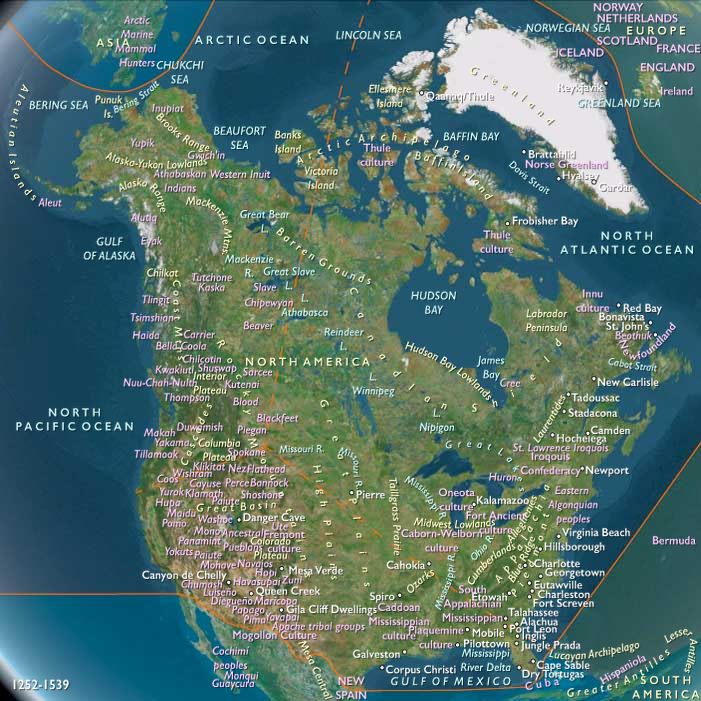
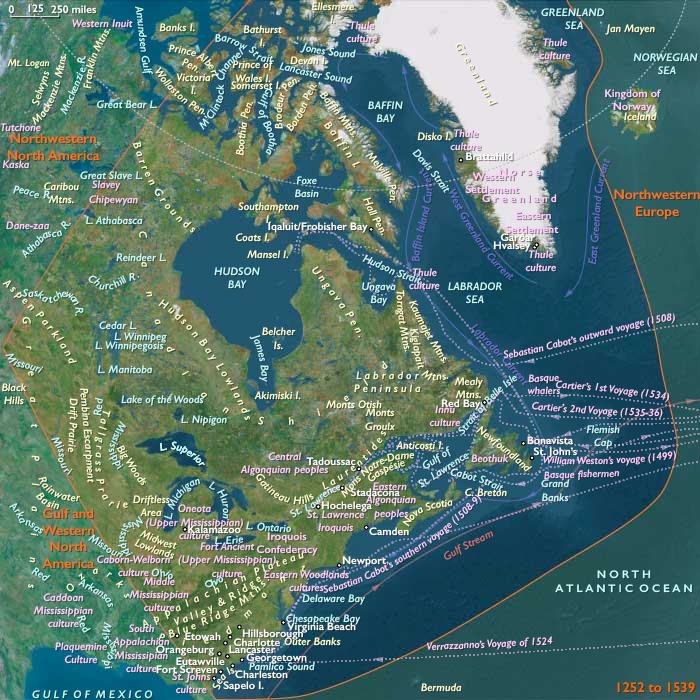
Northeastern North America includes: the Atlantic coast from Jacksonville, Florida to St. John’s, Newfoundland; Greenland; the Canadian Arctic; all Canadian provinces east to the Saskatchewan–Alberta border; and within the U.S., the Old South (Virginia, Carolinas, most of Georgia, northeast Alabama, Tennessee except its southwest), the Appalachian Plateau, the Midwest Lowlands, the Driftless Area, the Tallgrass Prairie, the Big Woods, the Drift Prairie, and the Aspen Parkland.
-
Anchors: Cahokia and Lower Mississippi chiefdoms, Great Lakes/Iroquoian towns, Greenland Norse Eastern Settlement, Inuit Thule sites, Appalachians, Atlantic seaboard villages, and Canadian Arctic bays.
Climate and Environmental Shifts
-
Little Ice Age onset (~1300): shortened growing seasons, harsher winters, crop failures.
-
Cahokia undermined by flooding/drought cycles.
-
Greenland Norse farms failed; sea ice cut off trade.
Societies and Political Developments
-
Cahokia declined by 1350; mound centers depopulated.
-
Iroquoian villages thrived in New York/Ontario; confederacy traditions formed.
-
Algonquians adapted through mixed farming, hunting, fishing.
-
Greenland Norse dwindled: Western Settlement abandoned (~1350); Eastern Settlement barely survived.
-
Inuit (Thule) fully occupied Arctic and Greenland, displacing Norse from hunting zones.
-
Old South chiefdoms fragmented but platform-mound towns persisted.
Economy and Trade
-
Iroquoian maize–beans–squash supported larger villages.
-
Great Lakes: fish, copper, shells traded widely.
-
Greenland Norse trade collapsed; ivory exports ended.
-
Inuit economy: whale, walrus, seal, sled mobility.
Belief and Symbolism
-
Iroquoian longhouse cosmology symbolized kin and polity.
-
Algonquian rituals emphasized spiritual intermediaries and vision quests.
-
Norse Christianity persisted weakly in Greenland until disappearance by late 14th century.
-
Inuit animism dominated Arctic ritual life.
Long-Term Significance
By 1395, Northeastern North America was transformed: Cahokia gone, Iroquoian ascendancy, Algonquian resilience, Greenland Norse collapse, and Inuit expansion across Arctic frontiers.
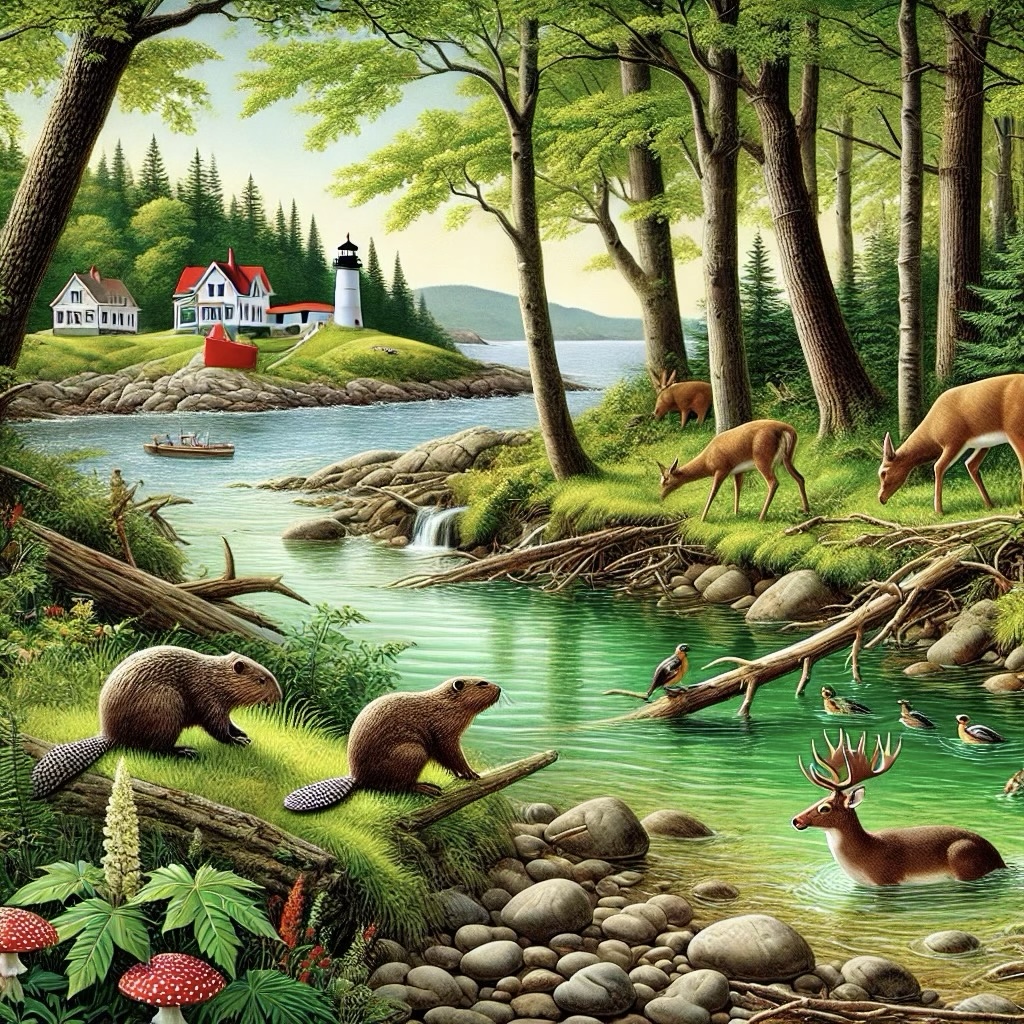
Northeastern North America (with civilization) ©2024-25 Electric Prism, Inc. All rights reserved.
Groups
- Mound Builders
- Dorset culture
- Mississippian culture
- Caddoan Mississippian culture
- Iroquois (Haudenosaunee, also known as the League of Peace and Power, Five Nations, or Six Nations)
- Penobscot people (Amerind tribe)
- Tunlit (Dorset culture)
- Greenland, Norwegian Crown Colony of
- Mi'kmaq people (Amerind tribe)
- Ho-Chunk (Amerind tribe)
- Thule people
- Cahokia Mounds
Topics
Commodoties
- Fish and game
- Gem materials
- Colorants
- Domestic animals
- Grains and produce
- Ceramics
- Strategic metals
- Tobacco
Subjects
- Commerce
- Environment
- Decorative arts
- Exploration
- Government
- Custom and Law
- Technology
- Human Migration
Regions
Subregions
Years: 1252 - 1395
Northeastern North America (with civilization) ©2024-25 Electric Prism, Inc. All rights reserved.
Groups
- Mound Builders
- Dorset culture
- Mississippian culture
- Caddoan Mississippian culture
- Iroquois (Haudenosaunee, also known as the League of Peace and Power, Five Nations, or Six Nations)
- Penobscot people (Amerind tribe)
- Tunlit (Dorset culture)
- Greenland, Norwegian Crown Colony of
- Mi'kmaq people (Amerind tribe)
- Ho-Chunk (Amerind tribe)
- Thule people
- Cahokia Mounds
Topics
Commodoties
- Fish and game
- Gem materials
- Colorants
- Domestic animals
- Grains and produce
- Ceramics
- Strategic metals
- Tobacco
Subjects
- Commerce
- Environment
- Decorative arts
- Exploration
- Government
- Custom and Law
- Technology
- Human Migration
Regions
Subregions