
Northeastern North America (1456 to 1467 …
Years: 1456 - 1467
Northeastern North America
(1456 to 1467 CE): Indigenous Consolidation, Arctic Stability, and Post-Norse Realignment
From 1456 to 1467 CE, indigenous societies across Northeastern North America demonstrated sustained resilience, cultural continuity, and stable ecological adaptation. The Haudenosaunee Confederacy solidified internal political cohesion, Mississippian-derived communities continued to adjust to localized resource conditions, Dhegiha peoples maintained prosperity west of the Mississippi, and Thule Inuit groups dominated the Arctic territories left vacant by the vanished Norse Greenland settlements.
Haudenosaunee Confederacy: Deepening Unity
Political and Social Stability
By this period, the Haudenosaunee Confederacy—traditionally attributed to the leadership of the Mohawk leader Hiawatha and the prophet Deganawidah—continued to strengthen internal political cohesion. The Confederacy, uniting the Mohawk, Oneida, Onondaga, Cayuga, and Seneca nations, had effectively established mechanisms to reduce intertribal conflicts, manage communal resources, and conduct diplomacy with surrounding tribes, consolidating their position as the dominant power in the northeastern woodlands.
Cultural and Linguistic Continuity
Distinctive Northern Iroquoian (Mohawk, Oneida, Onondaga, Cayuga, Seneca, Tuscarora, Susquehannock, and Huron) and Southern Iroquoian (Cherokee) language divisions persisted clearly. Matrilineal societal structures remained strong, with women retaining influential roles in governance, councils, and resource management, distinguishing Haudenosaunee social structures from neighboring indigenous groups.
Mississippian Chiefdoms: Localized Stability and Adaptation
Fortified Towns and Ceremonialism
Mississippian-descended chiefdoms, exemplified by smaller fortified settlements such as Etowah (Georgia) and Moundville (Alabama), remained culturally resilient during this era. Despite diminished ceremonial monumentality, localized rituals and smaller-scale ceremonial practices ensured ongoing community identity and cohesion.
Persistent Agricultural Adaptations
These communities continued to rely heavily on maize agriculture supplemented by beans, squash, hunting, and gathering. Stable agricultural economies provided a dependable basis for community sustainability, resilience, and adaptation to shifting ecological conditions.
Dhegiha Communities: Ongoing Prosperity
Agricultural and Social Resilience
West of the Mississippi River, the Dhegiha-speaking peoples—ancestors of modern-day Quapaw, Omaha, Ponca, Osage, and Kaw tribes—continued stable and prosperous village-based agricultural economies. Their communities were securely sustained through maize cultivation, hunting, and gathering, supported by robust kinship networks and effective local governance.
Thule Inuit: Consolidation and Stability in Arctic Regions
Arctic Dominance and Adaptation
By the mid-fifteenth century, Thule Inuit settlements remained dominant throughout Arctic Canada and Greenland. Their adaptive strategies, including sophisticated marine mammal hunting, effective use of sled dogs, toggling harpoons, and slate knives, ensured continued success in the harsh ecological conditions of the Arctic.
Post-Norse Arctic Realignment
Following the complete disappearance of Norse Greenlanders by this time, Thule Inuit populations fully occupied previously Norse-held territories. Archaeological evidence indicates Inuit settlements adapted to these landscapes, occasionally repurposing abandoned Norse structures and using leftover materials to enhance their subsistence practices and territorial consolidation.
Aftermath of Norse Greenland’s Collapse
Final Norse Settlement Abandonment
By this era (1456–1467 CE), the Norse Greenland settlements, once prosperous since their founding around 986 CE, had definitively vanished, primarily due to deteriorating climatic conditions during the onset of the Little Ice Age and economic isolation resulting from declining European demand for walrus ivory. The settlements at locations such as Brattahlíð and Hvalsey lay permanently abandoned, marking the definitive end of medieval European colonization in North America.
Climatic and Ecological Lessons
Analysis of Greenlandic ice cores and archaeological evidence highlights significant climatic variability historically experienced in Greenland, with dramatic temperature fluctuations and ecological shifts contributing directly to settlement viability. During the earlier Medieval Warm Period (approximately 800–1300 CE), agriculture and livestock had flourished, even allowing barley cultivation as far north as the 70th parallel. The subsequent cooling of the Little Ice Age disrupted agricultural viability, leading to nutritional stress, environmental degradation, and eventual abandonment.
Coastal and Riverine Indigenous Communities
Continued Stability and Cultural Resilience
Indigenous societies along northeastern Atlantic coasts and interior waterways remained stable, supported by robust subsistence practices centered around fishing, trapping, hunting, and gathering. Continued use of sophisticated techniques—including nets, weirs, and fish traps—ensured steady food supplies, consistent community stability, and clearly defined territorial boundaries.
Persistent Ceremonial and Artistic Traditions
Artistic traditions remained vibrant, evidenced by ongoing production of ceremonial pottery, shell gorgets, polished stone tools, and elaborate tobacco pipes. Although ceremonial practices had shifted from monumental scales to smaller, community-focused rituals, these local practices maintained cultural cohesion and spiritual identity.
Legacy of the Era (1456–1467 CE)
The years 1456 to 1467 CE illustrate continued indigenous resilience, stability, and adaptation in Northeastern North America. The Haudenosaunee Confederacy firmly established itself as a regional power, Mississippian chiefdoms adapted successfully to localized conditions, Dhegiha peoples remained prosperous west of the Mississippi, and the Thule Inuit maintained uncontested dominance in the Arctic. The disappearance of the Norse Greenlanders concluded a significant chapter in early North Atlantic exploration and colonization, leaving indigenous communities poised for forthcoming interactions with European explorers and colonists arriving later in the fifteenth and sixteenth centuries.
Groups
- Mound Builders
- Mississippian culture
- Caddoan Mississippian culture
- Iroquois (Haudenosaunee, also known as the League of Peace and Power, Five Nations, or Six Nations)
- Thule people
- Penobscot people (Amerind tribe)
- Ho-Chunk (Amerind tribe)
- Mi'kmaq people (Amerind tribe)
- Mohawk people (Amerind tribe)
- Wyandot, or Wendat, or Huron people (Amerind tribe)
- Osage Nation (Amerind tribe)
- Oneida people (Amerind tribe)
- Susquehannock (Amerind tribe)
- Catawba people (Amerind tribe)
- Quapaw, or Arkansas (Amerind tribe)
- Omaha (Amerind tribe)
- Kaw, or Kanza, people (Amerind tribe)
- Caddo (Amerind tribe)
- Tuscarora (Amerind tribe)
- Ponca (Amerind tribe)
- Yuchi (Amerind tribe)
- Seneca (Amerind tribe)
- Cherokee, or Tsalagi (Amerind tribe)
- Cayuga people(Amerind tribe)
- Onondaga people (Amerind tribe)
Topics
Commodoties
- Fish and game
- Gem materials
- Colorants
- Domestic animals
- Grains and produce
- Ceramics
- Strategic metals
- Tobacco
Subjects
- Commerce
- Environment
- Decorative arts
- Exploration
- Government
- Custom and Law
- Technology
- Human Migration
Regions
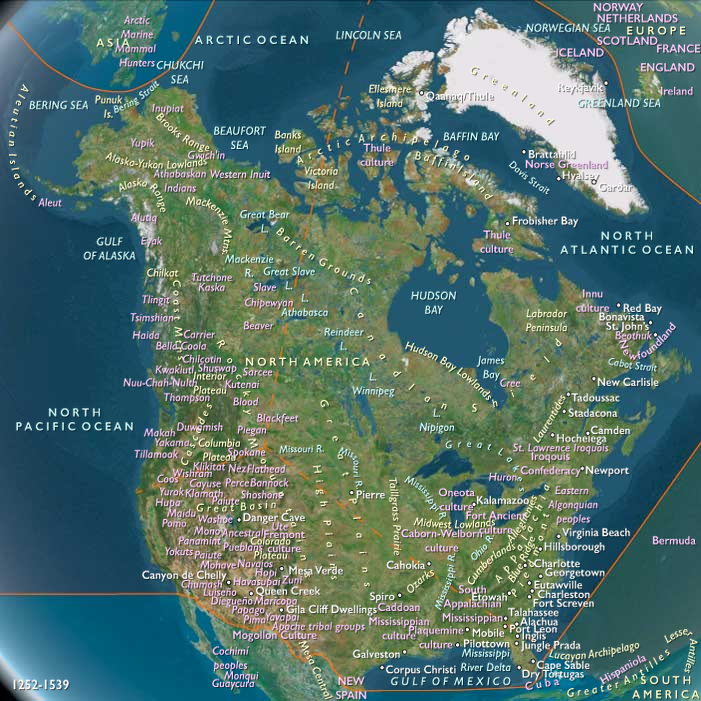
Subregions
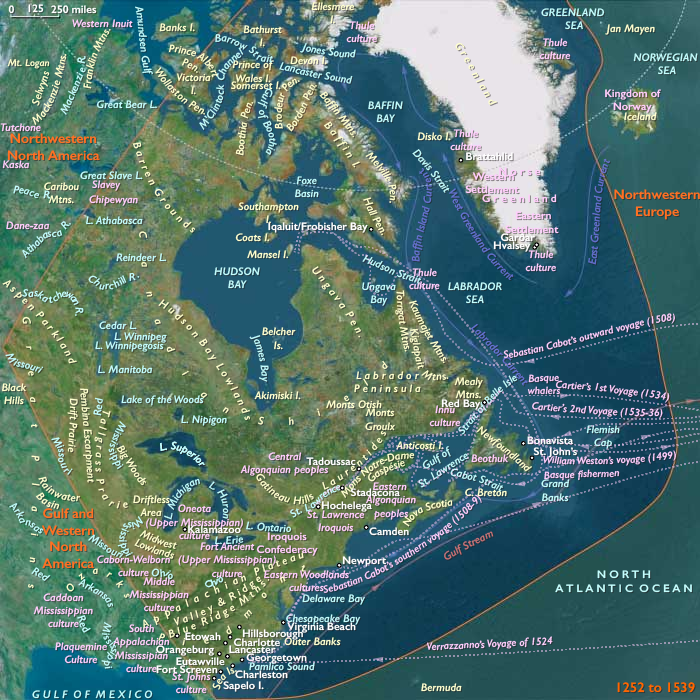
Years: 1456 - 1467
Groups
- Mound Builders
- Mississippian culture
- Caddoan Mississippian culture
- Iroquois (Haudenosaunee, also known as the League of Peace and Power, Five Nations, or Six Nations)
- Thule people
- Penobscot people (Amerind tribe)
- Ho-Chunk (Amerind tribe)
- Mi'kmaq people (Amerind tribe)
- Mohawk people (Amerind tribe)
- Wyandot, or Wendat, or Huron people (Amerind tribe)
- Osage Nation (Amerind tribe)
- Oneida people (Amerind tribe)
- Susquehannock (Amerind tribe)
- Catawba people (Amerind tribe)
- Quapaw, or Arkansas (Amerind tribe)
- Omaha (Amerind tribe)
- Kaw, or Kanza, people (Amerind tribe)
- Caddo (Amerind tribe)
- Tuscarora (Amerind tribe)
- Ponca (Amerind tribe)
- Yuchi (Amerind tribe)
- Seneca (Amerind tribe)
- Cherokee, or Tsalagi (Amerind tribe)
- Cayuga people(Amerind tribe)
- Onondaga people (Amerind tribe)
Topics
Commodoties
- Fish and game
- Gem materials
- Colorants
- Domestic animals
- Grains and produce
- Ceramics
- Strategic metals
- Tobacco
Subjects
- Commerce
- Environment
- Decorative arts
- Exploration
- Government
- Custom and Law
- Technology
- Human Migration
Regions
Subregions