
Northeastern North America (1468 to 1479 …
Years: 1468 - 1479
Northeastern North America
(1468 to 1479 CE): Indigenous Flourishing, Regional Stability, and Arctic Adaptations
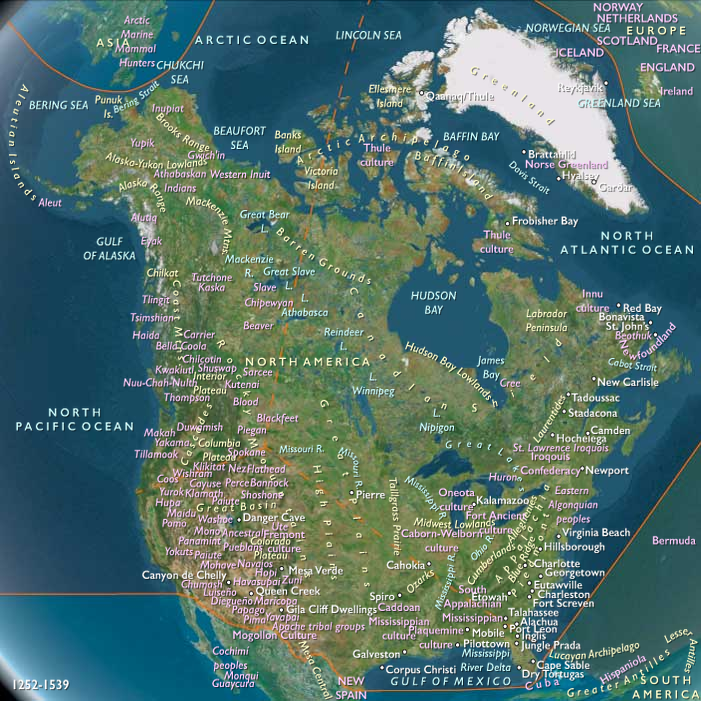
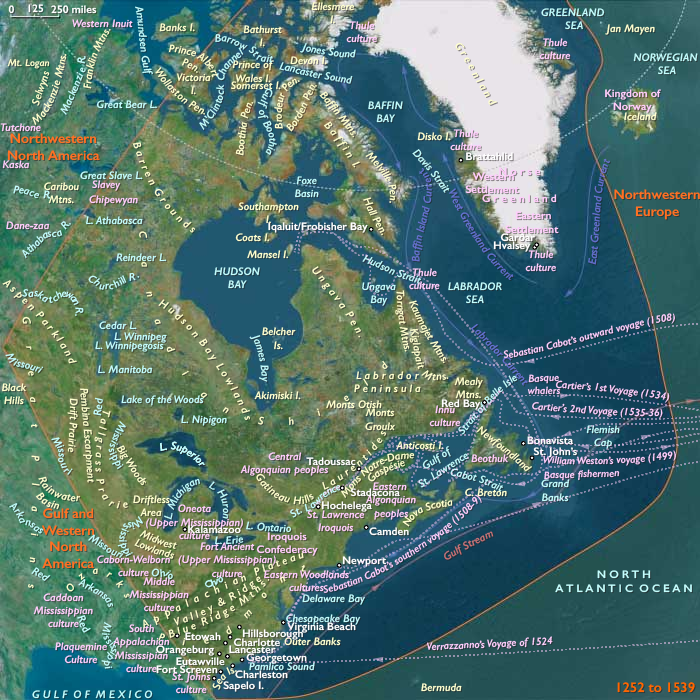
Between 1468 and 1479 CE, indigenous societies throughout Northeastern North America experienced a period of stable regional identity, internal consolidation, and continued ecological resilience. The Haudenosaunee Confederacy deepened its political structures, Mississippian-descended chiefdoms maintained community stability through localized cultural practices, Dhegiha-speaking communities west of the Mississippi sustained their prosperous agricultural systems, and Thule Inuit firmly occupied Arctic territories formerly inhabited by the vanished Norse Greenlanders.
Haudenosaunee Confederacy: Strengthening Political Cohesion
Internal Stability and Regional Influence
By the late fifteenth century, the Haudenosaunee Confederacy—comprising the Mohawk, Oneida, Onondaga, Cayuga, and Seneca nations—was fully consolidated as the dominant indigenous political force in the northeastern woodlands. Traditional accounts attribute its foundation to legendary leaders Hiawatha and Deganawidah earlier in the century. Throughout this era, internal structures of governance, ceremonial councils, and diplomatic networks further stabilized, allowing the Confederacy to project significant influence over neighboring Algonquian and Siouan-speaking peoples.
Cultural and Linguistic Identity
Northern Iroquoian languages (Mohawk, Oneida, Onondaga, Cayuga, Seneca, Susquehannock, Tuscarora, and Huron) remained distinct from the Southern Iroquoian Cherokee, reinforcing the Confederacy’s cultural distinctiveness. Matrilineal kinship structures persisted, with women playing central roles in governance, clan decisions, and community management, distinguishing their societal norms from many neighboring groups.
Mississippian Chiefdoms: Localized Stability and Resilience
Continued Community Adaptations
Smaller Mississippian chiefdoms, such as those at Etowah in Georgia and Moundville in Alabama, maintained their fortified settlements and localized ceremonial practices. While the monumental mound-building traditions of earlier eras had largely diminished, community-focused rituals and celebrations continued to preserve regional identity and social cohesion.
Agricultural Continuity and Sustainability
These communities remained stable through sustained agricultural practices, predominantly maize cultivation supplemented by beans, squash, hunting, and gathering. Local populations adeptly adapted to shifting ecological conditions and maintained resource sustainability through effective agricultural management.
Dhegiha Communities: Sustained Agricultural Prosperity
Stable Village Societies
The Dhegiha-speaking peoples—including ancestors of today’s Quapaw, Omaha, Ponca, Osage, and Kaw tribes—continued to thrive west of the Mississippi River. Their stable village societies were anchored by robust maize agriculture, seasonal hunting, and gathering practices, supported by strong kinship networks and consistent leadership. This economic resilience provided ongoing community prosperity and stability.
Thule Inuit: Dominance and Adaptation in Arctic Regions
Arctic Consolidation
By this period, Thule Inuit populations had definitively established themselves across Arctic Canada and Greenland. Having fully occupied territories formerly inhabited by both the Dorset peoples and the vanished Norse Greenlanders, they continued to successfully employ sophisticated hunting technologies, including sled dogs, toggling harpoons, and slate knives, enabling resilient community life in harsh climatic conditions.
Utilization of Former Norse Resources
Following the final abandonment of Norse settlements like Brattahlíð and Hvalsey, Thule Inuit communities adapted seamlessly to the altered ecological landscape. Archaeological evidence suggests that they sometimes reused abandoned Norse structures and tools, integrating these resources effectively into their subsistence and settlement practices.
Coastal and Riverine Indigenous Communities
Continued Stability in Subsistence Practices
Communities along the Atlantic coasts and interior waterways maintained robust economies through fishing, hunting, trapping, and gathering. Sophisticated techniques such as nets, weirs, fish traps, and specialized hunting methods ensured steady food security, stable population levels, and clearly defined territorial boundaries.
Enduring Artistic and Ceremonial Traditions
Local artisans continued to produce finely detailed ceremonial pottery, engraved shell gorgets, polished stone tools, and ornate tobacco pipes. Although large-scale mound-building and monumental rituals were less common, localized ceremonial practices persisted, reinforcing cultural identities and ensuring strong community cohesion.
Environmental Context: Post-Norse Ecological Lessons
Climatic Variability and Indigenous Adaptations
The disappearance of Norse Greenlanders earlier in the century highlighted the dramatic impact of climatic variability in the region. Ice-core data and ecological studies confirm repeated significant climatic fluctuations, including both the warmer Medieval Warm Period (ca. 800–1300 CE) and subsequent cooling of the Little Ice Age. Indigenous populations, in contrast to their Norse counterparts, demonstrated sustained resilience and effective adaptation to these ecological challenges, maintaining stable subsistence strategies and flexible resource management practices.
Legacy of the Era (1468–1479 CE)
The years 1468 to 1479 CE underscore a period of indigenous resilience, stability, and adaptation across Northeastern North America. While the Haudenosaunee Confederacy expanded its regional dominance and internal cohesion, Mississippian-descended societies, Dhegiha-speaking communities, and Thule Inuit continued flourishing within their respective ecological niches. This sustained indigenous stability provided a solid foundation for the transformative interactions soon to emerge following the arrival of European explorers and colonizers at the close of the fifteenth century.
Groups
- Mound Builders
- Mississippian culture
- Caddoan Mississippian culture
- Iroquois (Haudenosaunee, also known as the League of Peace and Power, Five Nations, or Six Nations)
- Thule people
- Penobscot people (Amerind tribe)
- Ho-Chunk (Amerind tribe)
- Mi'kmaq people (Amerind tribe)
- Mohawk people (Amerind tribe)
- Wyandot, or Wendat, or Huron people (Amerind tribe)
- Osage Nation (Amerind tribe)
- Oneida people (Amerind tribe)
- Susquehannock (Amerind tribe)
- Catawba people (Amerind tribe)
- Quapaw, or Arkansas (Amerind tribe)
- Omaha (Amerind tribe)
- Kaw, or Kanza, people (Amerind tribe)
- Caddo (Amerind tribe)
- Tuscarora (Amerind tribe)
- Ponca (Amerind tribe)
- Yuchi (Amerind tribe)
- Seneca (Amerind tribe)
- Cherokee, or Tsalagi (Amerind tribe)
- Cayuga people(Amerind tribe)
- Onondaga people (Amerind tribe)
Topics
Commodoties
- Fish and game
- Gem materials
- Colorants
- Domestic animals
- Grains and produce
- Ceramics
- Strategic metals
- Tobacco
Subjects
- Commerce
- Environment
- Decorative arts
- Exploration
- Government
- Custom and Law
- Technology
- Human Migration
Regions
Subregions
Related Events
Showing 10 events out of 41031 total
Years: 1468 - 1479
Groups
- Mound Builders
- Mississippian culture
- Caddoan Mississippian culture
- Iroquois (Haudenosaunee, also known as the League of Peace and Power, Five Nations, or Six Nations)
- Thule people
- Penobscot people (Amerind tribe)
- Ho-Chunk (Amerind tribe)
- Mi'kmaq people (Amerind tribe)
- Mohawk people (Amerind tribe)
- Wyandot, or Wendat, or Huron people (Amerind tribe)
- Osage Nation (Amerind tribe)
- Oneida people (Amerind tribe)
- Susquehannock (Amerind tribe)
- Catawba people (Amerind tribe)
- Quapaw, or Arkansas (Amerind tribe)
- Omaha (Amerind tribe)
- Kaw, or Kanza, people (Amerind tribe)
- Caddo (Amerind tribe)
- Tuscarora (Amerind tribe)
- Ponca (Amerind tribe)
- Yuchi (Amerind tribe)
- Seneca (Amerind tribe)
- Cherokee, or Tsalagi (Amerind tribe)
- Cayuga people(Amerind tribe)
- Onondaga people (Amerind tribe)
Topics
Commodoties
- Fish and game
- Gem materials
- Colorants
- Domestic animals
- Grains and produce
- Ceramics
- Strategic metals
- Tobacco
Subjects
- Commerce
- Environment
- Decorative arts
- Exploration
- Government
- Custom and Law
- Technology
- Human Migration
Regions
Subregions