
Northeastern North America (1600 to 1611 CE):…
1600 CE to 1611 CE
Northeastern North America
(1600 to 1611 CE): Foundations of Permanent Colonies, Indigenous Alliances, and Intensified European Trade Networks
Between 1600 and 1611 CE, Northeastern North America experienced transformative developments marked by the establishment of enduring European settlements, expanded fur trade networks, and complex diplomatic realignments among indigenous communities. French and English colonization efforts intensified, even as continental European conflicts briefly delayed French activities in the St. Lawrence region. Indigenous nations strategically adapted through alliances, economic integration, and territorial defense, notably during an era of significant conflict and shifting political relationships.
European Colonial Foundations: French and English Settlements
French Colonization: Port Royal and Quebec
After delays caused by continental wars and political turmoil in Europe during the late sixteenth century, French colonization resumed at the turn of the seventeenth century. French explorer Samuel de Champlain led expeditions establishing Port Royal (1605) in present-day Nova Scotia, marking the first lasting French settlement in North America. Building upon earlier coastal interactions, Champlain subsequently founded Quebec City (1608) along the strategic St. Lawrence River, establishing a critical inland commercial and diplomatic hub.
English Colonization and Maritime Expansion
In 1607, English colonists established Jamestown, their first enduring settlement in North America, near the Chesapeake Bay region, though outside the strict geographic boundary of Northeastern North America. Concurrently, English fishermen expanded their seasonal settlements along Newfoundland’s coast, particularly around St. John’s, creating modest but growing permanent English footholds north of Spanish Florida.
Expanding Fur Trade Networks and Indigenous Partnerships
French-Indigenous Commercial Alliances
With the establishment of Quebec, French traders quickly solidified fur-trade partnerships with indigenous groups—especially the Mi’kmaq, Montagnais, and Algonquin peoples—offering European goods (metal tools, firearms, textiles, beads) in return for valuable furs. These indigenous nations eagerly embraced such exchanges, becoming crucial intermediaries linking interior trade routes with European markets.
Basque and French Maritime Activity
Basque whalers continued seasonal hunting in the Strait of Belle Isle and around Red Bay, Labrador, focusing on whale-oil extraction. Meanwhile, French cod fishermen maintained robust seasonal fisheries in the Gulf of Saint Lawrence, enhancing regional trade exchanges and diplomatic contacts with coastal indigenous nations such as the Mi’kmaq.
Indigenous Nations: Diplomacy and Economic Integration
Mi’kmaq Strategic Adaptation
The Mi’kmaq skillfully leveraged trade with French settlers, integrating European commodities into their traditional economies. Their strategic role as intermediaries fostered economic strength and diplomatic stability, allowing them to maintain cultural integrity and territorial autonomy amid expanding European contact.
Montagnais and Algonquin Alliances
Similarly, the Montagnais and Algonquin peoples significantly expanded diplomatic and economic alliances with the French, securing valuable European goods and enhancing their regional influence. These alliances proved foundational for future cooperative ventures and shaped indigenous-European interactions for generations.
Haudenosaunee Confederacy: Diplomatic Complexity and Conflict
Establishment and Consolidation
The powerful Iroquois Confederacy (Haudenosaunee) had already emerged by the turn of the seventeenth century, if not considerably earlier. Their internal cohesion, rooted in traditions attributed to legendary leaders Hiawatha and Deganawidah, provided resilience in the face of external pressures. Their strategic reservation of vast hunting territories—including the Upper Ohio Valley and the Central Appalachians—further reinforced their territorial dominance.
Mohawk Conflict with Susquehannock and Algonquin (1580–1600)
According to Iroquois oral tradition recorded in the Jesuit Relations, the late sixteenth century (between 1580 and 1600) saw a major, exhausting conflict involving the Mohawk Iroquois against a powerful alliance of Susquehannocks and Algonquins. This prolonged warfare significantly impacted regional stability and influenced subsequent Haudenosaunee diplomatic and territorial strategies, laying groundwork for cautious engagement with European traders and settlers in the following decades.
Interior Indigenous Nations: Great Lakes Stability and Migration Patterns
Great Lakes Algonquian Communities
The Potawatomi maintained stable villages in Michigan, while northern Great Lakes nations—including the Ojibway, Cree, Cheyenne, and Arapaho—continued their traditional subsistence economies north of Lake Superior. Additionally, the Kickapoo, Menominee, Sauk, and Fox tribes retained stable agricultural communities, preparing strategically for future involvement in expanding trade networks.
Miami and Illinois Strategic Positioning
In the Ohio Valley, the Miami and Illinois maintained agriculturally productive settlements along strategic waterways. Positioned advantageously, these nations anticipated future involvement in evolving indigenous-European trade relationships, bolstering their diplomatic strength.
Siouan-speaking Peoples: Territorial Adjustments and Stability
Eastern Siouan Communities
The eastern Siouan-speaking peoples—Dakota, Assiniboine, and Winnebago (Ho-Chunk)—remained relatively stable in Wisconsin and Upper Michigan, insulated from significant European interaction. Further east, ancestors of Plains-bound Siouan nations (Omaha, Iowa, Kansa, Osage, and Quapaw) continued residing along the Appalachian foothills, gradually preparing for westward migrations as eastern territories faced increased European colonization.
Mandan, Hidatsa, and Crow Expansion
To the west, the Mandan and Hidatsa nations consolidated semi-sedentary agricultural villages along the Upper Missouri River, becoming influential trade intermediaries. Simultaneously, the Crow, having separated from their Hidatsa kin, migrated further westward, actively displacing the Shoshone and forming strategic alliances with the Kiowa and Kiowa Apache tribes.
Plains Indigenous Communities: Territorial Consolidation
Pawnee Territorial Stability
Ancestors of the Pawnee maintained stable agricultural communities along central Plains river valleys. Despite regional shifts among neighboring groups, their stratified social structures and ceremonial traditions remained intact, providing cultural continuity and territorial stability.
Gros Ventre and Tsuu T’ina Continuity
The Gros Ventre near Lake Manitoba and the Tsuu T’ina (Sarcee) of northern Saskatchewan retained traditional hunting lifestyles, benefiting from geographic isolation and thus experiencing minimal European contact during this period.
Persistent Demographic Impacts of Disease
Continuing Epidemics and Indigenous Adaptations
Ongoing outbreaks of European diseases—smallpox, influenza, measles, typhus—continued to dramatically reduce indigenous populations. In response, many indigenous communities adapted through strategic migrations, diplomatic realignments, and territorial consolidation, significantly reshaping indigenous geopolitical landscapes.
Depopulated Regions and Haudenosaunee Control
Regions such as the Central Appalachians and Upper Ohio Valley remained notably depopulated due to disease, reinforcing Haudenosaunee territorial dominance. The demographic vacuum enhanced their ability to maintain exclusive hunting grounds, influencing regional indigenous-European interactions.
Newfoundland’s Beothuk: Continued Isolation
Persistent Cultural Isolation
The indigenous Beothuk of Newfoundland remained culturally and geographically isolated, minimizing contact with European fishermen. Although temporary protection from disease resulted from limited interaction, increased seasonal European activity posed long-term risks for demographic decline.
Indigenous Artistic and Cultural Resilience
Vibrancy of Artistic Traditions
Indigenous artistic craftsmanship remained strong, exemplified by ceremonial pottery, intricate beadwork, ornate shell gorgets, and tobacco pipes. These cultural practices reinforced indigenous identity, resilience, and cohesion amid demographic and economic pressures.
Strength in Ritual and Ceremony
Traditional ceremonies—such as Haudenosaunee Longhouse gatherings, Mi’kmaq seasonal celebrations, and Pawnee religious rituals—persisted robustly, reinforcing community stability and identity in a rapidly changing geopolitical landscape.
Environmental Context and Indigenous Adaptations
Little Ice Age Conditions and Subsistence Strategies
The climatic fluctuations associated with the Little Ice Age continued challenging indigenous agricultural productivity and resource availability. Communities effectively adapted through diversified agricultural practices, ecological knowledge, and seasonal migration, demonstrating significant resilience.
Legacy of the Era (1600–1611 CE)
The years 1600 to 1611 CE established enduring European settlements, significantly expanded indigenous-European trade networks, and revealed complex indigenous diplomatic strategies. The era was marked by both conflict—such as the Mohawk’s exhausting war with the Susquehannock-Algonquin alliance—and cooperation, as exemplified by French-indigenous alliances. Indigenous nations strategically adapted to demographic challenges, emerging geopolitical dynamics, and economic opportunities, shaping foundational relationships and territorial frameworks that would define Northeastern North America for centuries to come.
People
Groups
Topics
Commodities
Subjects
Regions
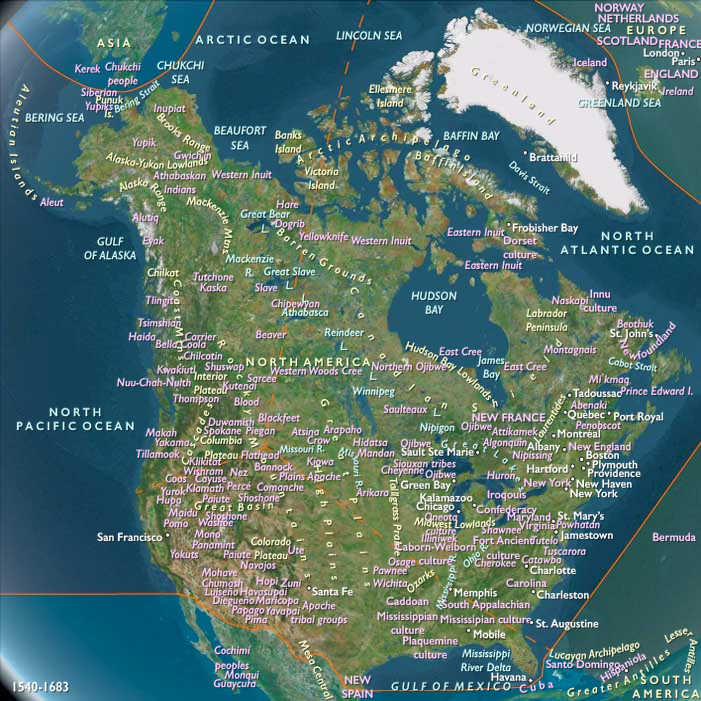
Northern North America
View →Subregions
