
Northeastern North America (1744 to 1755 …
Years: 1744 - 1755
Northeastern North America
(1744 to 1755 CE): Colonial Rivalries, Indigenous Transformations, and Economic Innovations
Between 1744 and 1755, Northeastern North America experienced escalating colonial conflicts, significant indigenous adaptations driven by the introduction of the horse, expanding economic innovations, and the intensifying cultural impacts of the Great Awakening. This era profoundly reshaped relationships between European powers, indigenous societies, and colonial populations, setting conditions for larger-scale confrontations such as the upcoming French and Indian War.
Colonial Conflict and Geopolitical Rivalry
King George’s War and the Siege of Louisbourg (1744–1748)
King George’s War (1744–1748), part of the broader War of the Austrian Succession, escalated Anglo-French tensions. In 1745, colonial militia, supported by the British navy, successfully captured Louisbourg, a strategically critical fortress-town on Cape Breton Island. However, the subsequent Treaty of Aix-la-Chapelle (1748) controversially returned Louisbourg to France, intensifying colonial dissatisfaction and sowing seeds of future conflict.
Expanding French Influence and Exploration
French Fortifications and the Ohio Valley
Throughout the late 1740s and early 1750s, France actively expanded its presence in the Ohio Valley, establishing forts, most notably Fort Duquesne (modern Pittsburgh) in 1754. French voyageurs explored extensive river valleys, including the Red, Arkansas, Platte, and Missouri Rivers, as well as regions around Lake Winnipeg, Lake Manitoba, and the Lower Saskatchewan River, strengthening France’s vast fur-trading networks and indigenous alliances.
The Great Awakening and Cultural Transformation
Revivalism and Religious Liberty
The Great Awakening profoundly shaped colonial culture, increasing religious diversity and promoting ideas of religious liberty. Charismatic evangelical preachers like Jonathan Edwards and George Whitefield continued driving religious fervor, significantly influencing future political thought and encouraging new denominations and cultural shifts across the colonies.
Indigenous Adaptations: Plains Tribes and Horse Culture
Adoption of the Horse on the Plains
From about 1740, the widespread adoption of horses dramatically transformed Plains societies. Tribes like the Crow, Hidatsa, Eastern Shoshone, and Northern Shoshone became skilled horse breeders and traders, maintaining relatively large herds despite harsh northern winters. These tribes' equestrian proficiency allowed them to hunt bison more effectively, altering their economies, cultures, and territorial reach significantly.
Intertribal Rivalries and Alliances
The Crow increasingly became targets for raids and horse thefts from tribes lacking large horse herds, including the powerful Blackfoot Confederacy, Gros Ventre, Assiniboine, Pawnee, and Ute. Emerging threats from the south and east, notably from the horse-rich Lakota (Sioux), Cheyenne, and Arapaho, intensified competition and conflict over valuable horse herds and hunting grounds.
Friendly relations developed between the Crow and other northern Plains tribes such as the Flathead (Salish), Nez Perce, Kutenai, Shoshone, Kiowa, and Kiowa Apache, although periodic tensions existed. Meanwhile, the formidable Iron Confederacy (Nehiyaw-Pwat), a northern Plains alliance centered on the fur trade and dominated by the Plains Cree and Assiniboine, emerged as a significant rival to the Crow. This confederation later included groups such as the Stoney, Saulteaux, Ojibwe, and Métis, shaping regional politics and economics.
Indigenous Populations and Demographic Shifts
Decline and Consolidation of Eastern Tribes
By 1750, the indigenous population along the eastern seaboard—numbering around 120,000 in the sixteenth century—had dramatically declined to fewer than 20,000 due to disease and warfare. Surviving tribes often consolidated or redefined their identities. For instance, the Mohegans merged with surviving Pequot peoples, and the Mahicans became known as the Stockbridge Indians after relocating to Stockbridge, Massachusetts.
Migration of the Tuscarora
Following their defeat in the Tuscarora War (1711–1713) against Carolina colonists, the Tuscarora migrated northward. By the mid-eighteenth century, they had joined the Iroquois Confederacy, becoming its sixth nation, a significant adaptation reshaping Iroquois political and social structures.
British Colonies: Economic Prosperity and Social Change
South Carolina’s Wealth and Cultural Expansion
South Carolina’s economy thrived due to rice cultivation and maritime trade, significantly dependent on enslaved African labor. By mid-century, Charleston was a leading colonial port, exporting rice, indigo, naval stores, and lumber. Prosperity fueled significant cultural growth, exemplified by institutions like the Charleston Library Society (founded 1748) and by the first theater building in America, erected in Charleston in 1736.
Indigo Cultivation by Eliza Lucas (1747–1750)
In 1747, Eliza Lucas introduced and perfected indigo cultivation in the Lowcountry with critical knowledge from enslaved Africans from the Caribbean. Supported by British subsidies, indigo quickly became a leading export by 1750, greatly enriching South Carolina’s economy.
Colonial Frontier Tensions
Virginia and the Ohio Valley Conflict
Virginia’s expanding colonial claims conflicted directly with French ambitions in the Ohio Valley. Virginia asserted territorial rights based on treaties with the Iroquois Confederacy and royal charters, while France insisted on the region’s inclusion within Louisiana. This dispute heightened frontier tensions, ultimately leading to confrontations that foreshadowed the upcoming French and Indian War.
Frontier Tensions with Spanish Florida
Continued Anglo-Spanish Rivalries
The earlier unsuccessful siege of St. Augustine (1740) by James Oglethorpe left lingering distrust and frequent minor conflicts along the Georgia-Florida border. These continued hostilities underscored broader British-Spanish rivalry in the southeastern colonies.
Environmental Transformations and Agricultural Innovations
African Agricultural Techniques and Landscape Change
Enslaved Africans further refined sophisticated irrigation and water-management techniques central to rice cultivation in South Carolina’s Lowcountry. These innovations significantly reshaped regional landscapes, ensuring increased agricultural productivity, which underpinned the colony’s wealth and prominence.
Legacy of the Era (1744–1755 CE)
The years 1744 to 1755 marked significant geopolitical, cultural, and economic shifts in Northeastern North America. Colonial rivalries escalated with the return of Louisbourg to France, intensifying Anglo-French hostilities. French territorial ambitions, notably in the Ohio Valley, significantly raised tensions with Britain and its colonies, setting the stage for broader future conflicts. The Great Awakening fundamentally reshaped colonial religious, social, and political thought. Indigenous societies rapidly adapted, especially on the Plains, where the widespread adoption of horses transformed economies, societies, and intertribal relations. The severe population decline and tribal consolidations among eastern indigenous groups permanently altered regional demographics. South Carolina’s economic expansion, driven by enslaved labor, indigo cultivation, and maritime trade, solidified economic and social hierarchies, while Virginia’s contested claims in the Ohio Valley intensified colonial rivalries. These intertwined developments established essential conditions for the impending French and Indian War, dramatically reshaping North America’s future.
People
Groups
- Austria, Archduchy of
- Nakoda (Stoney)
- Ute (Amerind tribe)
- Blackfoot Confederacy
- Crow people, aka Absaroka or Apsáalooke (Amerind tribe)
- Cheyenne people (Amerind tribe)
- Arapaho people (Amerind tribe)
- Salish, or ”Flatheads” (Amerind tribe)
- Gros Ventre or “Atsina” people (Amerind tribe)
- Assiniboine people (Amerind tribe)
- Nez Perce (Amerind tribe)
- Kiowa people (Amerind tribe)
- Plains Apache, or Kiowa Apache; also Kiowa-Apache, Naʼisha, Naisha (Amerind tribe)
- Mohegan people (Amerind tribe)
- Saulteaux
- Miami (Amerind tribe)
- Ojibwa, or Ojibwe, aka or Chippewa (Amerind tribe)
- Lakota, aka Teton Sioux (Amerind tribe)
- Mahican (Amerind tribe)
- Pequots (Amerind tribe)
- Pawnee (Amerind tribe)
- Arikara people (Amerind tribe)
- Mandan (Amerind tribe)
- Hidatsa people (Amerind tribe)
- Shoshone, Shoshoni, or Snakes (Amerind tribe)
- Protestantism
- New France (French Colony)
- Kutenai
- Florida (Spanish Colony)
- France, (Bourbon) Kingdom of
- Métis in Canada
- New York, Province of (English Colony)
- Acadia, (restored) French colony of
- Spain, Bourbon Kingdom of
- England, (Stuart) Kingdom of
- Louisiana (New France)
- South Carolina, Province of (British Colony)
- Georgia, Province of (British Colony)
Topics
- Middle Subatlantic Period
- Little Ice Age (LIA)
- Colonization of the Americas, Spanish
- North American Fur Trade
- Colonization of the Americas, English
- Little Ice Age, Warm Phase III
- Great Awakening, First
- Austrian Succession, War of the
- King George's War
- French and Indian War
Commodoties
Subjects
Regions
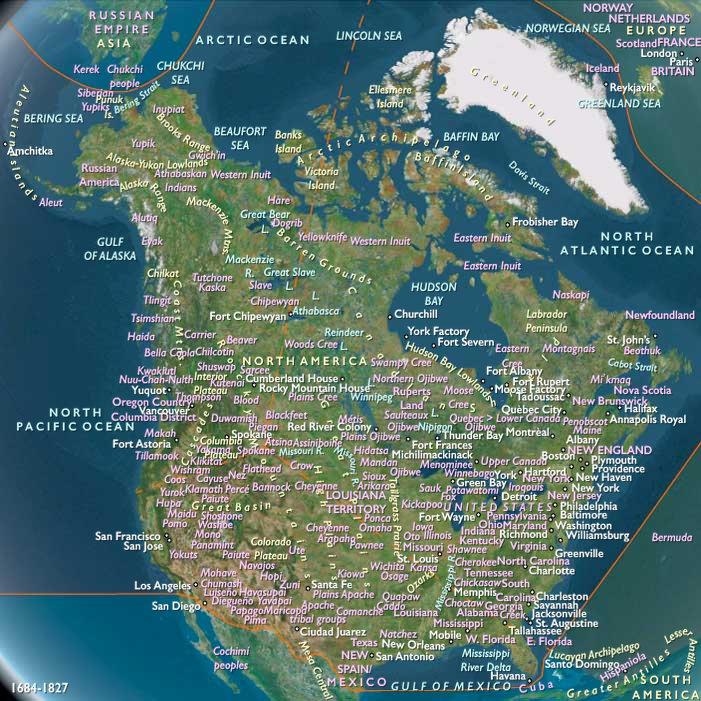
Subregions
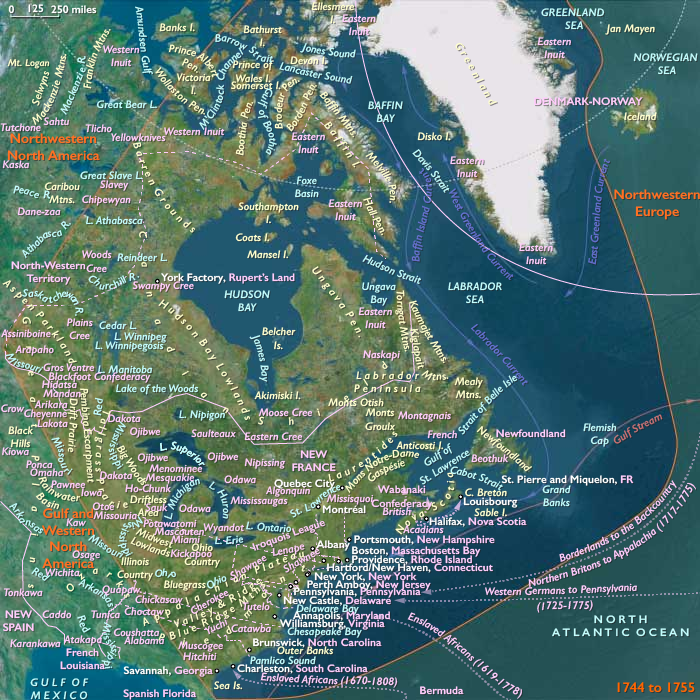
Years: 1744 - 1755
People
Groups
- Austria, Archduchy of
- Nakoda (Stoney)
- Ute (Amerind tribe)
- Blackfoot Confederacy
- Crow people, aka Absaroka or Apsáalooke (Amerind tribe)
- Cheyenne people (Amerind tribe)
- Arapaho people (Amerind tribe)
- Salish, or ”Flatheads” (Amerind tribe)
- Gros Ventre or “Atsina” people (Amerind tribe)
- Assiniboine people (Amerind tribe)
- Nez Perce (Amerind tribe)
- Kiowa people (Amerind tribe)
- Plains Apache, or Kiowa Apache; also Kiowa-Apache, Naʼisha, Naisha (Amerind tribe)
- Mohegan people (Amerind tribe)
- Saulteaux
- Miami (Amerind tribe)
- Ojibwa, or Ojibwe, aka or Chippewa (Amerind tribe)
- Lakota, aka Teton Sioux (Amerind tribe)
- Mahican (Amerind tribe)
- Pequots (Amerind tribe)
- Pawnee (Amerind tribe)
- Arikara people (Amerind tribe)
- Mandan (Amerind tribe)
- Hidatsa people (Amerind tribe)
- Shoshone, Shoshoni, or Snakes (Amerind tribe)
- Protestantism
- New France (French Colony)
- Kutenai
- Florida (Spanish Colony)
- France, (Bourbon) Kingdom of
- Métis in Canada
- New York, Province of (English Colony)
- Acadia, (restored) French colony of
- Spain, Bourbon Kingdom of
- England, (Stuart) Kingdom of
- Louisiana (New France)
- South Carolina, Province of (British Colony)
- Georgia, Province of (British Colony)
Topics
- Middle Subatlantic Period
- Little Ice Age (LIA)
- Colonization of the Americas, Spanish
- North American Fur Trade
- Colonization of the Americas, English
- Little Ice Age, Warm Phase III
- Great Awakening, First
- Austrian Succession, War of the
- King George's War
- French and Indian War
Commodoties
Subjects
Regions
Subregions