
Northeastern North America (1108 – 1251 CE): …
Years: 1108 - 1251
Northeastern North America (1108 – 1251 CE): Cahokia Zenith, Iroquoian Expansion, and Greenland’s Stability
Geographic and Environmental Context
Northeastern North America includes: the Atlantic coast from Jacksonville, Florida to St. John’s, Newfoundland; Greenland; the Canadian Arctic; all Canadian provinces east to the Saskatchewan–Alberta border; and within the U.S., the Old South (Virginia, Carolinas, most of Georgia, northeast Alabama, Tennessee except its southwest), the Appalachian Plateau, the Midwest Lowlands, the Driftless Area, the Tallgrass Prairie, the Big Woods, the Drift Prairie, and the Aspen Parkland.
-
Anchors: Cahokia (St. Louis region), Greenland Eastern/Western Settlements, Great Lakes/Iroquoian fortified villages, Old South chiefdoms, Appalachians, St. Lawrence Valley, and Canadian Arctic settlements.
Climate and Environmental Shifts
-
Peak of the Medieval Warm Period: bumper harvests fueled Cahokia; Great Lakes maize agriculture flourished.
-
Greenland Norse farms prospered marginally, exporting to Europe.
Societies and Political Developments
-
Cahokia reached zenith (~1200): 20,000+ people, Monk’s Mound, complex hierarchy.
-
Iroquoian polities grew in Ontario/New York; longhouses and palisaded towns expanded.
-
Algonquians in Maritimes and Appalachians organized fishing/farming societies.
-
Greenland Norse remained tied to Europe via Iceland/Norway.
-
Thule Inuit spread through Canadian Arctic, adapting to sea ice and whale hunting.
Economy and Trade
-
Cahokia: maize surpluses sustained elite redistribution.
-
Greenland Norse: walrus ivory, furs, hides.
-
Great Lakes: copper, maize, fish.
-
Prairies/Appalachians: mixed agriculture and bison/hunting.
-
Inuit Arctic economy: seal, whale, caribou, sled dogs.
Belief and Symbolism
-
Cahokia’s ceremonial plazas structured ritual and political authority.
-
Iroquoian cosmologies (sky woman, earth-diver) tied to longhouse ritual.
-
Norse Greenlanders: Catholic churches and Christian burials flourished.
Long-Term Significance
By 1251, Northeastern North America blended Cahokia’s urban power, Iroquoian expansion, Greenland Norse stability, and Inuit migration, linking the continent’s interior to the Atlantic edge.
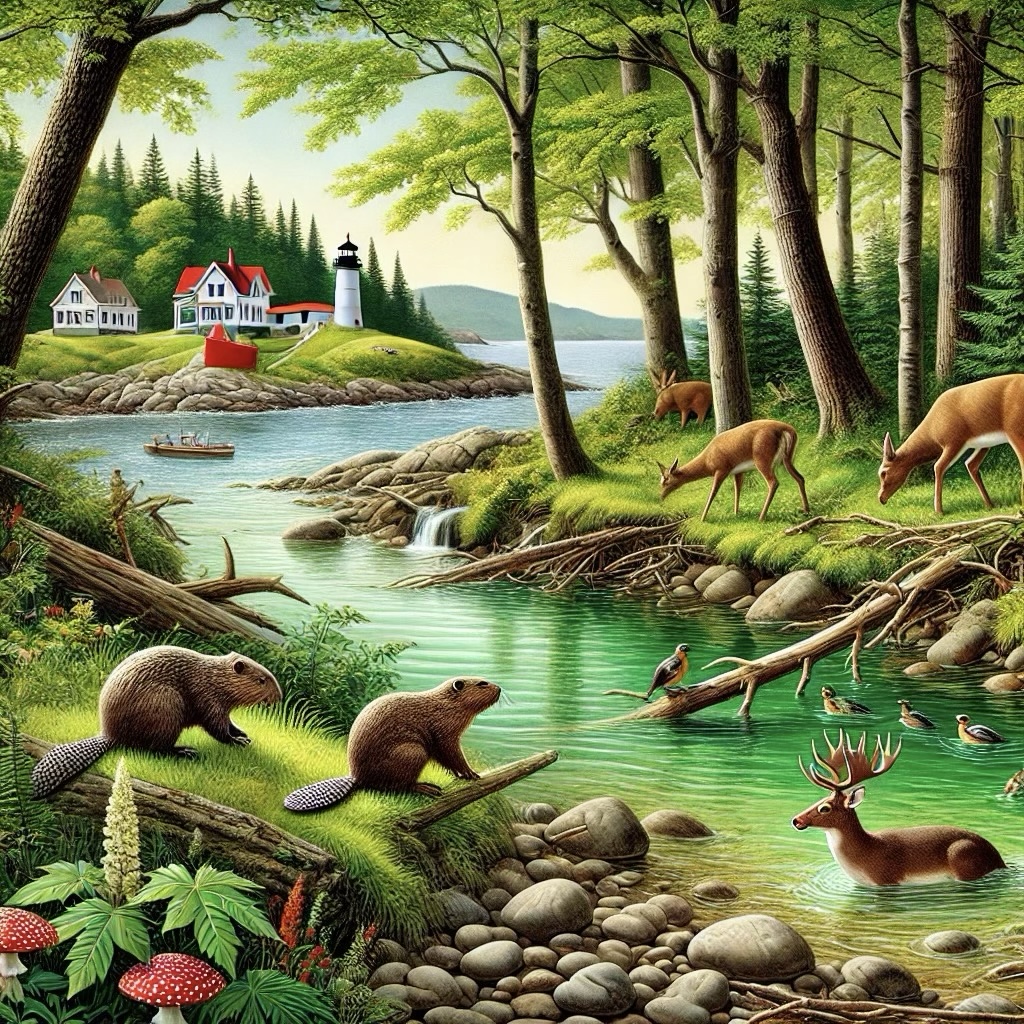
Northeastern North America (with civilization) ©2024-25 Electric Prism, Inc. All rights reserved.
Groups
- Mound Builders
- Dorset culture
- Mississippian culture
- Caddoan Mississippian culture
- Iroquois (Haudenosaunee, also known as the League of Peace and Power, Five Nations, or Six Nations)
- Inuit
- Tunlit (Dorset culture)
- Greenland, Norwegian Crown Colony of
- Mi'kmaq people (Amerind tribe)
- Ho-Chunk (Amerind tribe)
- Thule people
- Penobscot people (Amerind tribe)
- Cahokia Mounds
Topics
Commodoties
- Fish and game
- Gem materials
- Colorants
- Domestic animals
- Grains and produce
- Ceramics
- Strategic metals
- Tobacco
Subjects
Regions
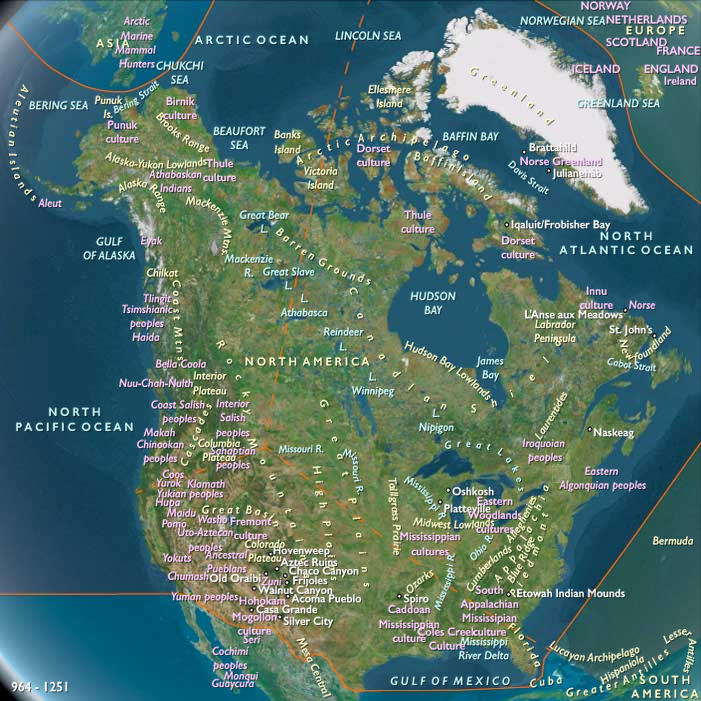
Subregions
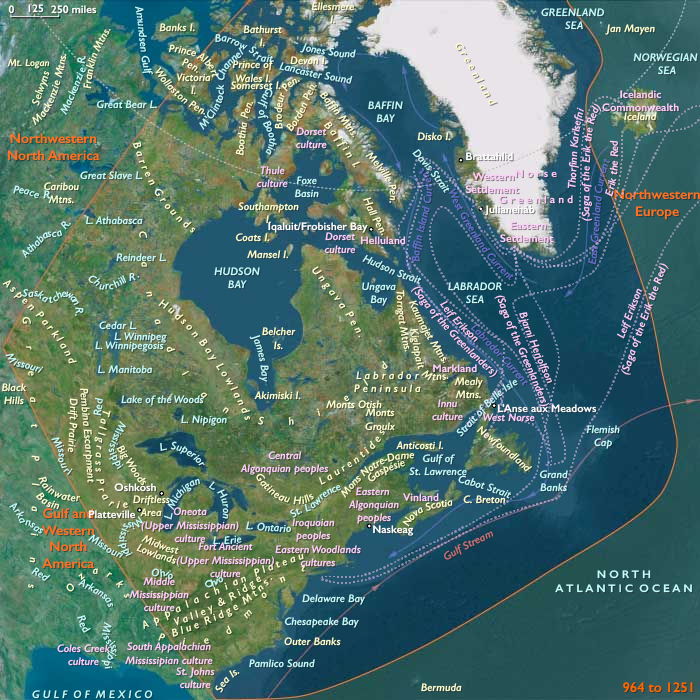
Years: 1108 - 1251
Northeastern North America (with civilization) ©2024-25 Electric Prism, Inc. All rights reserved.
Groups
- Mound Builders
- Dorset culture
- Mississippian culture
- Caddoan Mississippian culture
- Iroquois (Haudenosaunee, also known as the League of Peace and Power, Five Nations, or Six Nations)
- Inuit
- Tunlit (Dorset culture)
- Greenland, Norwegian Crown Colony of
- Mi'kmaq people (Amerind tribe)
- Ho-Chunk (Amerind tribe)
- Thule people
- Penobscot people (Amerind tribe)
- Cahokia Mounds
Topics
Commodoties
- Fish and game
- Gem materials
- Colorants
- Domestic animals
- Grains and produce
- Ceramics
- Strategic metals
- Tobacco
Subjects
Regions
Subregions