
Upper South Asia (1053–910 BCE): Urbanization, Cultural …
Years: 1053BCE - 910BCE
Upper South Asia (1053–910 BCE): Urbanization, Cultural Flourishing, and Regional Complexity
Consolidation and Urban Expansion
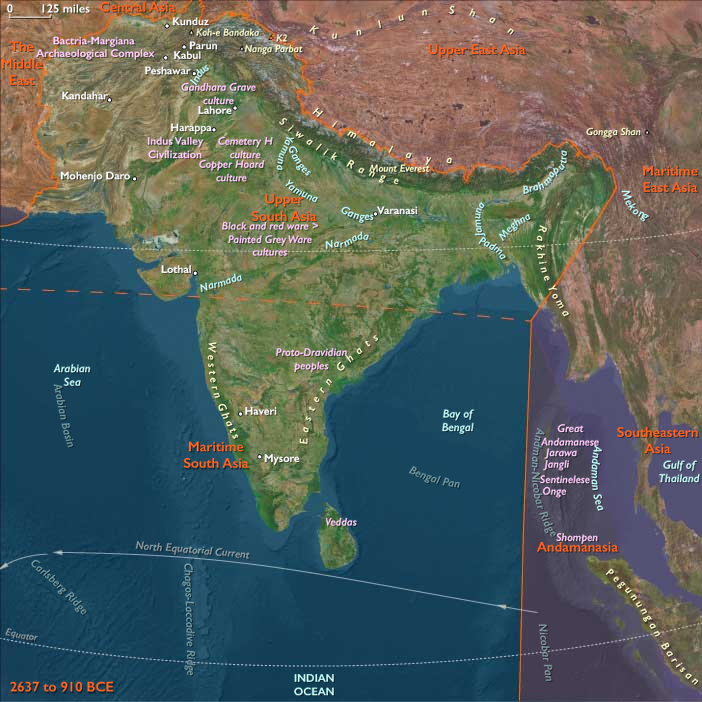
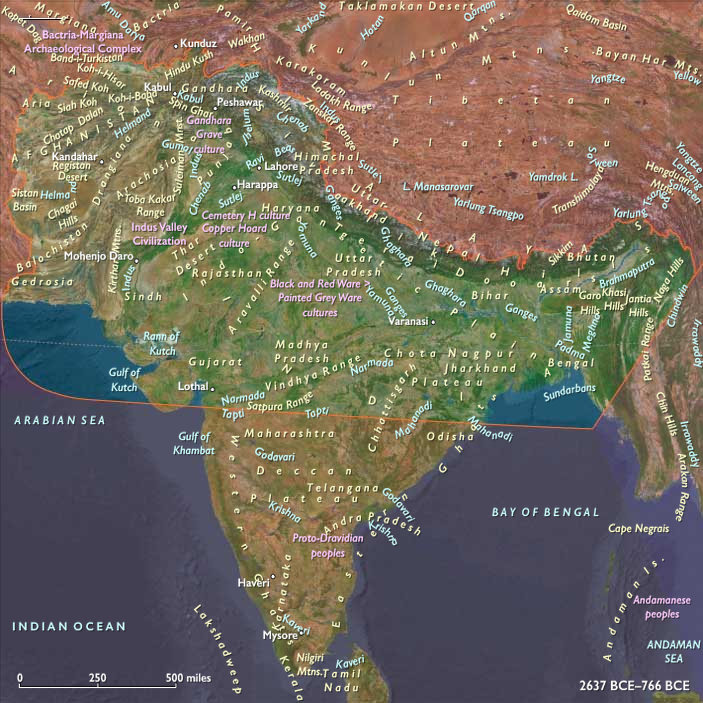
The period from 1053–910 BCE sees further maturation of Vedic civilization in Upper South Asia. Urbanization accelerates, especially in regions encompassing modern-day Uttar Pradesh, Bihar, West Bengal, and increasingly in Odisha and Jharkhand. Agricultural productivity, particularly rice and barley, drives the growth of urban settlements and emerging trade networks, while the Painted Gray Ware (PGW) culture reaches its zenith, further illustrating economic specialization and social stratification.
Regional Polities and the Rise of Monarchies
In Punjab, Haryana, and the central Gangetic Plains, the political landscape continues to evolve from tribal oligarchies into more centralized monarchical states. The Kuru kingdom expands its influence, solidifying its dominance around Kurukshetra, and establishing foundations for powerful successor states. These kingdoms increasingly rely on military organization and administrative sophistication, as reflected in Vedic texts composed during this period, including later Brahmanas and early Upanishads.
Further Stratification of the Caste System
Social hierarchies intensify, reinforcing distinctions among Brahmins, Kshatriyas, Vaishyas, and Shudras. Brahmins secure their religious dominance by codifying rituals and sacred texts, while Kshatriyas expand their political authority and military roles. Economic stability and agricultural prosperity allow Vaishyas and Shudras to sustain the productive base of society.
Economic Diversification and Technological Innovation
Economic diversification becomes pronounced, driven by enhanced agricultural practices, improved metallurgy, pottery, textile production, and trade. Metallurgical advances are evidenced by sophisticated ironworking techniques becoming increasingly prevalent, facilitating better agricultural tools and effective weaponry. Urban centers benefit from these developments, growing in size and complexity.
Gandhara and Northwestern Cultural Integration
In the northwest, particularly the Swat Valley and surrounding regions, the Gandhara Grave culture continues to thrive. Its distinctive ceramic traditions and burial practices indicate ongoing Indo-Aryan cultural developments, interactions with Central Asian groups, and trade connections reaching as far as present-day Afghanistan and Iran.
Himalayan Cultural and Economic Networks
Highland communities, including Jammu and Kashmir, Ladakh, Himachal Pradesh, Uttarakhand, Nepal, and Bhutan, sustain vibrant economic and cultural exchanges with lowland Vedic communities. Pastoralism, agriculture, and trade networks facilitate mutual influences, fostering a shared cultural framework across diverse geographic zones.
Eastern Complexity and Emergence of Distinct Cultures
Eastern territories including present-day Bangladesh, Assam, Nagaland, Manipur, Meghalaya, Tripura, Mizoram, Arunachal Pradesh, and northwestern Myanmar (Kachin State, Sagaing Region, Chin State, and northern Rakhine State) experience continued cultural growth and increasing political complexity. The flourishing Black and Red Ware culture highlights regional identity within the broader Indo-Gangetic tradition, reflecting advancements in pottery and other craft specializations.
Medical and Technological Progress
Advances in medical practices, including continued refinement of proto-dentistry evidenced at Mehrgarh, indicate ongoing technological sophistication. Innovations in health practices contribute significantly to societal stability, population growth, and improved quality of life.
Agriculture and Domestication Advances
Domestication of animals, particularly the Red Junglefowl, significantly enhances regional agricultural productivity. Continued improvement in animal husbandry and farming techniques provides a reliable food source, underpinning population growth and urban expansion.
Artistic and Religious Developments
Artistic and religious traditions remain deeply connected to their Harappan roots, evolving further into early Hindu iconography. Iconic motifs, such as horned deities, animals, and symbols related to fertility and prosperity, persist in religious rituals and artistic expressions, underscoring continuity amidst cultural evolution.
Legacy of the Age
This age significantly deepens cultural integration, solidifies the foundations of political and economic structures, and sets the stage for more complex societal developments in the succeeding periods. Urbanization, technological innovations, and the ongoing stratification of society create a resilient framework that will influence the historical trajectory of Upper South Asia profoundly.
Groups
- Gandhara grave, or Swat, culture
- Vedic period
- Gandhāra
- Painted Grey Ware culture
- Panchalas, Kingdom of the
- Kuru Kingdom
Commodoties
- Weapons
- Gem materials
- Colorants
- Domestic animals
- Grains and produce
- Fibers
- Textiles
- Strategic metals
Subjects
- Painting and Drawing
- Environment
- Decorative arts
- Faith
- Government
- Custom and Law
- Technology
- Medicine
Regions
Subregions
Years: 1053BCE - 910BCE
Groups
- Gandhara grave, or Swat, culture
- Vedic period
- Gandhāra
- Painted Grey Ware culture
- Panchalas, Kingdom of the
- Kuru Kingdom
Commodoties
- Weapons
- Gem materials
- Colorants
- Domestic animals
- Grains and produce
- Fibers
- Textiles
- Strategic metals
Subjects
- Painting and Drawing
- Environment
- Decorative arts
- Faith
- Government
- Custom and Law
- Technology
- Medicine
Regions
Subregions