
Upper South Asia (1197–1054 BCE): Expansion, Cultural …
Years: 1197BCE - 1054BCE
Upper South Asia (1197–1054 BCE): Expansion, Cultural Consolidation, and Regional Complexity
Vedic Civilization and Eastern Expansion
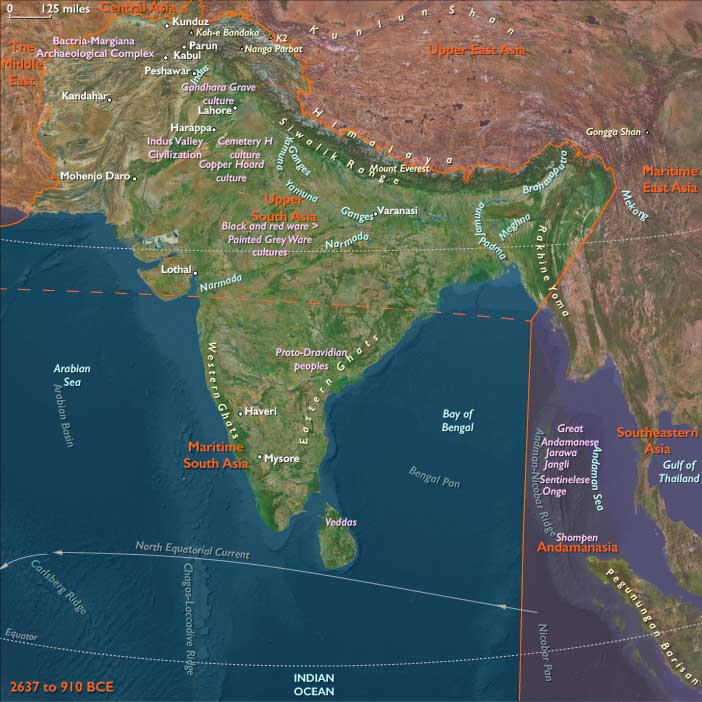
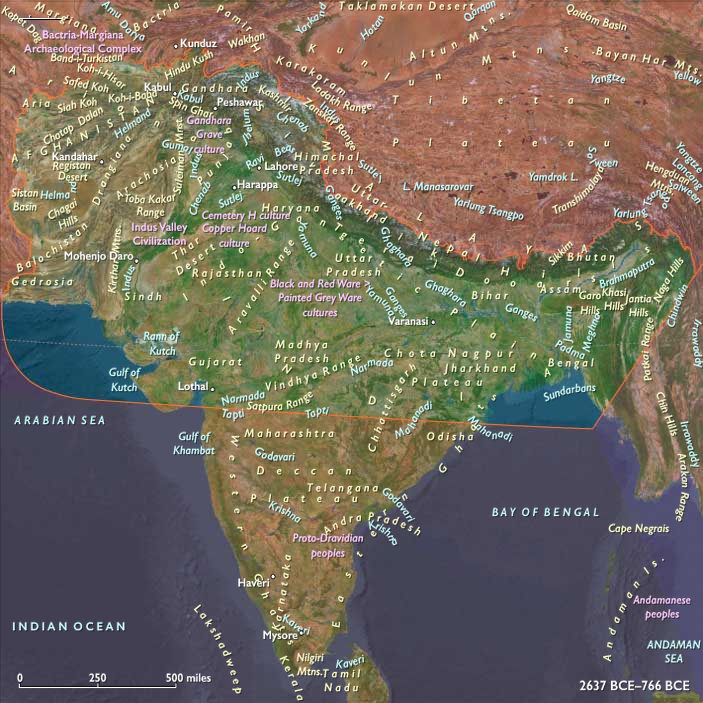
During the period of 1197–1054 BCE, Vedic civilization experiences continued geographical and cultural expansion. The Indo-Aryan communities push further into the Gangetic Plains, firmly establishing themselves in regions that encompass present-day Uttar Pradesh, Bihar, West Bengal, and into parts of eastern India including Jharkhand and Odisha. This movement is evidenced by the spread and further evolution of the Painted Gray Ware (PGW) culture, characterized by distinctive pottery styles and agricultural intensification, particularly rice cultivation.
Regional Political Dynamics
In Punjab, Haryana, and the Kuru kingdom around modern-day Kurukshetra, political structures continue to evolve toward more centralized monarchies and oligarchies. The societal complexity within these states is captured in the later Vedic texts, particularly the Brahmanas and early Upanishads, reflecting a transition toward more elaborate ritual and philosophical traditions. The contemporaneous Painted Gray Ware culture emerges, significantly overlapping geographically and temporally with the Kuru kingdom, reinforcing the correlation between archaeological evidence and textual records.
Further Development of the Caste System
The caste system, increasingly rigidified during this period, sees further delineation of social roles. The Brahmins enhance their religious authority, codifying rituals and textual interpretations, while Kshatriyas consolidate political power and military prowess, crucial in supporting territorial expansions. Vaishyas and Shudras remain integral in economic and agricultural activities, forming the productive backbone of society.
Economic Specialization and Urban Emergence
Northern South Asia witnesses incremental urbanization, particularly in the upper Gangetic Plains, reflecting economic specialization and diversification. Agricultural surpluses, notably rice and barley, foster trade, craft specialization (including advanced pottery, metalwork, and textile production), and the growth of small urban settlements that become future nuclei of major cities.
Gandhara Grave Culture and Northwestern Developments
The Gandhara Grave culture, predominant in the Swat Valley, maintains its significance, representing Indo-Aryan cultural practices and continued interactions with Central Asian and Iranian communities. Burial practices, horse symbolism, and distinctive ceramic styles remain markers of these interactions.
Cultural and Economic Networks in the Himalayas
Highland societies in the Himalayan regions—including Jammu and Kashmir, Ladakh, Himachal Pradesh, Uttarakhand, Nepal, and Bhutan—continue robust economic activities centered around pastoralism, agriculture, and trade. These interactions support ongoing cultural exchanges with lowland Vedic societies, fostering mutual influence and cooperation.
Eastern Regional Complexity and Cultural Interactions
The eastern territories of Bangladesh, Assam, Nagaland, Manipur, Meghalaya, Tripura, Mizoram, Arunachal Pradesh, and northwestern Myanmar (Kachin State, Sagaing Region, Chin State, and northern Rakhine State) experience increasing societal complexity. Agricultural innovations and intensified trade interactions reinforce regional identities and interregional connections, laying the groundwork for more structured political entities. The contemporaneous Black and Red Ware culture also flourishes, contributing to the broader Indo-Gangetic cultural tradition.
Medical and Technological Innovations
Medical practices continue evolving, building upon proto-dentistry evidence discovered at Mehrgarh. These advances reflect broader technological sophistication, contributing to societal stability, health, and productivity.
Agricultural Practices and Animal Domestication
Domestication practices, particularly involving the Red Junglefowl, further enhance regional agricultural productivity. These practices reflect ongoing adaptations and improvements in food security and agricultural efficiency.
Artistic and Religious Continuities
Harappan artistic motifs and religious symbolism continue influencing emerging Hindu iconography. Traditional symbols like the horned deities and animal motifs endure, signifying cultural resilience and continuity within an evolving societal framework.
Legacy of the Age
This age solidifies cultural identities, expands regional influence, and establishes the foundations for future urban and political developments across Upper South Asia. The period witnesses a deepening cultural integration, significant economic diversification, and strengthening societal structures, laying critical groundwork for subsequent historical epochs.
Groups
Commodoties
- Weapons
- Gem materials
- Colorants
- Domestic animals
- Grains and produce
- Fibers
- Textiles
- Strategic metals
Subjects
- Painting and Drawing
- Environment
- Decorative arts
- Faith
- Government
- Custom and Law
- Technology
- Medicine
Regions
Subregions
Related Events
Showing 10 events out of 67182 total
Years: 1197BCE - 1054BCE
Groups
Commodoties
- Weapons
- Gem materials
- Colorants
- Domestic animals
- Grains and produce
- Fibers
- Textiles
- Strategic metals
Subjects
- Painting and Drawing
- Environment
- Decorative arts
- Faith
- Government
- Custom and Law
- Technology
- Medicine
Regions
Subregions