Event
Maritime South Asia (49,293–28,558 BCE): Late Pleistocene…
Maritime South Asia (49,293–28,558 BCE): Late Pleistocene I — Deccan Foragers, Sri Lankan Rainforests, and Indian Ocean Lowlands
Geographic and Environmental Context
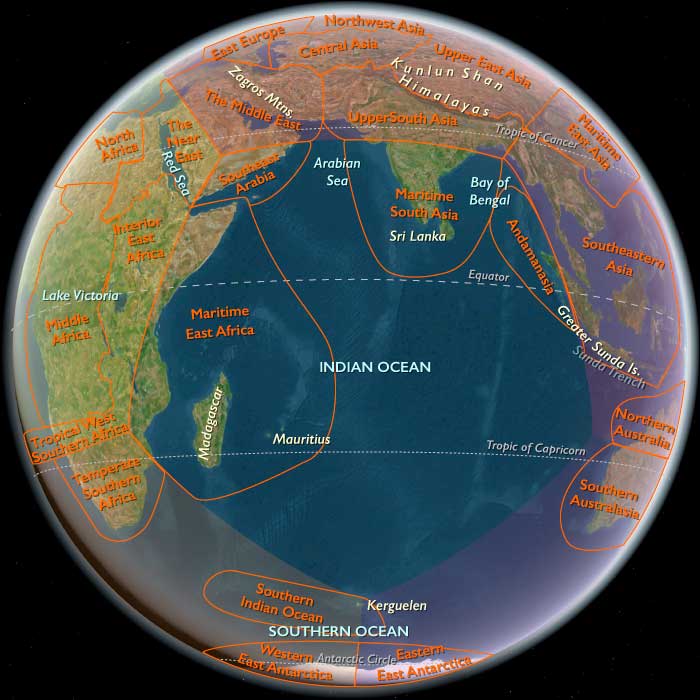
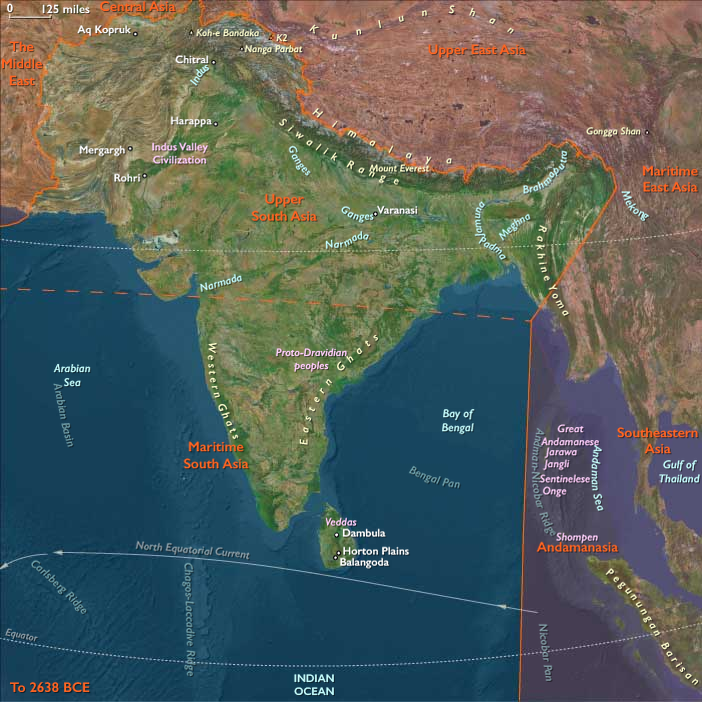
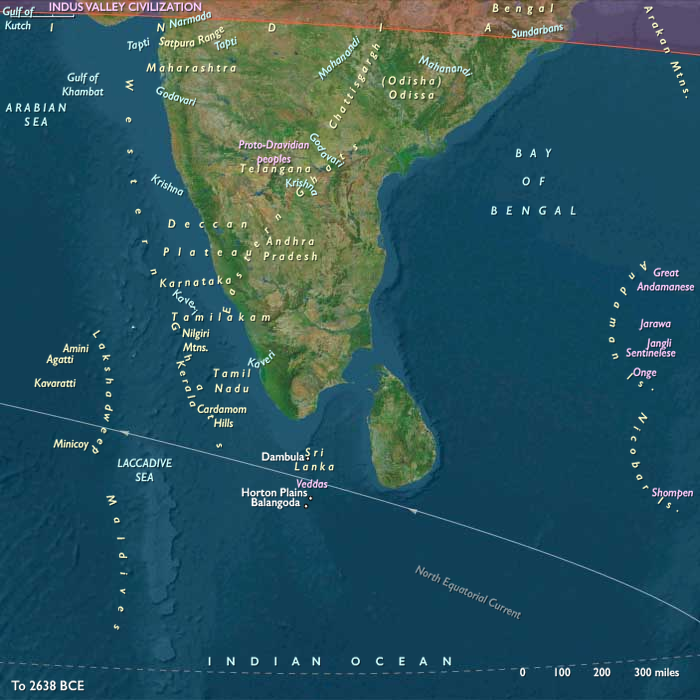
Maritime South Asia includes peninsular India south of the canonical boundary, Sri Lanka, Lakshadweep, the Maldives, and Chagos.
The Deccan Plateau, Western and Eastern Ghats, Godavari–Krishna–Kaveri systems, Malabar and Coromandel lowlands, and Sri Lankan wet and dry zones formed the main inhabited landscapes.
Human Presence
Modern humans were well established across peninsular India and Sri Lanka.
Sri Lanka preserves an exceptional record. Fa-Hien Lena contains human occupation reaching back approximately 48,000 years, including specialized rainforest hunting and early microlithic and bone technologies.
This demonstrates that tropical rainforest was not merely a marginal refuge but could support highly specialized human lifeways.
Climate and Environmental Shifts
MIS 3 (Marine Isotope Stage 3) monsoon fluctuations repeatedly altered forest extent, river flow, grassland, and coastal environments.
Lower sea levels intermittently joined Sri Lanka more closely to southern India through the Palk region and enlarged continental coastal plains.
Subsistence and Settlement
Peninsular communities occupied rock shelters, river valleys, woodland, and open country.
Sri Lankan rainforest populations hunted small arboreal and semi-arboreal mammals and collected mollusks, nuts, fruits, and other plant foods. Recent research demonstrates intensive plant use deep into the Late Pleistocene.
Technology and Material Culture
Stone technologies varied sharply across the subregion. Sri Lanka preserves very early microlithic technologies and bone tools, while these should not be projected automatically into every peninsular Indian assemblage.
Oceanic Islands
Lakshadweep, Maldives, and Chagos remained without known human occupation during this interval.
Transition
By 28,558 BCE, Maritime South Asia supported both broad continental foraging traditions and remarkably specialized tropical rainforest populations, while the remote Indian Ocean archipelagos remained beyond human settlement.

-
{# Image navigates to the detail page; the magnifying-glass chip is the only Fancybox lightbox trigger (kept a separate sibling — anchors can't nest). #}
 The Indian Ocean Lands
World
The Indian Ocean Lands
World
-
{# Image navigates to the detail page; the magnifying-glass chip is the only Fancybox lightbox trigger (kept a separate sibling — anchors can't nest). #}
 South Asia
Region
South Asia
Region
-
{# Image navigates to the detail page; the magnifying-glass chip is the only Fancybox lightbox trigger (kept a separate sibling — anchors can't nest). #}
 Maritime South Asia
Subregion
Maritime South Asia
Subregion