
Northwest Asia (1540–1683 CE): Cossack Rivers, Fur …
Years: 1540 - 1683
Northwest Asia (1540–1683 CE): Cossack Rivers, Fur Empires, and Forest Resistance
Geographic & Environmental Context
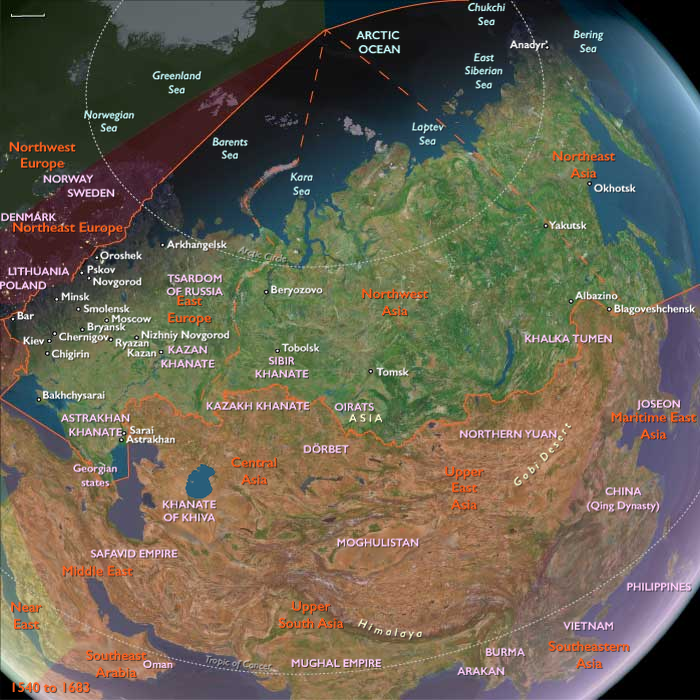
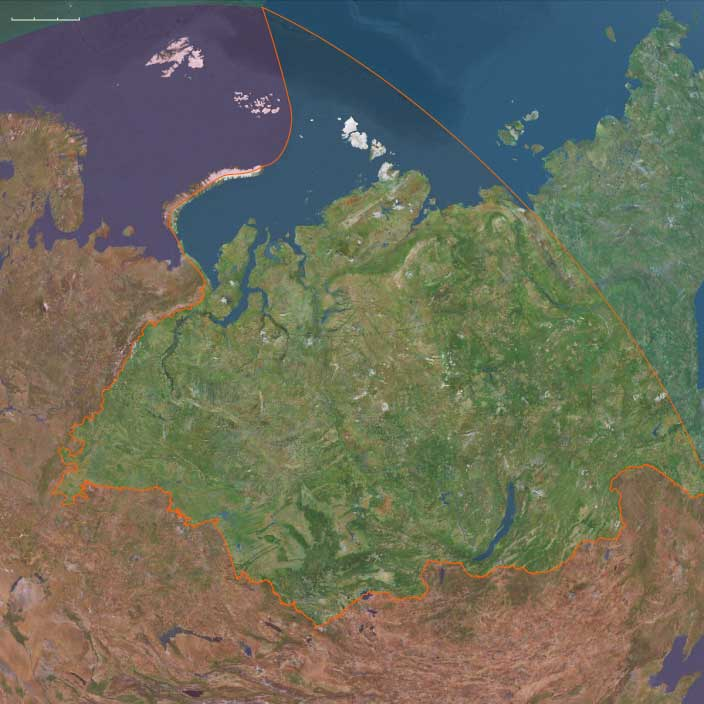
The subregion of Northwest Asia includes the western and central Siberian interior from the Ural Mountains to about 130°E, bounded by the Arctic Ocean in the north and the Kazakh steppe–Altai in the south. Anchors include the Ob–Irtysh and Yenisei river systems (with the Tobol, Tom, Chulym, and Lower Tunguska tributaries), the taiga–tundra belt reaching to the Kara and Laptev margins, and the forest–steppe fringe abutting the Kazakh steppe and Altai uplands. Palisaded river forts (ostrogs) and indigenous river–forest settlements studded these corridors.
Climate & Environmental Shifts
The Little Ice Age deepened long winters and shortened growing seasons.
-
Winters: severe cold, deeper snowpack, and prolonged river ice;
-
Spring floods: high freshets on the Ob, Irtysh, and Yenisei regularly inundated lowlands;
-
Summers: brief but intense, with insects and peat-bog fires;
-
Tundra/taiga: permafrost edged farther south in cold decades. These swings forced tighter seasonal timing for hunting, trapping, transport, and provisioning at forts.
Subsistence & Settlement
-
Forest and river peoples (Khanty, Mansi, Selkup, Ket, Evenk, and Samoyedic groups such as Nenets): mobile hunting–fishing–trapping economies (elk, sable, hare, waterfowl, sturgeon/whitefish), log winter huts and summer bark shelters; dog and reindeer traction; seasonal fish camps.
-
Steppe margins & Altai valleys: agro-pastoral niches (millet/barley gardens, horse/cattle herding), trade with taiga neighbors.
-
Russian newcomers: small riverbank farmsteads near forts (rye, oats, hemp, cabbages), hay meadows on floodplains; provisioning hunts and fisheries tied to garrison needs.
Technology & Material Culture
-
Indigenous toolkits: birchbark canoes, skis and snowshoes, sinew-backed bows, iron knives/hatchets obtained by barter; fur parkas and fish-skin garments; shaman drums and ritual regalia.
-
Russian frontier gear: arquebuses/matchlocks, small cannon, sabers and mail; log ostrog fortification, bake-ovens, smithies; koch sea-going craft for Arctic coasting and broad-beamed river boats for remonting rapids. Orthodox icons and bells appeared at key forts (notably Tobolsk), alongside trade scales and stamp seals for yasak (fur tribute).
Movement & Interaction Corridors
-
River highways: Cossack detachments and traders ran the Tobol–Irtysh–Ob and Tom–Chulym–Yenisei chains, portaging around falls; winter zimnik trails (sled roads) linked basins.
-
Arctic coasting: the Mangazeya sea route (via the Kara Sea) briefly boomed (early 1600s) for direct sable export before state closure redirected traffic inland.
-
Steppe gates: caravan ties to Kazan–Astrakhan–Bukhara moved iron, cloth, and beads north; furs and captives south.
-
Mission & administration: couriers tied Tobolsk (founded 1587) to Tyumen (1586), Tomsk (1604), Yeniseisk(1619), and Krasnoyarsk (1628)—a chain of governance and trade depots.
Cultural & Symbolic Expressions
-
Forest cosmologies: animal-master spirits, river beings, and clan guardians animated hunting rites; antler offerings at confluences; winter shamanic séances for healing and luck.
-
Orthodox frontier: processions and feast days at forts, icons in blockhouses, and the first schools and scribes at Tobolsk projected imperial sacrality.
-
Epic and oral lore: Turkic and Ugric heroic cycles celebrated hunters, khans, and trickster spirits; Cossack songs memorialized rapids, sieges, and winterings.
Environmental Adaptation & Resilience
-
Taiga risk-spreading: staggered traplines, smoked/dried fish and meat, rendered fat and berry stores; flexible camp moves to follow fur cycles; reindeer husbandry for mobility on tundra margins.
-
Fort provisioning: mixed farming–fishing–hunting; haymaking on floodplains; winter haulage of grain and salt along frozen rivers.
-
Trade buffers: exchange of furs for iron, salt, flour, and cloth stabilized lean years; yasak commutations in goods occasionally relieved tribute strain after bad hunts.
Technology & Power Shifts (Conflict Dynamics)
-
Conquest of the Siberian Khanate: Yermak Timofeyevich (backed by the Stroganov merchants) overran Khan Kuchum’s domain in the 1580s; Kuchum’s guerrilla bands persisted until defeat and dispersal by 1598, leaving a tribute framework over forest peoples.
-
Fort chain & fur state: rapid planting of Tyumen (1586), Tobolsk (1587), Tomsk (1604), Yeniseisk (1619), Krasnoyarsk (1628) established nodes for yasak extraction, trade fairs, and judiciary; Tobolsk became administrative and spiritual center of the region.
-
Cossack penetration: detachments pushed up the Yenisei and toward the Upper Lena (near the 130°E limit), levying yasak from Evenk and other groups; punitive raids followed resistance.
-
Indigenous resistance: Khanty, Mansi, Selkup, and Evenk communities fought shootings and seized boats; sporadic sieges of forts, ambushes on winter roads, and yasak refusals recurred; epidemics (smallpox waves) compounded losses and spurred flight deeper into taiga.
-
Rival steppe polities: Nogai and Kazakh groups contested the southern forest–steppe gates, taxing caravans and occasionally raiding tributary lines; Russian diplomacy and arms sought to keep the Ural gates open.
Movement & Interaction Corridors (Trade & Tribute)
-
Fur pipelines: sable, fox, ermine, wolverine moved from traplines to ostrogs, then west to Kazan/Moscow; in return flowed ironware, kettles, beads, and vodka.
-
Arctic–inland shunts: the closing of Mangazeya re-channeled exports to river–overland routings through Tobolsk; seasonal fairs synchronized with spring breakup and autumn freeze-up.
-
Missionary circuits: priests and interpreters circulated between forts and wintering camps, negotiating baptisms and mediating conflicts—often intertwined with tribute demands.
Climate–Society Feedbacks
Cold decades depressed fur populations locally; Cossacks extended lines to new watersheds, intensifying pressure elsewhere. High flood years aided hay and fish but threatened fort palisades; fires in dry summers destroyed stores. Communities rebuilt log stockades, moved winter huts to higher ground, and diversified traplines to spread ecological risk.
Transition
By 1683 CE, Northwest Asia had been transformed from khanate and forest sovereignties into a river-fort fur commonwealth under Muscovite rule. Tobolsk, Tomsk, Yeniseisk, and Krasnoyarsk anchored administration, Orthodoxy, and trade; yasak knit taiga peoples into imperial circuits, even as resistance and epidemic shocks persisted. Cossack scouts were already nosing eastward to the upper Lena, pressing the 130°E frontier. The next age would consolidate taxation, mission, and law, extend fort chains, and entangle the region with new steppe and Manchu powers pressing from without.
People
Groups
- Evens, or Eveny
- Mansi people
- Khanty
- Selkup
- Nenets
- Evenks
- Yakuts
- Russians (East Slavs)
- Moscow, Grand Principality of
- Sibir, Khanate of
- Russia, Tsardom of
- Chinese Empire, Qing (Manchu) Dynasty
Topics
Commodoties
Subjects
Regions
Subregions
Years: 1540 - 1683
People
Groups
- Evens, or Eveny
- Mansi people
- Khanty
- Selkup
- Nenets
- Evenks
- Yakuts
- Russians (East Slavs)
- Moscow, Grand Principality of
- Sibir, Khanate of
- Russia, Tsardom of
- Chinese Empire, Qing (Manchu) Dynasty
Topics
Commodoties
Subjects
Regions
Subregions