Northwest Asia (820–963 CE): River Exchange, Yenisei…
820 CE to 963 CE
Northwest Asia (820–963 CE): River Exchange, Yenisei Kyrgyz Power, and Taiga–Tundra Continuity
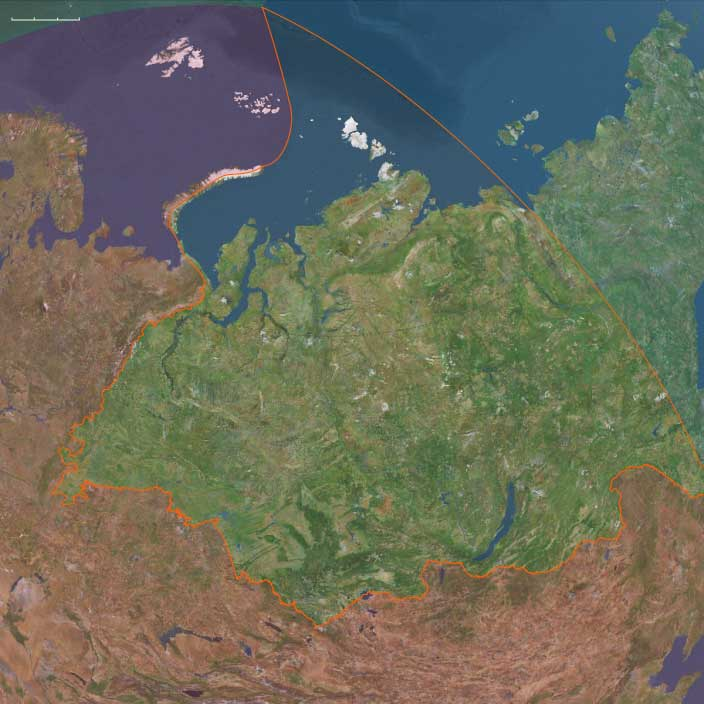
Geographic Parameters
Northwest Asia extended from the Ural Mountains eastward across the West Siberian Plain and the Ob–Irtysh and Yenisei drainage systems to approximately 130°E. It included the Kara Sea littoral, the tundra and northern taiga, the great peatlands and floodplains of western Siberia, the forest-steppe margins of the Tobol and Irtysh, and the Sayan–Altai and Minusinsk environments along the southern edge.
The Ob, Irtysh, Tobol, Tom, Chulym, and Yenisei formed the principal corridors of settlement and movement. Their seasonal rhythms governed fishing, transport, gathering, hunting, tribute, and exchange across a landscape in which overland travel was often more difficult than movement by boat or winter sledge.
Environmental Continuity
Taiga, wetland, tundra, and forest-steppe remained the dominant systems. Northern districts supported wild reindeer, fish, waterfowl, and coastal resources, while central forests contained sable, squirrel, fox, ermine, elk, and beaver. Southern basins and steppe margins permitted horse and livestock pastoralism, haymaking, and limited cultivation.
Long winters, short summers, spring floods, unstable channels, and extensive wetlands restricted permanent political control. Most settlements remained small and seasonal or semi-permanent, positioned on river terraces, lake margins, fishing grounds, and portages.
Climate and Seasonal Change
The climate remained sharply continental and subarctic. Winter travel over frozen rivers could be easier than summer movement through bogs and forest, while spring breakup temporarily severed routes and threatened low settlements. Modest warming toward the middle of the tenth century may have slightly extended river-navigation and grazing seasons in southern districts, but northern environments remained severe.
Variability in snowfall, river discharge, and animal movement affected reindeer pasture, fish runs, and trapping success. Communities responded by maintaining access to several resource zones rather than depending upon one harvest.
Societies and Political Development
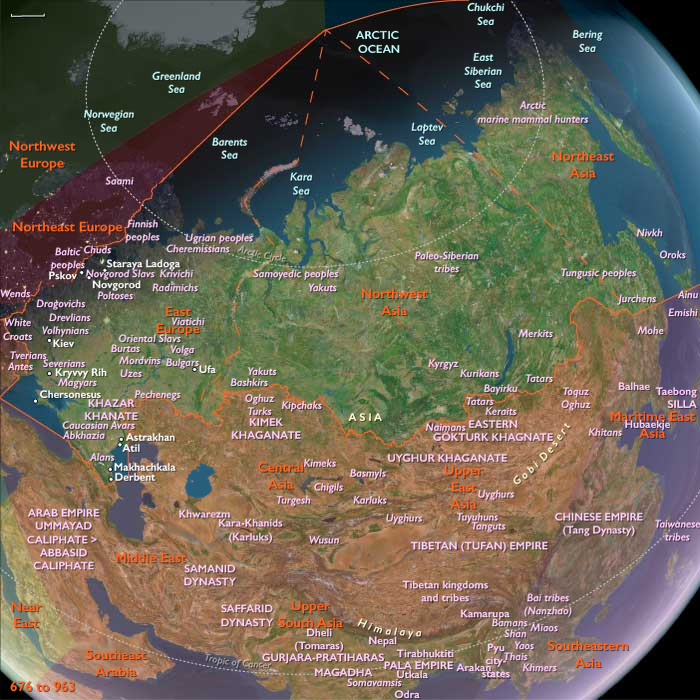
The Yenisei Kyrgyz emerged as the strongest political power along the southern margin after defeating the Uyghur Khaganate in 840. Their authority was centered in the upper Yenisei and Minusinsk Basin, where mounted elites controlled pastoral wealth, tribute, and connections with Inner Asia. Their influence in the taiga was indirect and uneven, expressed through exchange, tribute, alliance, and access to southern markets rather than close territorial administration.
Along the Ob and Irtysh, Khanty, Mansi, Selkup, and related river and forest communities organized life through kinship, seasonal councils, and customary territories. Ket communities occupied portions of the Yenisei world, while Nenets and other Samoyedic-speaking peoples ranged across tundra and northern forest environments. Evenki communities moved through central taiga districts as hunters, fishers, and reindeer users.
On the southern forest-steppe, Kimek, Kipchak, and Oghuz confederations interacted with forest communities through trade, raiding, diplomacy, and seasonal access to pasture and river crossings.
Productive Landscapes
Fishing provided one of the most dependable foundations of life. Communities used nets, wicker traps, weirs, hooks, and spears to take whitefish, sturgeon, pike, and other river species. Fish were dried, smoked, frozen, or rendered into oil.
Hunting combined large game with intensive trapping of fur-bearing animals. Reindeer, elk, and waterfowl supplied meat, hide, bone, and sinew, while sable and other pelts became increasingly important exchange goods. Berries, nuts, roots, and other plant foods supplemented winter stores.
In northern regions, reindeer were used for transport, meat, and hides, although herd size and pastoral specialization varied. Southern Kyrgyz and steppe societies relied more heavily on horses, sheep, cattle, and mobile pastoralism.
Technology and Material Culture
Birch-bark and dugout canoes supported summer movement, while skis, snowshoes, sledges, dogs, and reindeer enabled winter travel. Log and earth houses appeared in more permanent river settlements, alongside portable hide tents and bark shelters.
Composite bows, bone and antler points, trapping devices, fishing gear, and imported iron blades formed the core technological system. Among the Yenisei Kyrgyz, saddles, stirrups, lances, composite bows, and lamellar armor supported mounted warfare and political authority.
Exchange and Circulation
The principal new system of the age was the intensification of river-mediated fur exchange. Sable, squirrel, fox, ermine, wax, hides, fish oil, antler, walrus products, and mammoth ivory moved toward southern and western markets. Iron tools, salt, beads, textiles, metal vessels, and silver moved northward.
Samanid silver dirhams reached parts of the Ob and upper Yenisei worlds through Khwarazmian, Volga Bulghar, and steppe intermediaries. Coinage did not replace barter or gift exchange, but silver could serve as ornament, stored wealth, or weighed metal.
The Yenisei Kyrgyz mediated portions of the horse, fur, felt, and metal trade along the southern margin, while Kimek and Oghuz networks connected the Irtysh approaches with the wider steppe.
Religion and Symbolic Geography
Animist and shamanic cosmologies linked human communities with river beings, animal masters, ancestors, and powerful places. Bear rites, first-catch observances, and first-kill ceremonies expressed reciprocity with prey and affirmed limits upon hunting.
Sacred groves, confluences, islands, mountains, and ancestral burial grounds formed a symbolic geography embedded in ordinary movement. Among the Yenisei Kyrgyz, reverence for Tengri and ancestral power helped legitimate elite authority, while stelae, cairns, and burial traditions commemorated lineages.
Adaptation and Resilience
Seasonal mobility spread risk across fisheries, traplines, hunting territories, tundra pasture, and forest gathering grounds. Food preservation, shared stores, exchange partnerships, and kin-based access to several territories reduced vulnerability to failed hunts or poor fish runs.
Imported iron and salt were valuable, but communities retained toolkits that could be produced locally from wood, bark, bone, antler, hide, and stone. This technological flexibility limited dependence upon long-distance exchange.
Legacy of the Age
By 963 CE, Northwest Asia had become more closely linked to Eurasian trade without losing its environmental and Indigenous foundations. The Yenisei Kyrgyz anchored southern political exchange, while river and forest communities converted fish, furs, oil, antler, and ivory into tradable wealth.
The age established an enduring pattern: political power concentrated at the southern margins and strategic river nodes, while most of the taiga and tundra remained organized through Indigenous mobility, kinship, customary territories, and seasonal resource use.
Images

Northwest Asia in the Early Medieval (Upper) age
Groups
Commodities
Subjects
Regions
Northeastern Eurasia
View →Subregions