Northwest Asia (964–1107 CE): Forest–Steppe Brokerage, Kipchak…
964 CE to 1107 CE
Northwest Asia (964–1107 CE): Forest–Steppe Brokerage, Kipchak Expansion, and Fur–Silver Networks
Geographic Parameters
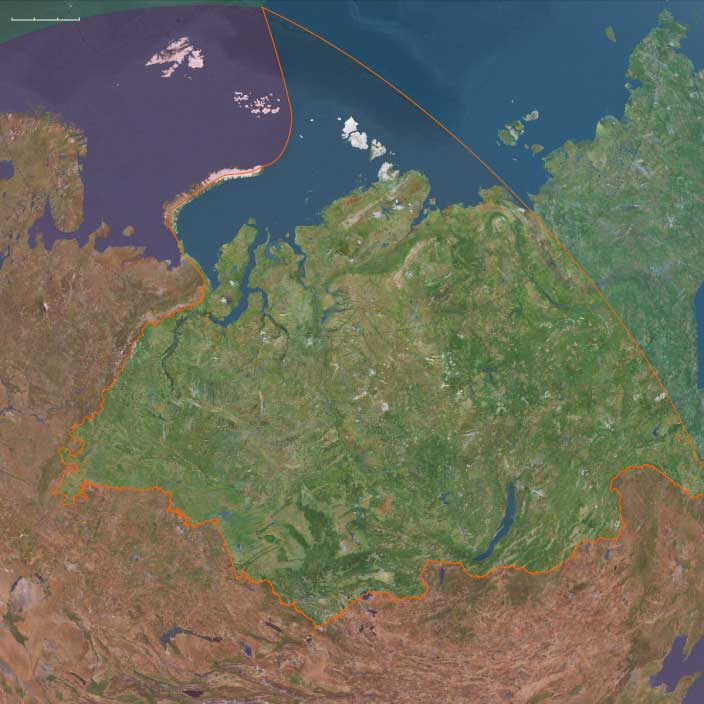
Northwest Asia continued to extend from the Urals across the Ob–Irtysh and Yenisei basins to approximately 130°E. Taiga and wetland dominated the central plain, tundra bordered the Arctic coast, and forest-steppe connected the Irtysh and Tobol corridors with the Kazakh and Inner Asian grasslands.
The major rivers remained the region’s most reliable routes, while portages and winter roads connected separate drainage systems. Southern interaction was concentrated along the Irtysh, Ishim, Tobol, and upper Yenisei approaches.
Environmental Continuity
The great river systems continued to support fisheries, transport, floodplain meadows, and dispersed settlement. Taiga hunting territories remained extensive, while northern reindeer economies and southern pastoral systems occupied different but connected ecological zones.
The landscape did not become uniformly warmer or more agriculturally productive. Modest climatic amelioration chiefly affected the length of southern growing, grazing, and navigation seasons.
Climate and Environmental Change
Conditions associated with the Medieval Warm Period modestly lengthened summer navigation and improved some southern pasture zones. Forest margins may have shifted locally northward, altering trapping territories and reindeer movement.
Long winters and periodic severe cold nevertheless remained normal. Spring floods could enrich fisheries and meadows while destroying camps, boats, stored food, and riverbank structures.
Societies and Political Development
The Yenisei Kyrgyz retained a localized but prestigious power base in the Minusinsk and upper Yenisei region. Their wider imperial reach had diminished, yet Kyrgyz elites continued to coordinate pastoral production, tribute, and exchange with forest communities and Inner Asian partners.
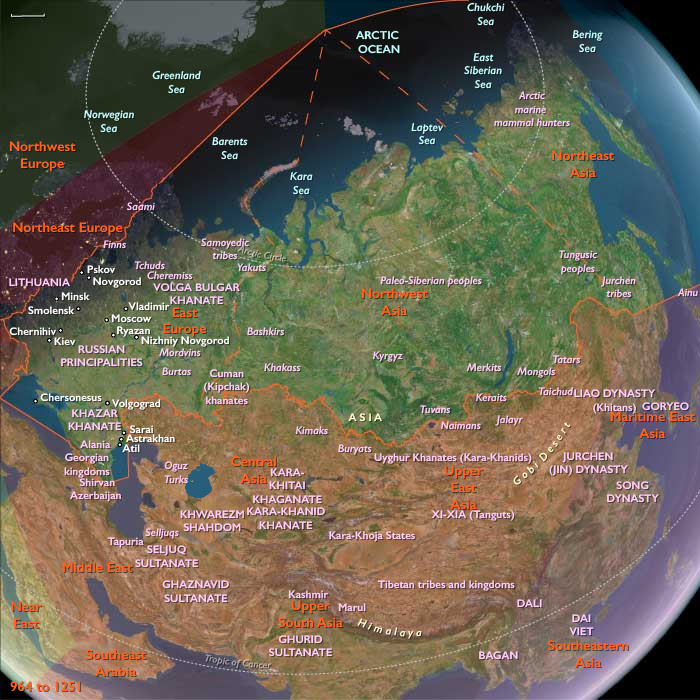
The most important political change occurred along the southwestern approaches. The Kipchaks expanded within and beyond the former Kimek confederational world, increasing their influence over the Ishim–Irtysh and forest-steppe corridors. Their westward movement pressured Oghuz groups and reshaped the routes connecting Siberian furs with Khwarazm and the Volga region.
Khanty, Mansi, Selkup, Ket, Nenets, Evenki, and other Indigenous communities retained local authority and seasonal control of fisheries, pasture, and hunting territories. Their relationship with steppe powers varied from tribute and trade to avoidance, alliance, and resistance.
Productive Landscapes
River fisheries remained the most stable productive system. Fishing camps, weirs, netting sites, drying racks, and oil-rendering areas appeared along tributaries and river bends rather than in large centralized settlements.
Winter trapping supplied sable, ermine, fox, beaver, and squirrel. Northern households combined reindeer use with fishing, hunting, and coastal resources. Southern forest-steppe groups practiced mixed herding and limited cultivation in favorable valleys.
Pastoral production among Kyrgyz and Kipchak communities centered on horses, sheep, cattle, and mobility between seasonal grazing areas.
Technology and Material Culture
Canoes, sledges, skis, snowshoes, and reindeer or dog traction continued to organize movement. Iron axes, knives, arrowheads, and kettles became more available through trade but remained unevenly distributed.
Steppe cavalry used composite bows, stirrups, saddles, lances, and forms of lamellar protection. Forest communities maintained specialized fishing, trapping, bark-working, hide-processing, and cold-weather technologies.
Exchange and Commerce
The principal development of the age was stronger brokerage between forest and steppe. Furs moved through Kipchak, Kyrgyz, Khwarazmian, and Volga Bulghar networks toward Islamic and European markets.
The decline in Samanid dirham production reduced the flow of newly struck coins, encouraging greater use of cut silver, weighed metal, beads, textiles, and direct barter. Khwarazm became increasingly important as an entrepôt for Ob–Irtysh products.
Forest communities exchanged furs, fish oil, wax, hides, and antler for iron, salt, cloth, vessels, ornaments, and selected luxury goods. Pelts could serve simultaneously as tribute, commercial goods, and stored value.
Movement and Interaction Corridors
The Ob–Irtysh corridor linked northern and central forest districts with steppe markets. Ural portages connected western Siberia with the Volga region, while the Yenisei tied taiga communities to Kyrgyz and Inner Asian exchange.
Winter routes over frozen rivers allowed faster movement of heavy loads than summer travel through bogs. Arctic coastal movement redistributed seal products, skins, driftwood, and fish between tundra camps and river mouths.
Religion and Symbolic Geography
Shamanic traditions continued to structure relations with animals, rivers, ancestors, and illness. Bear ceremonies, reindeer rites, and offerings at sacred places reinforced reciprocity and territorial memory.
Yenisei Kyrgyz and Kipchak groups maintained sky, earth, and ancestral traditions. Contact with Muslim traders introduced Islamic ideas and objects into parts of the southern frontier, although large-scale conversion had not yet transformed the forest-steppe.
Adaptation and Resilience
Communities preserved flexible combinations of fishing, trapping, herding, gathering, and exchange. When silver became less available, trade shifted toward other media without collapsing.
Seasonal mobility allowed households to adjust to flood, fire, pasture failure, animal scarcity, and political pressure. Alliances, intermarriage, tribute agreements, and avoidance of heavily contested corridors helped preserve access to resources.
Legacy of the Age
By 1107 CE, Northwest Asia had become more firmly integrated into a taiga–steppe–oasis exchange system. Kipchak expansion strengthened southern brokerage, while the Yenisei Kyrgyz retained regional authority in the east.
The region remained politically distributed. Greater circulation did not erase Indigenous control of most river, forest, and tundra landscapes, but it increased the value of furs and intensified competition over the routes through which they moved.
Images

Northwest Asia in the Hgh Medieval (Lower) age
Groups
Commodities
Subjects
Regions
Northeastern Eurasia
View →Subregions