
Northwest Europe (1504–1515 CE): Diplomacy, Renaissance Flourishing, …
Years: 1504 - 1515
Northwest Europe (1504–1515 CE): Diplomacy, Renaissance Flourishing, and Religious Precursors
England: Diplomatic Maneuvering and Dynastic Ambitions
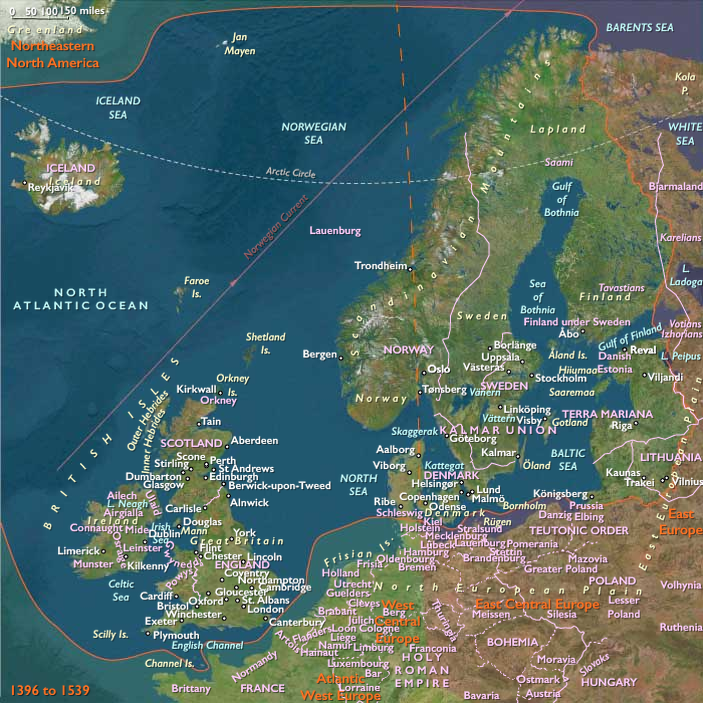
Under Henry VII, England continued its cautious yet effective foreign policy, ensuring internal stability and diplomatic alliances. Henry further secured his dynasty by arranging the marriage of his surviving son, Prince Henry, to Catherine of Aragon in 1509, after obtaining papal dispensation due to her previous marriage to Henry’s elder son Arthur. Following Henry VII’s death in the same year, Henry VIII ascended the throne, initiating a dynamic yet turbulent reign. The new king quickly demonstrated his ambition and martial aspirations, engaging in conflicts such as the Battle of the Spurs against France in 1513, securing English prestige on the European stage. Meanwhile, at home, the English Renaissance deepened, driven by increased patronage of arts and humanist scholarship. Notably, poet and satirist John Skelton flourished during this period, serving as "regius orator" and poet laureate to Henry VIII and writing influential works such as Phyllyp Sparrowe and The Bowge of Court, which fiercely satirized contemporary church and court life.
Scotland: Renaissance Peak and Flodden Disaster
Under James IV, Scotland experienced a cultural and intellectual renaissance marked by increased patronage of arts and learning, including the flourishing of poetry and the establishment of the first printing press in Edinburgh by Walter Chepman and Andrew Myllar in 1508. However, James’s political ambitions led him into the conflict with England known as the Battle of Flodden in 1513. The battle was catastrophic for Scotland, resulting in James IV’s death and significant losses among Scottish nobility, leading to political instability as his infant son, James V, ascended the throne under a regency.
Ireland: Gaelic Resilience Amid English Encroachment
Gaelic Ireland continued to sustain considerable autonomy, with powerful dynasties such as the Fitzgeralds of Kildare maintaining significant influence. The English crown’s attempts to assert greater control beyond The Pale remained limited, often relying on the support or cooperation of local Gaelic lords. Cultural and political structures under traditional Gaelic law (Brehon law) persisted robustly, reflecting the enduring Gaelic identity despite intermittent pressures from English authorities.
Scandinavia: Ongoing Strife Within the Kalmar Union
The Kalmar Union, now led by King Christian II, faced continued internal discord, notably in Sweden, where nationalist sentiments increasingly threatened union stability. Christian’s attempts at centralization and increased control sparked resistance and ongoing unrest, setting the stage for future conflicts. In Denmark and Norway, Christian II’s reign was marked by attempts to reform administration and reduce aristocratic power, foreshadowing turbulent political changes ahead.
Iceland: Literary Preservation and Economic Struggles
Iceland persisted in maintaining its rich literary tradition despite economic hardships and geographic isolation. Manuscript production remained central, preserving sagas, poetry, and essential historical documents. Icelandic identity and cultural integrity remained resilient, with local scholars meticulously safeguarding their heritage through continued literary production and scholarly endeavors.
Cultural and Intellectual Growth
Cultural flourishing continued across Northwest Europe, prominently in England and Scotland. The English court increasingly supported humanist scholarship, exemplified by figures such as John Colet and Thomas More, who championed educational and ecclesiastical reform, influencing future developments in English religious and intellectual life. Oxford’s Magdalen College, with its iconic Magdalen Tower completed in 1509, and other institutions continued to be centers of scholarly pursuit and architectural distinction. The Tudor architectural style increasingly reflected European influences, characterized by symmetrical plans and ornate detailing, marking a transition from Gothic forms.
Early Explorations and Emerging Global Ambitions
Maritime exploration efforts, initially led by John Cabot’s voyages in the late fifteenth century, laid groundwork for future English colonial aspirations. Interest in new routes and territories grew steadily, though direct English colonial establishments remained limited during this era. Nevertheless, these early voyages fostered increased curiosity and ambition for global exploration and trade expansion.
Prelude to Reformation
The era saw the early stirrings of religious dissent and critique of the established Church, anticipating broader reformist movements. Influential humanists and intellectuals began openly questioning ecclesiastical authority and practices, setting the intellectual stage for forthcoming religious upheavals.
Legacy of the Era
By 1515 CE, Northwest Europe had seen significant diplomatic, cultural, and intellectual progress, alongside deepening tensions and emerging ambitions that would define subsequent decades. The foundations laid during this era—marked by humanist learning, dynastic consolidation, and nascent global aspirations—significantly shaped the trajectory of future historical developments.
People
- Catherine of Aragon
- Christian II
- Henry VII of England
- Henry VIII of England
- John Cabot
- John Colet
- John Skelton
- Thomas More
Groups
- Gaels
- Irish people
- Ireland, medieval
- Christians, Roman Catholic
- Ireland, (English) Lordship of
- Scotland, Kingdom of
- France, (Valois) Kingdom of
- Kalmar Union (of Denmark, Norway and Sweden)
- Iceland (Danish dependency)
- England, (Tudor) Kingdom of
Topics
- Middle Subatlantic Period
- Dano-Swedish War of 1501-12
- League of Cambrai, War of the
- Spurs, Battle of the
Subjects
Regions
Subregions
Related Events
Showing 10 events out of 39659 total
Years: 1504 - 1515
People
- Catherine of Aragon
- Christian II
- Henry VII of England
- Henry VIII of England
- John Cabot
- John Colet
- John Skelton
- Thomas More
Groups
- Gaels
- Irish people
- Ireland, medieval
- Christians, Roman Catholic
- Ireland, (English) Lordship of
- Scotland, Kingdom of
- France, (Valois) Kingdom of
- Kalmar Union (of Denmark, Norway and Sweden)
- Iceland (Danish dependency)
- England, (Tudor) Kingdom of
Topics
- Middle Subatlantic Period
- Dano-Swedish War of 1501-12
- League of Cambrai, War of the
- Spurs, Battle of the
Subjects
Regions
Subregions