
Northwest Europe (1552–1563 CE): Religious Turmoil, Dynastic …
Years: 1552 - 1563
Northwest Europe (1552–1563 CE): Religious Turmoil, Dynastic Shifts, and Cultural Advances
England: Protestant Intensification and Dynastic Crisis
The religious policies initiated under Edward VI intensified Protestant reforms throughout England. The publication of the revised Book of Common Prayer (1552) firmly established Protestant worship, shaping the Anglican tradition. Edward VI's untimely death in 1553 led to a brief dynastic crisis. Although Lady Jane Grey was briefly proclaimed queen through the machinations of the Duke of Northumberland, popular and political support rallied behind Edward’s Catholic half-sister, Mary I, who ascended the throne after nine days. Mary's reign marked a sharp reversal of religious policy, returning England to Catholicism and instituting severe measures against Protestant dissent, leading to the execution of prominent Protestants and earning her the sobriquet "Bloody Mary."
Scotland: Religious Conflict and the Rise of Protestantism
Scotland experienced significant religious turmoil during this era. The regency government of Mary of Guise, mother to Mary, Queen of Scots, faced mounting opposition as Protestant reformers increasingly challenged Catholic dominance. The Protestant preacher John Knox, influenced by Calvinist doctrines, became prominent, laying foundations for the Scottish Reformation. Political instability heightened tensions, setting the stage for deeper religious and political conflicts.
Ireland: English Consolidation and Continued Resistance
In Ireland, English attempts to consolidate centralized authority continued, meeting persistent resistance from Gaelic and Hiberno-Norman lords. The Irish Parliament remained an instrument of English control, but rebellions and local conflicts repeatedly challenged its authority. English administrators intensified efforts to impose Protestantism, encountering stubborn adherence to Catholic traditions among the majority of the population.
Scandinavia: Consolidation of Lutheranism and Royal Power
The Lutheran Church was firmly consolidated under Danish King Christian III, who continued to centralize royal authority by reinforcing Lutheran doctrines and practices throughout Denmark and its territories, including Norway and Iceland. The establishment of Protestant ecclesiastical structures strengthened royal influence, significantly reducing the power of traditional nobility and Catholic institutions.
Iceland: Reinforcement of Lutheran Authority
Lutheran authority became entrenched in Iceland following the execution of Bishop Jón Arason in 1550. Danish authorities continued to enforce Lutheran reforms rigorously, reshaping Icelandic religious practices and cultural traditions. The new ecclesiastical order facilitated tighter Danish administrative control and further integrated Iceland into the broader Lutheran Scandinavian sphere.
Cultural and Intellectual Developments
The period saw significant cultural advancements, particularly in literature and education. Humanist scholarship flourished across the region, further disseminated by advancements in printing technology. English intellectuals and writers navigated religious upheaval, influencing the literary landscape and contributing to cultural developments that would culminate in the Elizabethan Renaissance. Architecture continued to evolve under Tudor influences, marked by symmetrical designs, elaborate detailing, and increasingly sophisticated internal ornamentation.
Maritime Expansion and Commercial Growth
Maritime exploration and commercial expansion continued to play a significant role, particularly in England, where advancements in naval technology and navigation furthered ambitions for overseas trade and exploration. Enhanced naval capabilities, spurred by technological advancements initiated in previous eras, laid critical foundations for England’s future maritime prominence.
Legacy of the Era
By 1563 CE, Northwest Europe had witnessed intensified religious conflicts, critical dynastic shifts, and vibrant cultural and intellectual developments. The religious oscillations between Protestant and Catholic rule, combined with strengthened monarchical control and cultural flourishing, decisively shaped the social, political, and cultural trajectories of the region, setting the stage for profound changes in subsequent decades.
People
- Christian III
- Edward Seymour
- Edward VI of England
- James V, King of Scots
- Jane Grey
- John Dudley
- John Knox
- Marie de Guise
- Mary I of England and Ireland
- Mary I of Scotland
Groups
- Gaels
- Irish people
- Ireland, medieval
- Christians, Roman Catholic
- Scotland, Kingdom of
- France, (Valois) Kingdom of
- Iceland (Danish dependency)
- England, (Tudor) Kingdom of
- Lutheranism
- Protestantism
- Anglicans (Episcopal Church of England)
- Denmark-Norway, Kingdom of
- Ireland, (English) Kingdom of
Topics
Commodoties
Subjects
Regions
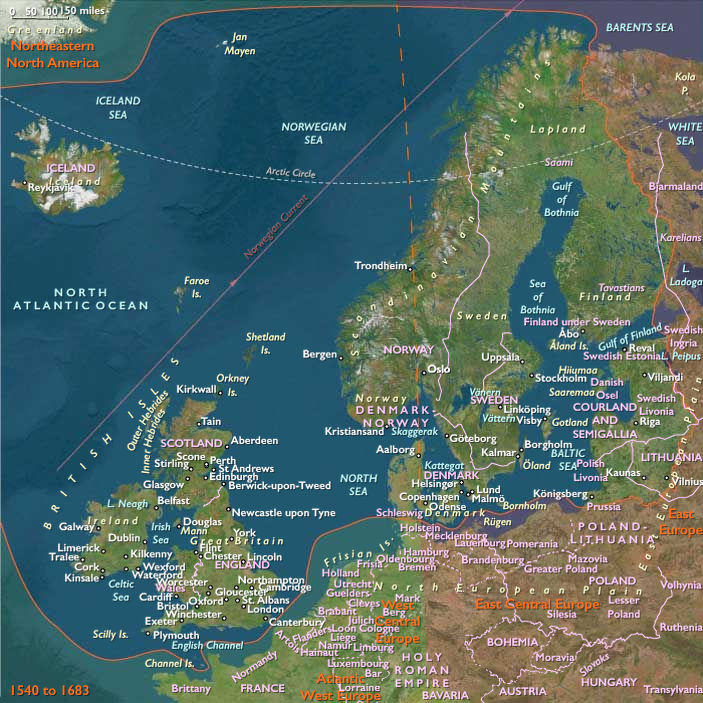
Subregions
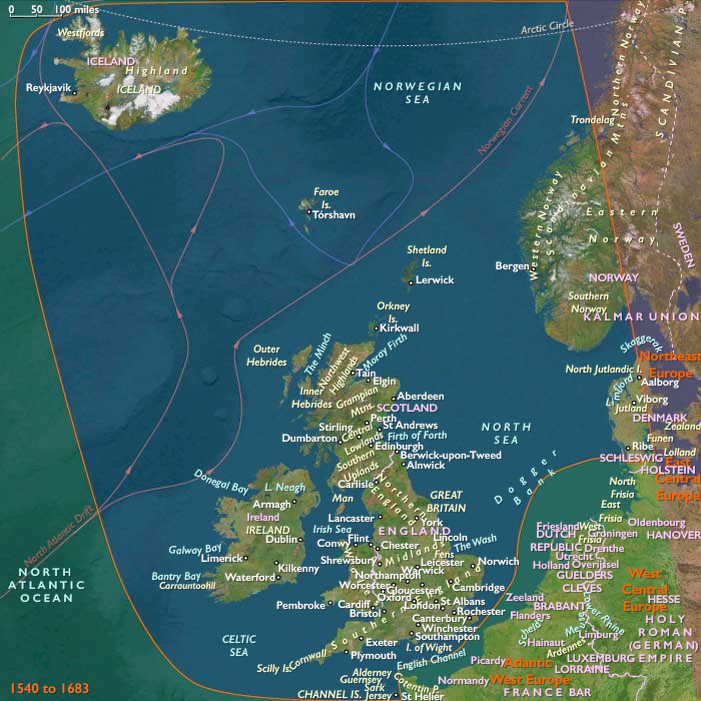
Years: 1552 - 1563
People
- Christian III
- Edward Seymour
- Edward VI of England
- James V, King of Scots
- Jane Grey
- John Dudley
- John Knox
- Marie de Guise
- Mary I of England and Ireland
- Mary I of Scotland
Groups
- Gaels
- Irish people
- Ireland, medieval
- Christians, Roman Catholic
- Scotland, Kingdom of
- France, (Valois) Kingdom of
- Iceland (Danish dependency)
- England, (Tudor) Kingdom of
- Lutheranism
- Protestantism
- Anglicans (Episcopal Church of England)
- Denmark-Norway, Kingdom of
- Ireland, (English) Kingdom of
Topics
Commodoties
Subjects
Regions
Subregions