
Northwestern North America (1396–1539 CE) Coastal …
Years: 1396 - 1539
Northwestern North America (1396–1539 CE)
Coastal Riches and Interior Pathways
Geography & Environmental Context
This subregion stretched from Alaska and the Yukon south through British Columbia and Washington, extending inland to the Rockies and the Columbia River. A rugged world of fjords, salmon rivers, conifer forests, and tundra valleys sustained dense coastal populations and far-ranging interior hunters.
Climate & Environmental Shifts
The Little Ice Age advanced glaciers in the St. Elias Mountains and shortened growing seasons inland. Stronger coastal storms and variable salmon runs tested food systems, but abundant rainfall kept forests lush.
Subsistence & Settlement
-
Coastal nations—Tlingit, Haida, Tsimshian, Nuu-chah-nulth, Coast Salish—built cedar plankhouses, fished salmon and halibut, hunted sea mammals, and gathered berries. The potlatch ceremony reaffirmed hierarchy and reciprocity.
-
Interior and plateau peoples—Nez Perce, Carrier, Kaska, Sekani, Shoshone—followed seasonal rounds of fishing, hunting elk and caribou, and gathering roots such as camas and wapato.
-
Aleut (Unangan) in the Aleutians lived in semi-subterranean barabaras and hunted seals, sea otters, and whales from agile baidarkas.
Technology & Material Culture
Cedar canoes, bentwood boxes, and carved masks embodied cosmology and clan identity. Stone, bone, and antler tools served hunting and woodworking; snowshoes and sledges sustained inland travel. The Aleut perfected composite harpoons and waterproof skin parkas for open-sea hunting.
Movement & Interaction Corridors
The Inside Passage supported trade in fish oil, copper, and shells. The Columbia River linked coast and plateau. Mountain passes ferried obsidian and hides, while the Aleutian straits connected Alaska to Siberia through limited barter.
Cultural & Symbolic Expressions
Raven and Thunderbird myths dramatized creation and transformation. Clan crests, totems, and potlatch exchanges articulated law, kinship, and spirituality. Inland, shamanic vision quests and mountain veneration affirmed ties to the landscape.
Environmental Adaptation & Resilience
Smoking and drying salmon, oil preservation, and inter-village trade buffered scarcity. Mobility between river valleys and coast distributed risk. Despite climatic volatility, abundance endured through cooperation and ceremony.
Transition
By 1539 CE, the Pacific Northwest was a thriving Indigenous maritime world. No sustained European presence had yet appeared; only distant rumors of ships in the southern seas hinted at change.
Groups
- Kwakwakaʼwakw
- Haida people
- Tlingit people
- Athabaskans, or Dene, peoples
- Klamath (Amerind tribe)
- Nuu-chah-nulth people (Amerind tribe; also formerly referred to as the Nootka, Nutka, Aht, Nuuchahnulth)
- Tsimshian
- Eyak
- Aleutian Tradition
- Thule Tradition, Punuk and Birnirk Stages
Commodoties
Subjects
- Commerce
- Watercraft
- Sculpture
- Painting and Drawing
- Environment
- Decorative arts
- Mayhem
- Government
- Custom and Law
- Technology
Regions
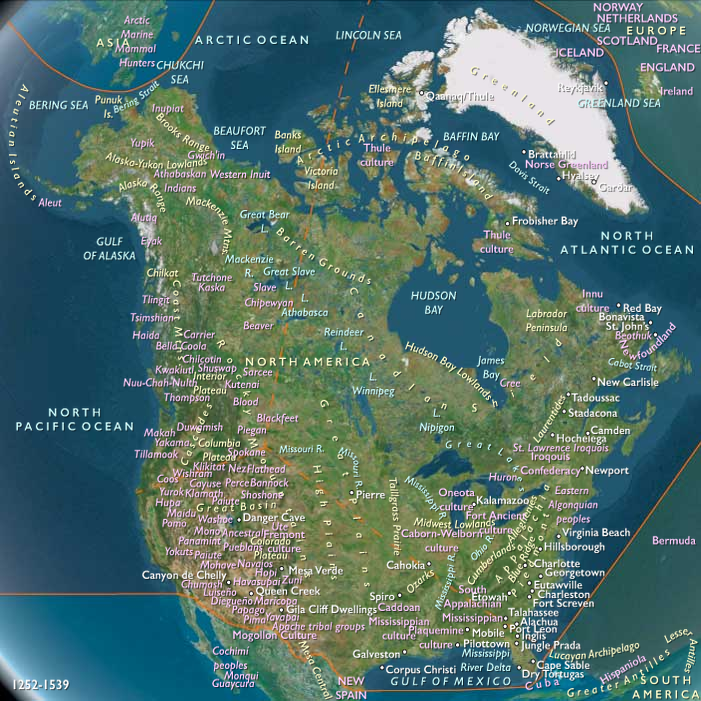
Subregions
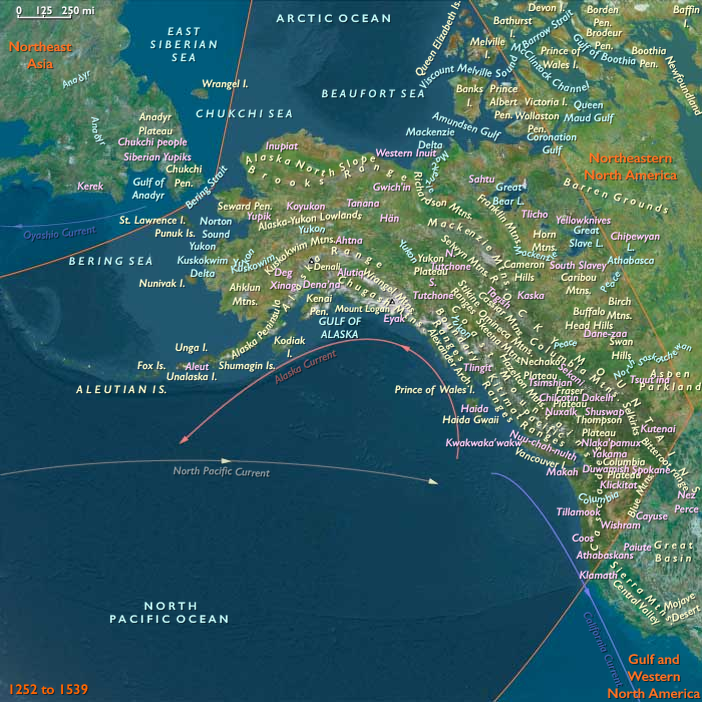
Years: 1396 - 1539
Groups
- Kwakwakaʼwakw
- Haida people
- Tlingit people
- Athabaskans, or Dene, peoples
- Klamath (Amerind tribe)
- Nuu-chah-nulth people (Amerind tribe; also formerly referred to as the Nootka, Nutka, Aht, Nuuchahnulth)
- Tsimshian
- Eyak
- Aleutian Tradition
- Thule Tradition, Punuk and Birnirk Stages
Commodoties
Subjects
- Commerce
- Watercraft
- Sculpture
- Painting and Drawing
- Environment
- Decorative arts
- Mayhem
- Government
- Custom and Law
- Technology
Regions
Subregions