Northwestern North America (6,093 – 4,366 BCE)…
6093 BCE to 4366 BCE
Northwestern North America
(6,093 – 4,366 BCE) Middle Holocene — Big Weirs, Big Villages, and Plank-House Precursors
Geographic and Environmental Context
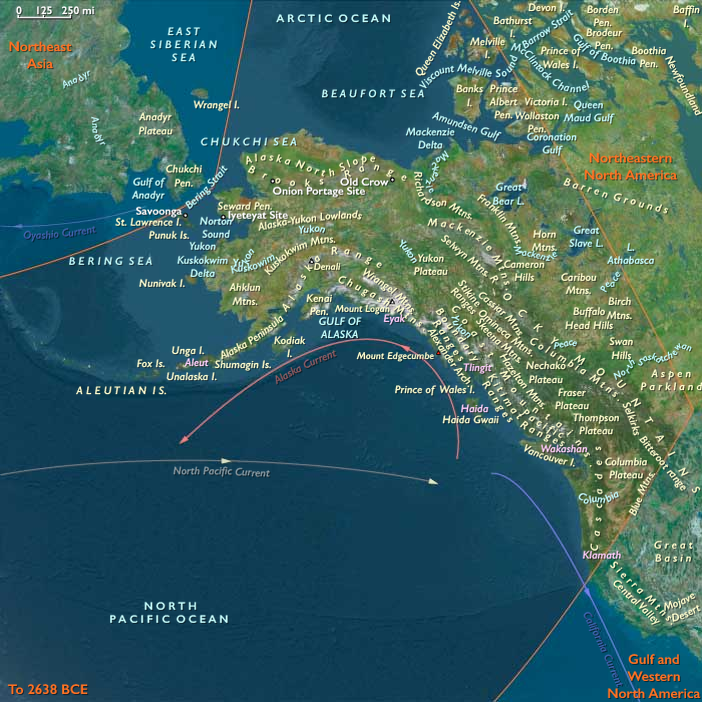
Northwestern North America includes Alaska, western Canada (Alberta, British Columbia, Yukon and Northwest territory and Nunavut west of 110°W) Alaska, Washington State, northern Idaho, and the northwestern portions of Montana, Oregon, and California.
-
Salmon-rich Fraser–Columbia canyons; sheltered Haida Gwaii bays; Cook Inlet–Kenai river mouths.
Climate & Environmental Shifts
-
Hypsithermal warmth: long ice-free seasons, productive kelp forests; periodic interior dry spells managed by river focus.
Subsistence & Settlement
-
Large pit-house villages on the interior plateaus; substantial coastal house platforms; higher population densities at canyon fisheries.
-
Intertidal harvesting scaled up (clam gardens in some locales, shellfish management).
Technology & Material Culture
-
Expanded net-weir complexes; standardized ground-stone adzes and chisels for heavy carpentry; hafted slate knives on outer coasts.
-
Early plank-house forms emerged in some coastal nodes; composite toggling harpoons refined.
Movement & Interaction Corridors
-
Coastwise canoe routes tied island archipelagos; interior riverine exchange in obsidian (e.g., Mount Edziza), ochre, and fine grained lithics.
Cultural & Symbolic Expressions
-
Feasting middens; shell bead caches; display of rare lithics and labrets in some Gulf of Alaska contexts indicate rising prestige economies.
Environmental Adaptation & Resilience
-
High-capacity storage, diversified procurement, and territorial tenure over weirs and berry patches stabilized communities across climate swings.
Transition
By 4,366 BCE, semi-sedentary salmon economies and woodworking fluency set the stage for fully ranked coastal societies.
Images

Northwestern North America in the Middle Holocene
Groups
Topics
Subjects
Regions
Northern North America
View →Subregions