Event
The continued influx of nomads from the…
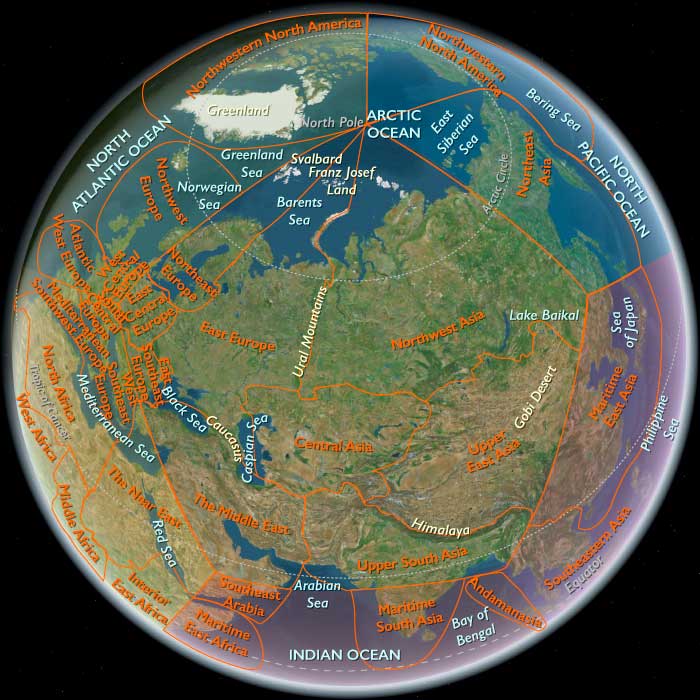
The continued influx of nomads from the northern steppes has brought a new group of people into Central Asia in the ninth century: the Turks, who live in the great grasslands stretching from Mongolia to the Caspian Sea.
Introduced mainly as slave soldiers to the Samanid Dynasty, these Turks served in the armies of all the states of the region, including the Abbasid army.
As the Samanids begin to lose control of Mawarannahr and northeastern Iran in the late tenth century, some of these soldiers come to positions of power in the government of the region, and eventually they establish their own states.
With the emergence of a Turkic ruling group in the region, other Turkic tribes begin to migrate to Mawarannahr.
The first of the Turkic states in the region is the Ghaznavid Empire, established in the last years of the tenth century.
The Ghaznavid state, which rulez lands south of the Amu Darya, is able to conquer large areas of Iran, Afghanistan, and northern India during the reign of Sultan Mahmud.
The dominance of Ghazna is curtailed, however, when large-scale Turkic migrations bring in two new groups of Turks who undermined the Ghaznavids.
In the east, these Turks are led by the Kara-Khanids, who conquer the Samanids.
The Seljuk family then leads Turks into the western part of the region, conquering the Ghaznavid territory of Khwarezm.
The Seljuks, attracted by the wealth of Central Asia as were earlier groups, dominate a wide area from Asia Minor to the western sections of Mawarannahr, in Afghanistan, Iran, and Iraq in the eleventh century.
The Seljuk Empire now splits into states ruled by various local Turkic and Iranian rulers.
The culture and intellectual life of the region continues unaffected by such political changes, however.
Turkic tribes from the north continued to migrate into the region during this period.
-
{# Image navigates to the detail page; the magnifying-glass chip is the only Fancybox lightbox trigger (kept a separate sibling — anchors can't nest). #}
 The Great Crossroads
World
-
{# Image navigates to the detail page; the magnifying-glass chip is the only Fancybox lightbox trigger (kept a separate sibling — anchors can't nest). #}
 Central Asia
Region
-
{# Image navigates to the detail page; the magnifying-glass chip is the only Fancybox lightbox trigger (kept a separate sibling — anchors can't nest). #}
 Central Asia
Subregion