Royalists in Paris declare a rebellion against…
October 1795 CE
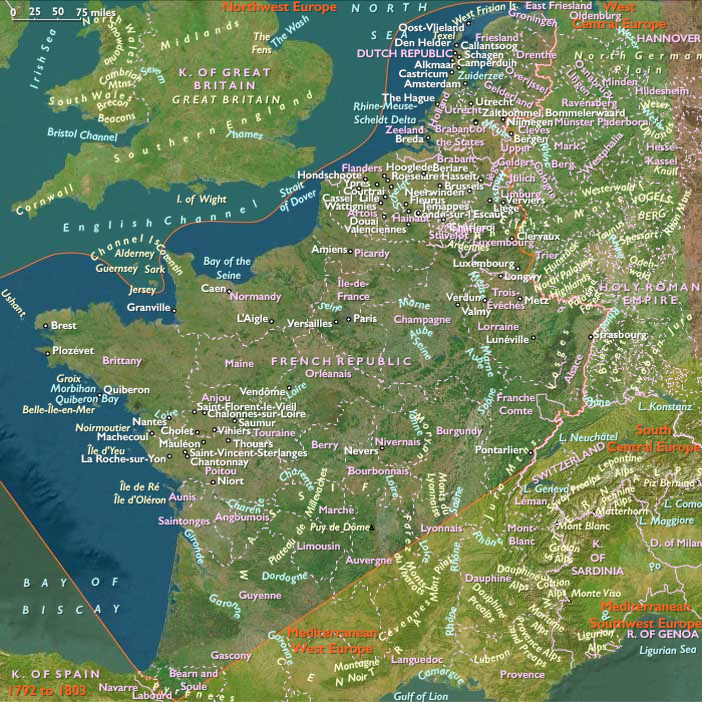
Royalists in Paris declare a rebellion against the National Convention on October 3 after they are excluded from a new government, the Directory.
Barras, one of the leaders of the Thermidorian Reaction, knows of Bonaparte's military exploits at Toulon and gives him command of the improvised forces in defense of the Convention in the Tuileries Palace.
Bonaparte had witnessed the massacre of the King's Swiss Guard there three years earlier and realizes artillery will be the key to its defense.
He orders a young cavalry officer, Joachim Murat, to seize large cannons and uses them to repel the attackers on October 5, 1795—13 Vendémiaire An IV in the French Republican Calendar.
One thousand four hundred royalists die, and the rest flee.
He had cleared the streets with "a whiff of grapeshot", according to the nineteenth century historian Thomas Carlyle in The French Revolution: A History (Johnson, P.; Napoleon: A life (2002) Penguin Books).
The defeat of the Royalist insurrection extinguishes the threat to the Convention and earns Bonaparte sudden fame, wealth, and the patronage of the new Directory; Murat will become his brother-in-law and one of his generals.
Bonaparte is promoted to Commander of the Interior and given command of the Army of Italy.
Locations
Groups
Topics
Commodities
Subjects
Regions
West Europe
View →Subregions