Although a revered figure in Sinhalese annals,…
1108 CE to 1251 CE
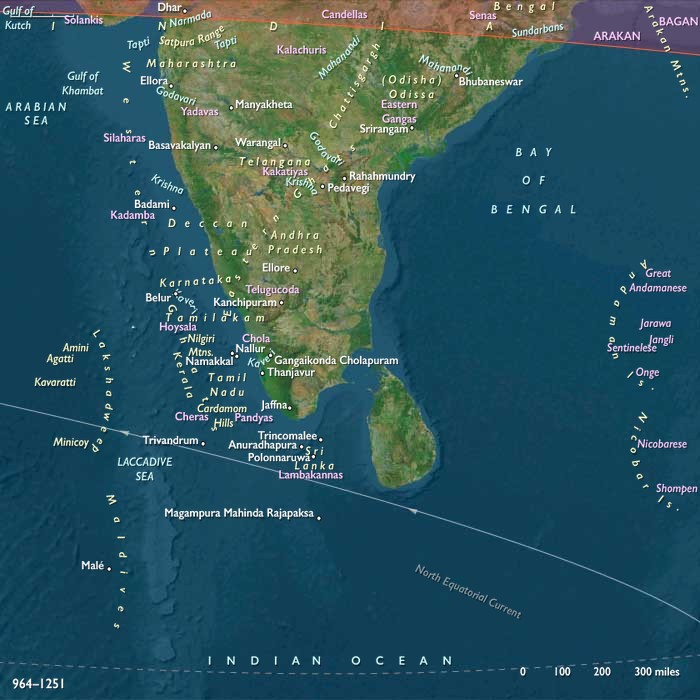
Although a revered figure in Sinhalese annals, Parakramabahu is believed to have greatly strained the royal treasury and contributed to the fall of the Sinhalese kingdom.
The post-Parakramabahu history of Polonnaruwa describes the destruction of the city twenty-nine years after his death and fifteen rulers later.
For the decade following Parakramabahu's death, however, a period of peace and stability ensues during the reign of King Nissanka Malla (1187-97).
During Nissanka Malla's rule, the Brahmanic legal system comes to regulate the Sinhalese caste system.
Henceforth, the highest caste stratum becomes identified with the cultivator caste, and land ownership confers high status.
Occupational caste becomes hereditary and regulates dietary and marriage codes.
At the bottom of the caste strata is the Chandala, who correspond roughly to the Indian untouchable.
It is during this brief period that it becomes mandatory for the Sinhalese king to be a Buddhist.
Groups
Commodities
Subjects
Regions
South Asia
View →Subregions