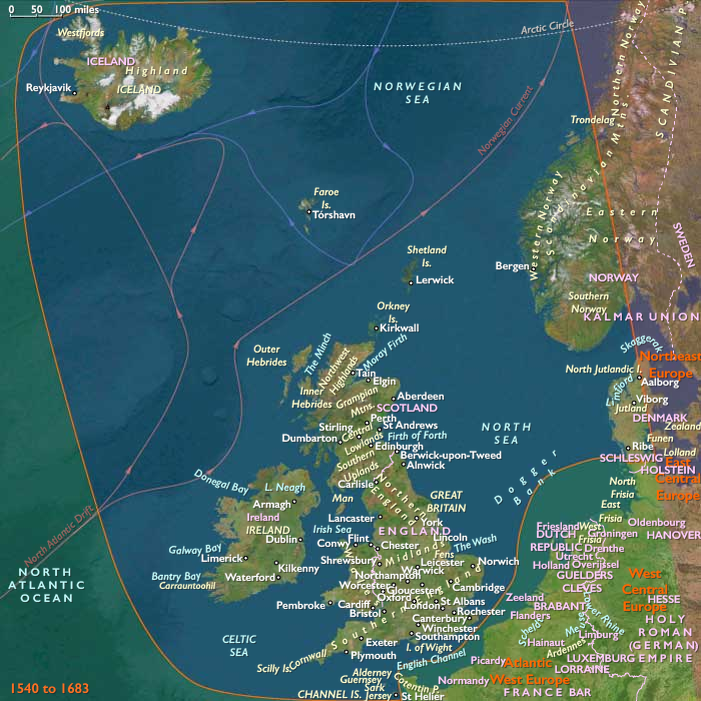
Parliament has long suspected the Scots' intentions,…
July 1650 CE
Parliament has long suspected the Scots' intentions, and decides to invade Scotland.
Sir Thomas Fairfax, the Army's commander, disagrees with this strategy and resigns.
Oliver Cromwell is made General in his place.
John Lambert is appointed Sergeant Major General and the Army's second-in-command.
As Cromwell leads his army over the border at Berwick-upon-Tweed in July 1650, the Scottish general, Sir David Leslie, decides that his best strategy is to avoid a direct conflict with the enemy.
Although his army comprises some twelve thousand soldiers outnumbering the English army of eleven thousand men and most of the Scots soldiers are well-trained, they are poorly armed compared to their English counterparts.
Leslie chooses therefore to shelter his troops behind strong fortifications around Edinburgh and refuses to be drawn out to meet the English in battle.
Furthermore, between Edinburgh and the border, Leslie has adopted a scorched earth policy thus forcing Cromwell to obtain all of his supplies from England, most arriving by sea through the port at Dunbar.
Topics
Commodities
Subjects
Regions
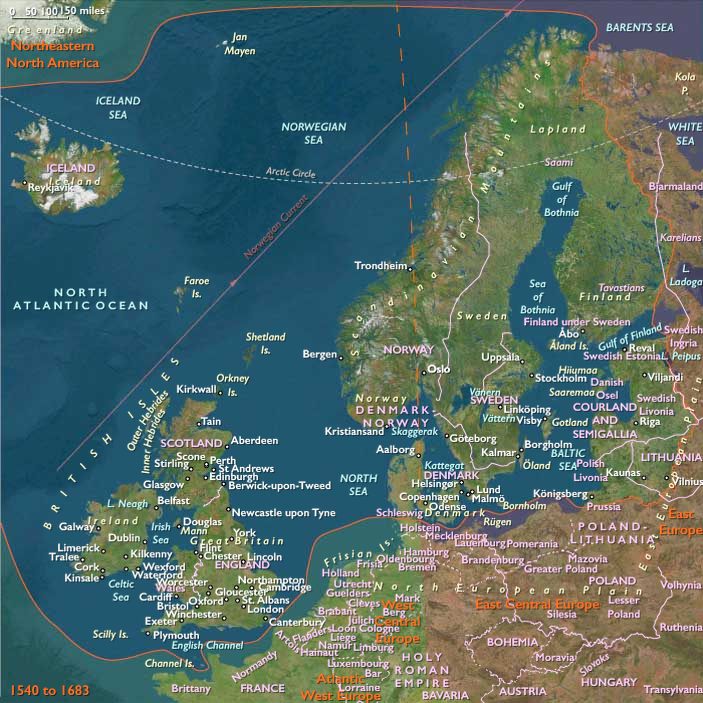
North Europe
View →Subregions