The Peace Settlement and Aftermath of the…
October 70 CE
The Peace Settlement and Aftermath of the Batavian Revolt (70 CE)
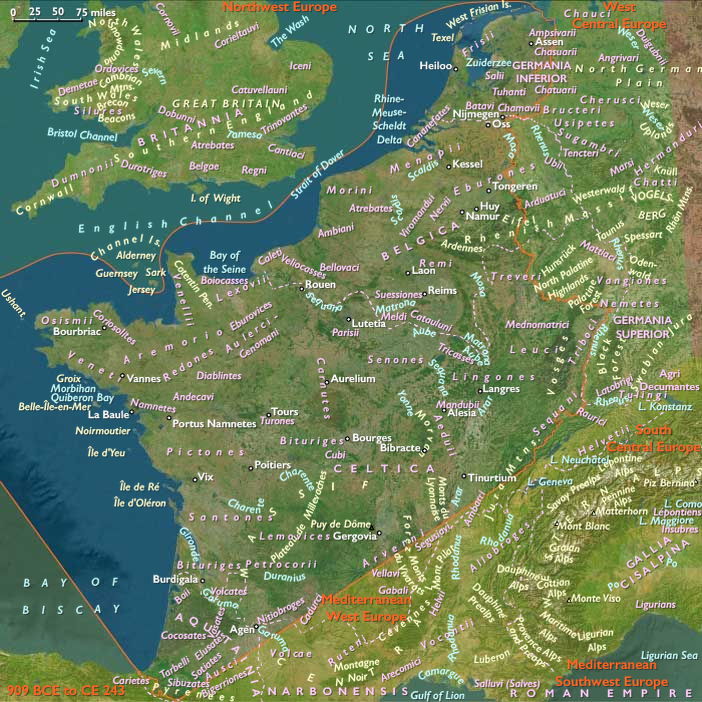
Following the Roman victory over the Batavian rebels, peace talks were held to negotiate the reincorporation of Batavia into the Roman Empire. These discussions took place at a bridge built over the River Nabalia, where the warring parties met on opposite sides.
While the exact terms of the agreement remain unknown, the outcome decisively reasserted Roman authority while still allowing the Batavians to retain some degree of self-governance.
Terms of the Peace Agreement
- The Batavians were forced to renew their alliance with Rome, ending their brief independence.
- They were required to levy another eight auxiliary cavalry units for the Roman military, reinforcing their status as a key source of elite auxiliary troops.
- Their capital, Nijmegen (Ulpia Noviomagus Batavorum), was destroyed, and its inhabitants were forced to rebuild a new settlement a few kilometers downstream in a defenseless position—a clear sign of Roman control over their territory.
- To secure the peace, the Tenth Legion (Legio X Gemina) was permanently stationed nearby, ensuring that another revolt would not occur.
The Fate of Civilis: Mystery and Speculation
- Julius Civilis disappears from historical records after the peace negotiations.
- His fate remains uncertain—possibilities include:
- Execution by the Romans as a warning to other potential rebels.
- Exile or forced retirement, similar to how Rome had dealt with past rebellious leaders.
- A possible political arrangement, in which he may have been allowed to live in obscurity in Batavia under Roman watch.
Long-Term Impact of the Batavian Revolt
- The Batavians remained part of the Roman Empire, but their autonomy was significantly reduced.
- Roman military presence in the region was strengthened, with permanent garrisons to prevent future uprisings.
- The rebellion demonstrated Rome’s reliance on auxiliary troops, but also the risks of mistreating subject peoples, a lesson that later emperors would take into account.
Though ultimately unsuccessful, the Batavian Revolt (69–70 CE) remains one of the most significant uprisings against Roman rule, highlighting both the resilience of frontier tribes and the strategic dominance of the Roman military.
Locations
People
Groups
Topics
Commodities
Subjects
Regions
West Europe
View →Subregions