Event
Subcontinental South America (1540–1683 CE): Mapuche Resistance,…
Subcontinental South America (1540–1683 CE): Mapuche Resistance, Colonial Islands, and a Contested Southern Frontier
Geographic and Environmental Context
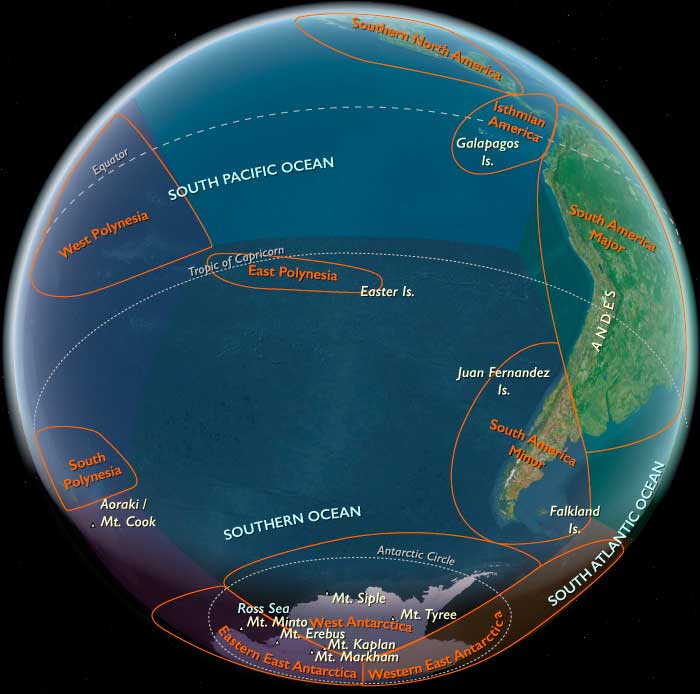
The sixteenth and seventeenth centuries divided Subcontinental South America more sharply between colonial footholds and vast autonomous Indigenous territories. Spanish towns and farms developed in central and southern Chile, Chiloé became a durable colonial island province, and European ships increasingly traversed southern waters. Yet Araucanía, Patagonia, and most of Tierra del Fuego remained beyond effective colonial occupation.
Societies and Political Development
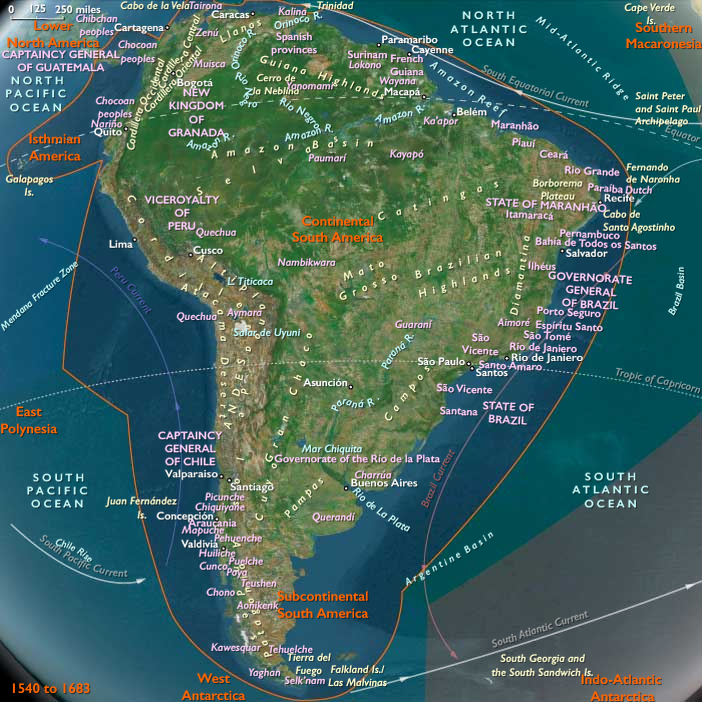
The Spanish Empire attempted to extend control southward after the founding of Santiago in 1541. Settlements including Concepción and Valdivia became bases for expansion into Indigenous territories.
Reche-Mapuche communities resisted encomienda, forced labor, territorial seizure, and military occupation. Warfare intensified throughout the sixteenth century. Indigenous fighters rapidly adopted horses, iron, European livestock, and other introduced technologies without surrendering political autonomy.
The Spanish defeat at Curalaba in 1598 triggered a major colonial retreat. Several settlements south of the Bío-Bío were destroyed or abandoned, and Araucanía remained largely beyond ordinary Spanish control thereafter.
Chiloé followed a different trajectory. Castro, founded in 1567, became the center of a poor but enduring colonial province in which Spanish settlers, Huilliche communities, maritime labor, agriculture, fishing, and mission activity developed together.
Valdivia, reoccupied and fortified by Spain in the seventeenth century, became an important strategic stronghold on the southern Pacific coast.
Productive Landscape and Economy
In colonial districts, wheat, cattle, horses, sheep, pigs, and European fruit crops joined older American foods and land-use systems. Mapuche communities incorporated livestock and introduced crops selectively, creating mixed Indigenous economies rather than simply adopting Spanish agriculture.
In Patagonia, hunting remained dominant. Horses began spreading southward and eastward, initiating changes that would become far more important in the following age.
Fuegian and western-channel communities continued maritime hunting, fishing, shellfish gathering, and terrestrial foraging with limited interference from Europeans.
Juan Fernández entered European maritime use as a provisioning island, and introduced animals began changing its ecology.
Movement and Interaction Corridors
The Bío-Bío became a contested frontier of warfare, exchange, diplomacy, and movement. Colonial routes linked Santiago, Concepción, Valdivia, and Chiloé, while Indigenous routes continued across Araucanía and the Andes.
European ships increasingly used the Strait of Magellan and Cape Horn routes, but maritime passage did not produce extensive settlement along the Patagonian and Fuegian coasts.
Technology and Material Culture
Mapuche adoption of the horse was one of the age's most consequential technological changes. Mounted movement, metal-tipped weapons, captured or traded iron tools, and European livestock became incorporated into Indigenous systems.
Spanish settlements introduced masonry, timber construction, mills, carts, firearms, sailing ships, and fortified defenses.
Older Indigenous pottery, woodworking, textile production, hunting technologies, canoes, and household practices remained widespread.
Religion and Cultural Expression
Catholic institutions accompanied Spanish settlement, especially in established towns and Chiloé. Missionaries sought to extend Christianity beyond colonial enclaves but encountered societies with durable religious traditions of their own.
Historically documented Mapuche ritual specialists known as machi and communal ceremonial traditions became increasingly visible in colonial accounts. Their spiritual system linked health, community, land, and powerful beings associated with the natural world.
Adaptation and Resilience
Mapuche survival depended partly on political decentralization, which prevented the defeat of one leader or settlement from ending resistance. Horses and introduced livestock strengthened mobility and economic flexibility.
Chiloé developed resilience through mixed farming, fishing, timber use, maritime transport, and relatively small settlements.
Patagonian and Fuegian communities retained mobility as their principal defense against local scarcity and outside pressure.
Legacy of the Age
By 1683, colonial expansion had not produced a uniformly Spanish far south. Instead, Subcontinental South America contained a durable frontier: Spanish and Huilliche Chiloé, fortified Valdivia, colonial central Chile, autonomous Mapuche Araucanía, overwhelmingly Indigenous Patagonia, and Indigenous-controlled Tierra del Fuego. Colonial intrusion had become permanent, but conquest remained incomplete.

-
{# Image navigates to the detail page; the magnifying-glass chip is the only Fancybox lightbox trigger (kept a separate sibling — anchors can't nest). #}
 The Ends of the Earth
World
-
{# Image navigates to the detail page; the magnifying-glass chip is the only Fancybox lightbox trigger (kept a separate sibling — anchors can't nest). #}
 South America
Region
-
{# Image navigates to the detail page; the magnifying-glass chip is the only Fancybox lightbox trigger (kept a separate sibling — anchors can't nest). #}
 Subcontinental South America
Subregion