Event
Subcontinental South America (1828–1971 CE): Territorial Conquest,…
Subcontinental South America (1828–1971 CE): Territorial Conquest, Sheep Frontiers, Ports, and Industrial Integration
Geographic and Environmental Context
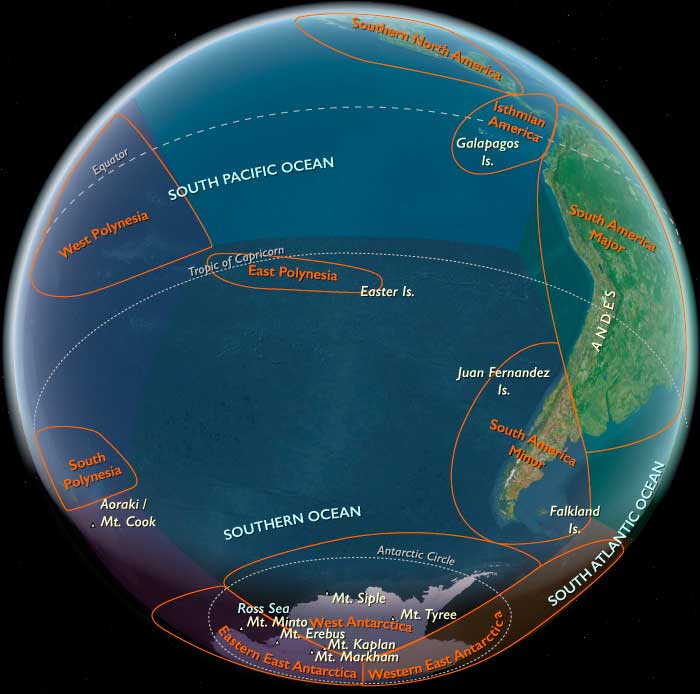
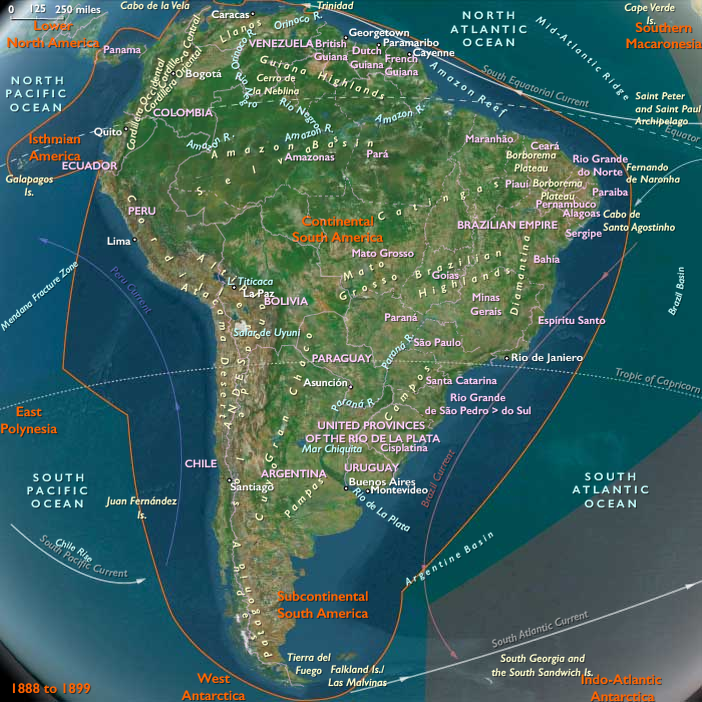
Between 1828 and 1971, Subcontinental South America underwent its most disruptive transformation. Territories long governed through Indigenous mobility and local autonomy were incorporated into Chilean, Argentine, and British-controlled political systems. Sheep ranches spread across Patagonia, Tierra del Fuego, and the Falkland/Malvinas Islands; ports expanded along strategic coasts; railways, telegraphs, roads, oil fields, and industrial shipping connected the far south to global markets.
Yet geographical differences persisted. Wet western fjords remained unlike the eastern steppe, and even modern infrastructure could not erase the logistical difficulties created by mountains, islands, wind, snow, and enormous distance.
Societies and Political Development
The Republic of Chile gradually expanded into Araucanía during the nineteenth century. Military occupation intensified from the 1860s and culminated in the early 1880s with the destruction of Mapuche political autonomy, large-scale land dispossession, settlement by Chileans and European immigrants, and confinement of many Mapuche communities to reduced territories.
The Argentine Republic simultaneously asserted control over Patagonia. Military campaigns culminating in the Conquest of the Desert during the 1870s and 1880s killed, captured, displaced, and dispossessed large numbers of Indigenous people while transferring enormous territories to the state and private landholders.
Tierra del Fuego became another frontier of violent incorporation. Sheep ranchers, gold seekers, missionaries, and state officials arrived in growing numbers from the 1880s. Selk’nam communities suffered organized killing, land loss, disease, forced relocation, and demographic collapse on a genocidal scale. Yaghan/Yámana and Kawésqar peoples likewise experienced catastrophic population decline and disruption through disease, mission concentration, settlement, and loss of territory.
The Falkland/Malvinas Islands came under continuous British administration after 1833 while Argentina maintained its sovereignty claim. A permanent settler society developed around sheep farming and maritime connections.
Productive Landscape and Economy
Sheep ranching became one of the age's dominant economic systems. Large estancias divided open grasslands with fences, tracks, corrals, and shearing infrastructure. Wool connected Patagonia, Tierra del Fuego, and the Falkland/Malvinas Islands to international markets.
Refrigeration later strengthened meat exports. Punta Arenas expanded as a commercial and provisioning center on the Strait of Magellan, while Ushuaia developed as an Argentine settlement and port.
Southern Chile experienced agricultural colonization, forestry, and growing market integration. Railways and roads linked parts of Araucanía and Patagonia with ports and larger cities.
Petroleum added a new industrial layer after its discovery at Comodoro Rivadavia in 1907. Oil development spread across parts of Argentine Patagonia and later Magallanes and Tierra del Fuego. Fishing, coal mining, forestry, and maritime commerce diversified the economy further.
Movement and Interaction Corridors
Steam navigation transformed the Strait of Magellan into a major international route before the opening of the Panama Canal in 1914. Punta Arenas benefited from shipping, repair, provisioning, and regional trade.
Railways, telegraphs, and later motor roads connected ranches, ports, resource districts, and towns. Coastal shipping remained indispensable where mountains and fjords prevented continuous roads.
Air transport appeared during the twentieth century, reducing travel times across previously isolated districts.
Technology and Material Culture
The new frontier landscape included wire fences, shearing sheds, wool presses, warehouses, steamships, docks, telegraph lines, railways, corrugated-metal buildings, motor vehicles, and industrial machinery.
Oil extraction introduced derricks, pumps, pipelines, storage tanks, and specialized worker settlements. Refrigerated shipping altered the export economy.
Older systems persisted beneath these changes: horses, carts, wooden boats, household farming, small fishing craft, traditional textiles, hunting knowledge, and Indigenous material practices.
Religion and Cultural Expression
Missionization intensified during nineteenth-century territorial expansion. Catholic and Protestant missions entered Patagonia and Tierra del Fuego, often concentrating Indigenous populations in ways that contributed unintentionally or directly to disease transmission and social disruption.
Indigenous cultural practices nevertheless persisted. Mapuche language, ritual, weaving, oral history, and communal organization survived territorial reduction. Southern Indigenous descendants maintained memories and identities despite severe population losses.
Settler populations developed new regional cultures shaped by Chilean, Argentine, British, Croatian, Welsh, German, and other immigrant communities.
Adaptation and Resilience
The new economies imposed heavy ecological costs. Sheep grazing altered native grasslands; forests were cleared; introduced species transformed islands; fisheries intensified; and oil development created new industrial environments.
Indigenous resilience increasingly depended on preserving community organization and cultural memory within state-controlled landscapes.
Settler communities adapted to severe winters, long transport routes, economic volatility, and geographical isolation through cooperative infrastructure, storage, repair, and diversified local production.
Legacy of the Age
By 1971, the far south had been comprehensively incorporated into national and global systems. Ranches, ports, oil fields, roads, railways, telecommunication, aviation, and permanent towns now overlaid older Indigenous landscapes. Yet state incorporation had come through enormous violence and dispossession, and Indigenous societies survived rather than disappearing.
Subcontinental South America had become a modern resource frontier—but still one governed by the environmental constraints of steppe, fjord, island, mountain, and sea.

-
{# Image navigates to the detail page; the magnifying-glass chip is the only Fancybox lightbox trigger (kept a separate sibling — anchors can't nest). #}
 The Ends of the Earth
World
-
{# Image navigates to the detail page; the magnifying-glass chip is the only Fancybox lightbox trigger (kept a separate sibling — anchors can't nest). #}
 South America
Region
-
{# Image navigates to the detail page; the magnifying-glass chip is the only Fancybox lightbox trigger (kept a separate sibling — anchors can't nest). #}
 Subcontinental South America
Subregion