The Love Affair of Peter Abelard and…
1119 CE
The Love Affair of Peter Abelard and Heloise: Passion, Scandal, and Tragedy (1118–1119 CE)
By 1118, Peter Abelard, one of the most brilliant and celebrated philosophers of his time, found his life irrevocably altered by a passionate and tragic love affair with Héloïse, the highly educated and intellectually gifted niece of Canon Fulbert of Notre-Dame. Their relationship, which began as an academic mentorship, quickly became a clandestine romance—one that would lead to public disgrace, violence, and lasting separation.
The Affair and Its Consequences
- Abelard, seeking an opportunity to be closer to Héloïse, persuaded Fulbert to let him move into his house, claiming that he could not afford lodging elsewhere while continuing his studies.
- He offered to tutor Héloïse, but their lessons soon turned into a passionate love affair, conducted in secret.
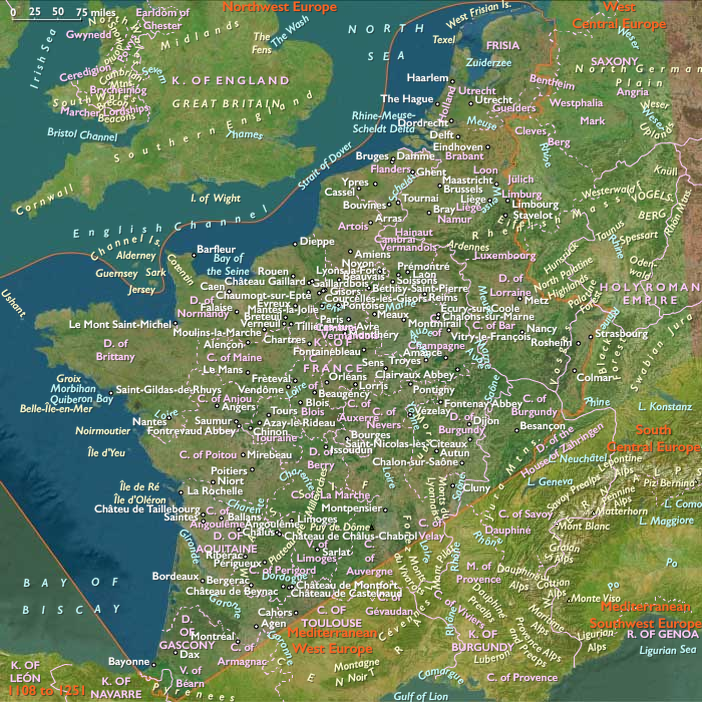
- When Héloïse became pregnant, Abelard moved her away from Fulbert for her safety, sending her to his sister’s home in Brittany, where she gave birth to their son, whom she named Astrolabe.
The name Astrolabe, an instrument used for astronomical calculations, reflected Abelard’s scholarly background, but little is known about his fate.
- He is mentioned only in passing in Abelard’s later writings and the necrology of the Paraclete, recording his death on October 29 or 30, though the year remains unknown.
- Peter the Venerable, in a later letter to Héloïse, suggested that he would try to secure a position for Astrolabe in a great church, implying that the child had sought clerical office at some point.
Public Disgrace and the Revenge of Fulbert (1119 CE)
When Fulbert learned of the affair, he publicly exposed the scandal. Seeking revenge for his dishonor, he arranged for Abelard’s brutal castration, an act that permanently ended Abelard’s worldly ambitions.
- The disgrace was devastating; the once-revered philosopher became an object of public humiliation.
- In the aftermath, Héloïse entered a convent, taking vows as a nun, while Abelard became a Benedictine monk, dedicating himself entirely to theological studies and writing.
Despite their physical separation, Abelard and Héloïse maintained a lifelong intellectual and emotional correspondence, their letters revealing deep love, philosophical reflection, and spiritual struggle. Their tragic romance remains one of the most enduring and poignant stories of medieval literature and intellectual history.
Locations
Groups
Regions

West Europe
View →Subregions