
Philip H. Diehl, in mounting a fan…
February 1887 CE
Philip H. Diehl, in mounting a fan blade on a sewing machine motor and attaching it to the ceiling, inventing the ceiling fan, which he patents in 1887, a few years after the invention of the electric fan by Schuyler Skaats Wheeler in 1882.
Diehl, born in Dalsheim, Germany, had emigrated in July 1868 to New York City, where he had worked in several machine shops before finding work as an apprentice with the Singer Manufacturing Company.
He had been transferred to Chicago in 1870 or 1871 and had worked at the Remington Machine Company until 1875, losing all of his possessions in the Great Chicago Fire of 1871 and marrying Emilie Loos in Chicago in 1873.
Diehl had moved in 1875 to Elizabeth, New Jersey and had taken charge of experimental work improving sewing machines at the Singer plant.
His daughter, Clara Elvira, was born April 2, 1876.
While working at Singer in Elizabeth, Diehl had experimented at work and n the basement of his home on Orchard Street.
This had resulted in several inventions.
Together with Lebbeus B. Miller, Diehl has invented and patented the "oscillating shuttle" bobbin driver design and a sewing machine build around it.
Diehl's work at Singer to improve the sewing machine leads to developments in electric motors, first to power sewing machines and later for other uses as well.
In 1884, at the Franklin Institute in Philadelphia, Pennsylvania, Diehl had demonstrated a dynamo, modeled after his smaller motor, which generates a current for arc lamps, sewing machine motors and incandescent lamps, all covered by his patents.
The judicial committee at the exhibition had judged it to be one of the best dynamos exhibited.
Diehl has invented a lamp that is different from the incandescent electric lamp patented by Thomas Edison in 1879.
Diehl's lamp has no lead-in wires.
In 1882, Diehl had obtained the first patent on this induction incandescent lamp.
The base of the lamp contains a wire coil that couples with a primary coil in the lamp socket, causing current to flow through the lamp without the need for lead-in wires.
Two additional patents had been granted in 1883, followed by patents for electrical lighting systems in 1885 and 1886.
Diehl had erected the city's first arc light in front of the Corey Building, which still stands at 109 Broad Street.
Diehl's invention of the induction lamp is used by George Westinghouse to force royalty concessions from Thomas Edison.
The Westinghouse Company buys Diehl's patent rights for twenty-five thousand dollars.
Although Diehl's lamp cannot be made and sold at a price to compete with the Edison lamp, the Westinghouse Company uses the Diehl bulb to force the holders of the Edison patent to charge a more reasonable rate for the use of the Edison patent rights, thus lowering the price of the electric lamp.
Groups
Topics
Regions
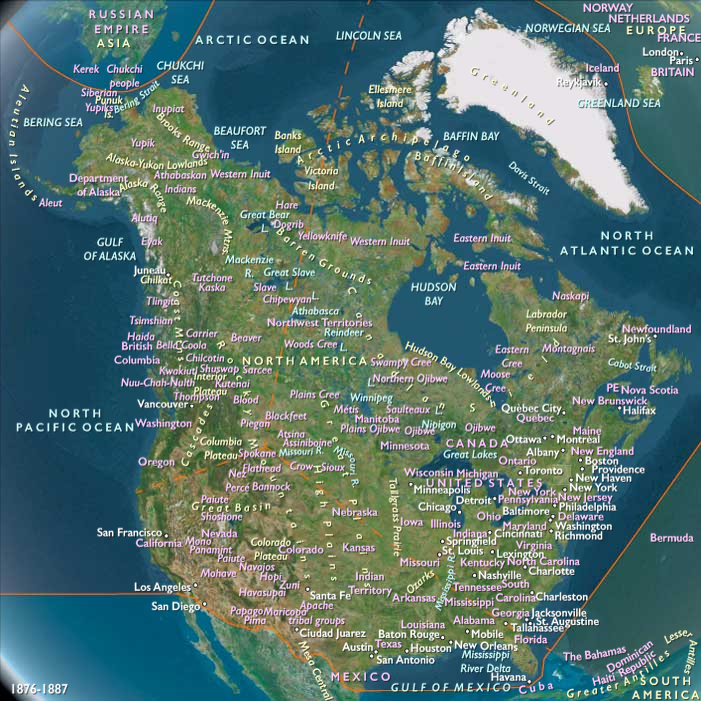
Northern North America
View →Subregions
