The Tomb of Philip the Bold at…
1404 CE
The Tomb of Philip the Bold at the Chartreuse de Champmol (1378–1404)
In 1378, Philip the Bold, Duke of Burgundy, acquired the domain of Champmol near Dijon to build a Chartreuse (Carthusian monastery) between 1383 and 1388. Intended as his dynastic burial site, the Chartreuse de Champmol became a monumental artistic project, bringing together some of the most skilled sculptors and painters of the Burgundian court.
I. The Chartreuse de Champmol: Philip’s Burgundian Mausoleum
- Philip planned the monastery as the burial place for himself and his successors, rivaling the necropolis of French kings at Saint-Denis.
- After his death, the monastery was converted into a hospital, though its original artistic elements and tombs were preserved.
II. The Tomb of Philip the Bold: A Masterpiece of Burgundian Sculpture
- The construction of Philip’s tomb spanned several decades and was completed by some of the greatest sculptors of the time:
- Jean de Marville (1381–1389) – Began the design and sculptural elements.
- Claus Sluter (1390–1406) – Expanded and enriched the monumental sculpture, emphasizing naturalism and depth.
- Claus de Werve (1406–1410) – Completed additional sculptural details.
- The gisant (recumbent effigy) of Philip is considered one of the finest examples of medieval French sculpture, showcasing the transition from Gothic idealization to Renaissance naturalism.
- Jean Malouel, Philip’s court painter, was responsible for polychromy and gilding, enhancing the tomb’s luxurious appearance.
III. Philip’s Burial at the Chartreuse de Champmol (1404)
- After his death on April 27, 1404, Philip’s body was eviscerated, embalmed, and placed in a lead coffin.
- On June 16, 1404, his remains were deposited in the choir of the Chartreuse de Champmol, where his tomb became a central feature of Burgundian dynastic identity.
IV. Impact and Legacy
- The tomb of Philip the Bold set a new standard for princely burial monuments, influencing Burgundian and French funerary art for generations.
- The Chartreuse de Champmol became a symbol of Burgundian power and artistic patronage, reinforcing Dijon’s status as a cultural and political center.
- Although the monastery was later repurposed as a hospital, Philip’s magnificent tomb survives as a landmark of medieval sculpture, now preserved at the Musée des Beaux-Arts in Dijon.
The tomb of Philip the Bold at the Chartreuse de Champmol remains one of the greatest achievements of medieval Burgundian art, showcasing the collaboration of master sculptors and painters under Philip’s ambitious artistic vision.
Locations
Regions
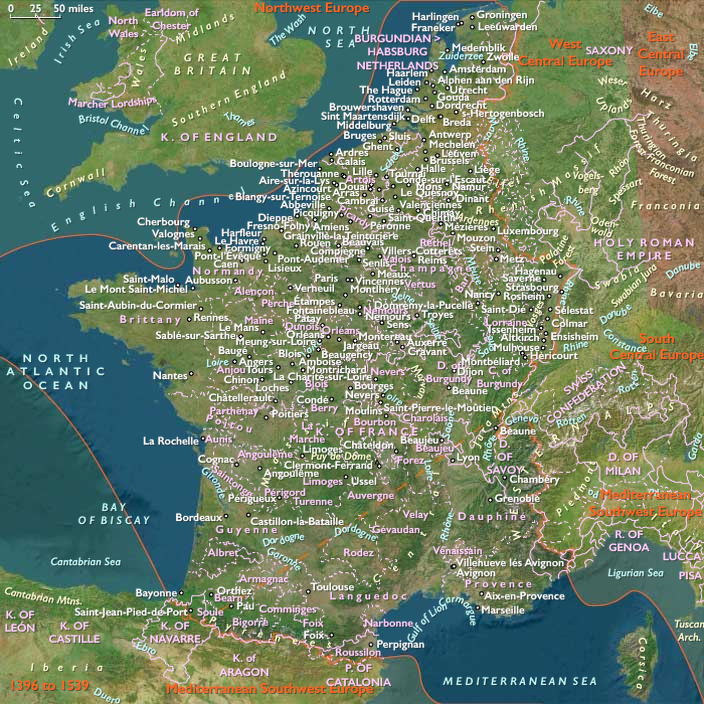
West Europe
View →Subregions