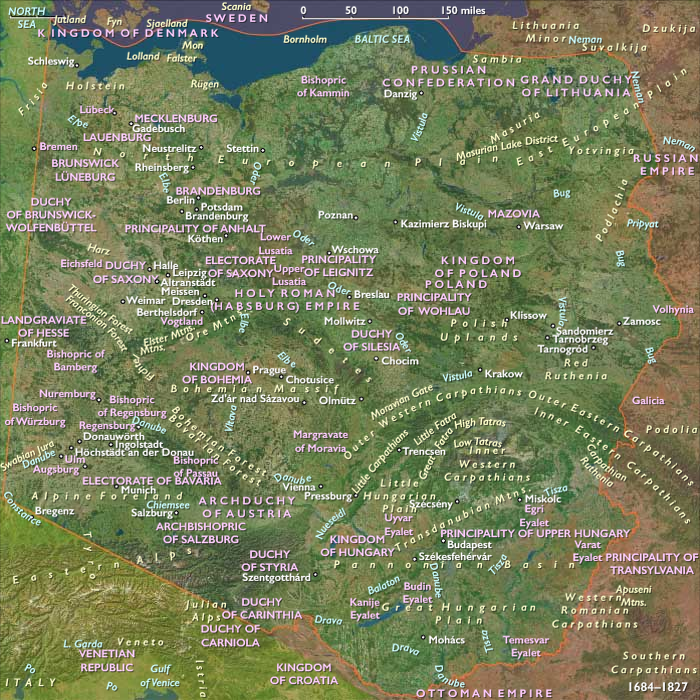
Kosciuszko marches back to Kraków and makes…
April 1794 CE
After the battle, Kościuszko parades before his troops in a sukmana, a traditional attire worn in Lesser Poland, in honor of the bravery of the peasants, whose charge had ensured the quick capture of the Russian artillery.
He also praises Wojciech Bartosz Głowacki, a peasant who was the first to capture a cannon, smothering its fuse with his hat before it fired.
In return he receives an award of nobility, his freedom, a tract of land and is made standard-bearer.
The victory will subsequently be promoted in Poland as a major success and will help in spreading the Kościuszko Uprising to other areas of Poland and instigating the Warsaw Uprising of 1794.
Also, the participation of peasant volunteers will come to be seen by many as the starting point of the political evolution of Polish peasantry from serfs to equally entitled citizens of the nation.
Locations
Groups
Topics
Regions
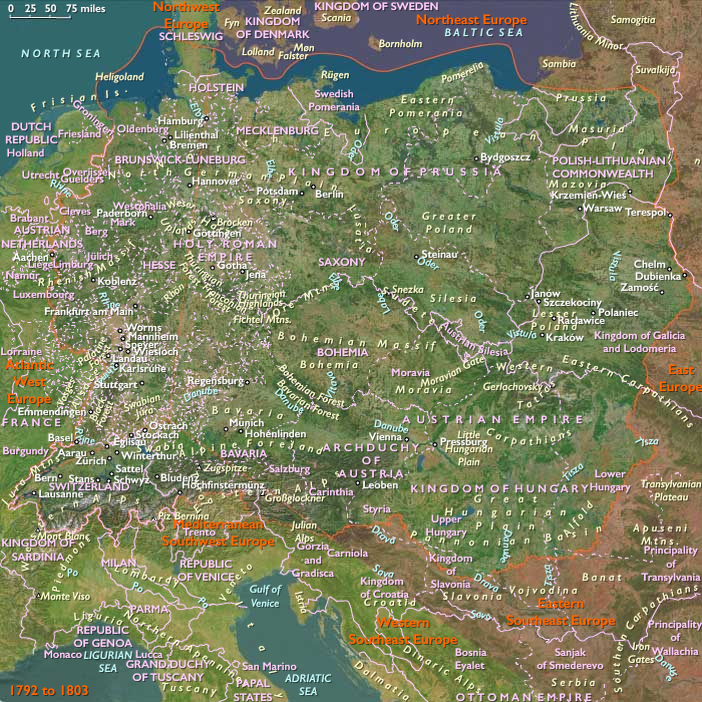
Central Europe
View →Subregions