Polynesia (6,093–4,366 BCE) Middle Holocene — Reef…
6093 BCE to 4366 BCE
Polynesia (6,093–4,366 BCE)
Middle Holocene — Reef Expansion, Oceanic Stability, and the Unpeopled Pacific
Geographic & Environmental Context
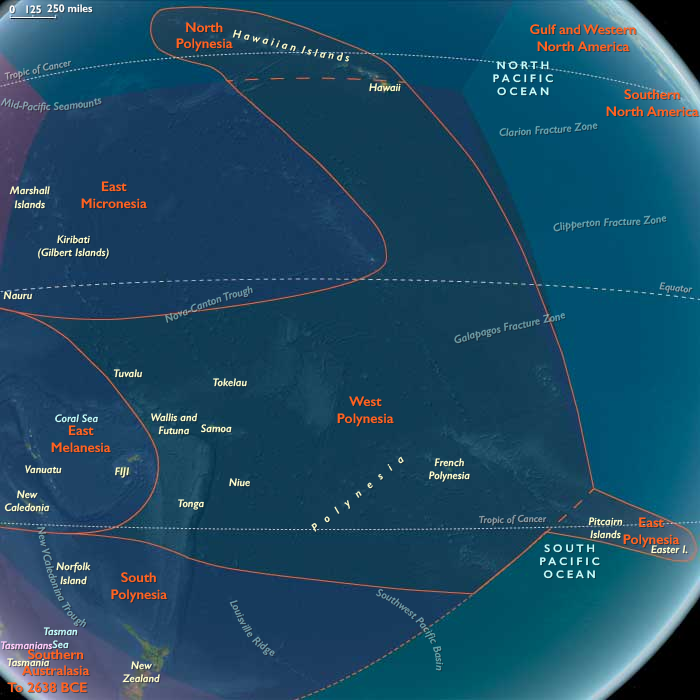
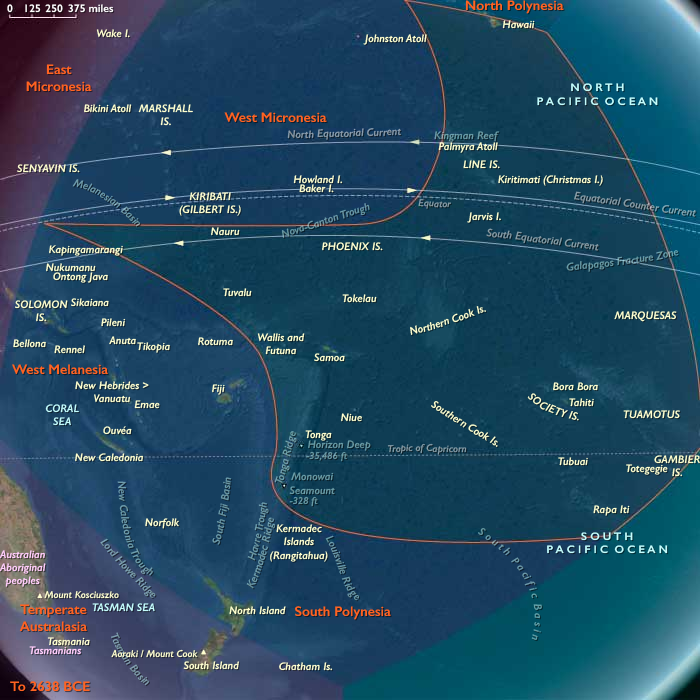
Polynesia remained one of Earth's largest uninhabited regions, stretching across a vast triangle of ocean from Hawaiʻi in the north to Rapa Nui in the southeast and the Tonga–Samoa region in the southwest.
Major geographic anchors included:
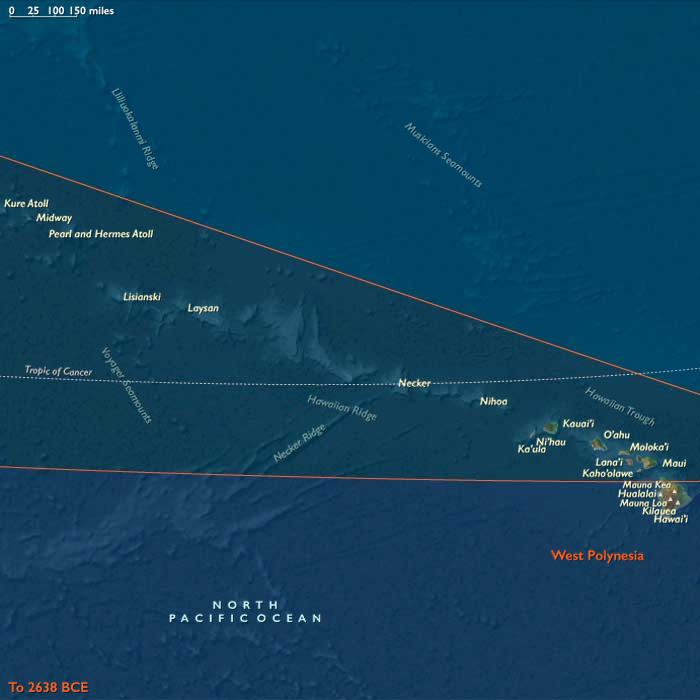
- the Hawaiian archipelago
- the Marquesas Islands
- Society Islands
- Tuamotu Archipelago
- Cook Islands
- Austral Islands
- Samoa
- Tonga
- Tokelau
- Line Islands
- Phoenix Islands
- Rapa Nui
- Pitcairn
Volcanic high islands alternated with coral atolls across millions of square kilometers of ocean.
Climate & Environmental Shifts
The Middle Holocene remained generally warm and stable.
Sea level approached and, in some areas, slightly exceeded modern levels.
Important environmental developments included:
- expansion of reef platforms
- stabilization of lagoon systems
- maturation of atoll ecosystems
- increased coastal sediment accumulation
Trade winds and ocean currents operated in patterns broadly recognizable today.
Many low coral islands reached their greatest Holocene extent during this interval.
Baseline Ecology
Polynesia remained an immense mosaic of isolated ecosystems.
High volcanic islands supported:
- extensive palm forests
- tropical woodlands
- montane cloud forests
- freshwater streams and wetlands
Coral atolls supported:
- seabird rookeries
- coastal strand vegetation
- turtle nesting beaches
- productive lagoons
Marine ecosystems flourished with:
- reef fish
- sharks
- rays
- turtles
- cetaceans
- pelagic seabirds
Many islands lacked significant terrestrial predators.
Bird populations remained extraordinarily abundant.
Subsistence & Settlement
No permanent human populations occupied Polynesia during this period.
The major island groups remained entirely ecological landscapes.
There was:
- no agriculture
- no domesticated animals
- no permanent villages
- no inter-island voyaging
Forests, reefs, and seabird colonies developed without human disturbance.
Technology & Material Culture
None.
Movement & Interaction Corridors
Natural movement networks dominated.
Important ecological corridors included:
- seabird migration routes
- turtle migration pathways
- whale migrations
- ocean-current dispersal systems
Seeds, driftwood, insects, and birds occasionally colonized new islands through long-distance natural dispersal.
Cultural & Symbolic Expressions
None.
No archaeological evidence suggests permanent settlement or organized visitation.
The islands remained entirely natural environments.
Environmental Adaptation & Resilience
Polynesian ecosystems reached some of their highest levels of ecological integrity.
Key stabilizing features included:
- intact forest canopies
- massive seabird colonies
- predator-free nesting grounds
- mature reef ecosystems
- extensive nutrient cycling between ocean and land
Guano deposition from seabirds enriched many island soils and helped sustain forest productivity.
Long-Term Significance
By 4,366 BCE Polynesia remained the world's largest unpeopled oceanic realm. Reef systems, forests, seabird colonies, and marine food webs had reached mature and highly stable configurations. The environmental conditions that would eventually support one of humanity's greatest maritime expansions were already in place, even though the first Polynesian navigators would not arrive for several millennia.
Topics
Subjects
Regions