
East Polynesia (6,093–4,366 BCE) Middle Holocene —…
6093 BCE to 4366 BCE
East Polynesia (6,093–4,366 BCE)
Middle Holocene — Palm Forest Expansion and Pristine Oceanic Ecosystems
Geographic & Environmental Context
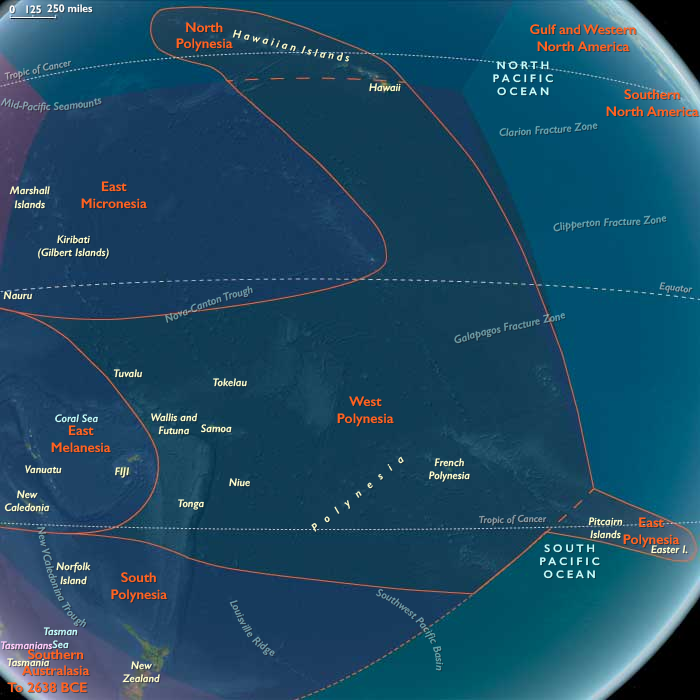
East Polynesia remained confined to:
- Rapa Nui
- Pitcairn
- Henderson
- Ducie
- Oeno
Its extreme isolation continued to define the region.
Climate & Environmental Shifts
Warm, stable conditions persisted.
Sea level stabilized close to modern positions.
Coral reef systems reached mature configurations around Ducie and Oeno.
Seasonal droughts occurred but remained within long-term ecological norms.
Baseline Ecology
Palm forests reached extensive development on:
- Rapa Nui
- Pitcairn
Woodlands, shrubs, and grasslands occupied environmental gradients across volcanic slopes.
Seabird populations remained enormous.
Marine ecosystems supported:
- sharks
- reef fish
- turtles
- pelagic seabirds
Henderson's unique endemic species flourished.
Subsistence & Settlement
No permanent human occupation.
No evidence of agriculture.
No evidence of sustained visitation.
The islands remained entirely ecological landscapes.
Technology & Material Culture
None.
Movement & Interaction Corridors
Natural corridors only:
- bird migrations
- drifting seeds
- oceanic dispersal
Human voyaging had not yet reached these islands.
Cultural & Symbolic Expressions
None.
Environmental Adaptation & Resilience
The islands maintained:
- intact forests
- predator-free nesting systems
- highly productive marine environments
Ecological resilience remained exceptionally high.
Long-Term Significance
By 4,366 BCE East Polynesia remained among the least disturbed environments on Earth. The ecological conditions established during this period would persist for millennia before the arrival of Polynesian navigators.
Images

East Polynesia in the Middle Holocene
Topics
Subjects
Regions
Polynesia
View →Subregions
