
An earthquake strikes Rome in August 618,…
616 CE to 627 CE
An earthquake strikes Rome in August 618, followed by an outbreak of a scab disease, during which Adeodatus dies.
There is a vacancy of one year, one month, and sixteen days before his successor, a Neopolitan, is consecrated as Pope Boniface V.
Before his consecration, Italy had been disturbed by the rebellion of the eunuch Eleutherius, Exarch of Ravenna.
The patrician pretender had advanced towards Rome, but before he could reach the city, he was slain by his own troops.
The Liber Pontificalis records that Boniface made certain enactments relative to the rights of sanctuary, and that he ordered the ecclesiastical notaries to obey the laws of the empire on the subject of wills.
He also prescribed that acolytes should not presume to translate the relics of martyrs and that, in the Basilica di San Giovanni in Laterano, they should not take the place of deacons in administering baptism.
Boniface completed and consecrated the cemetery of Saint Nicomedes on the Via Nomentana.
In the Liber Pontificalis, Boniface is described as "the mildest of men", whose chief distinction was his great love for the clergy.
Locations
Groups
Regions
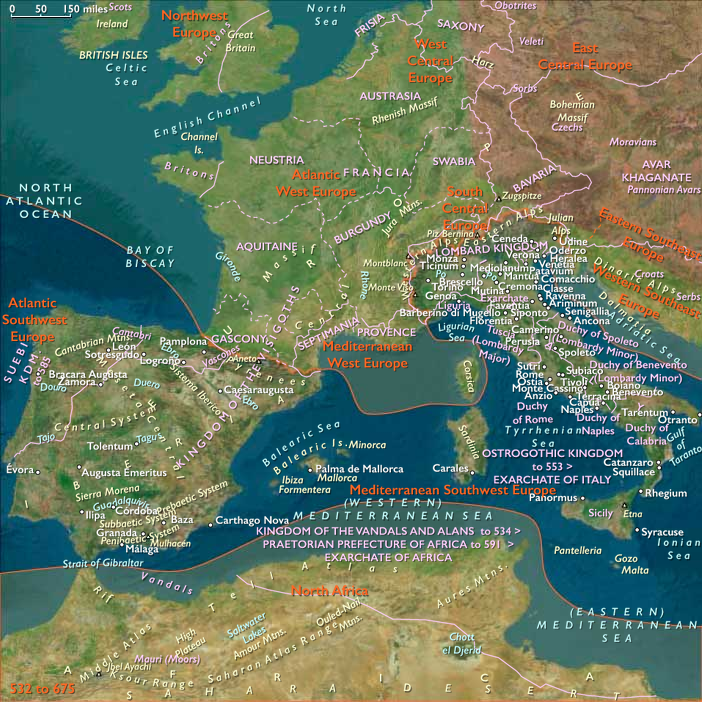
Southwest Europe
View →Subregions
