
The Fall of the Jesuits and the…
1759 CE
The Fall of the Jesuits and the Rise of Carvalho de Melo (1759)
By 1759, Sebastião José de Carvalho e Melo, Portugal’s powerful Secretary of State, had consolidated his authority and was now determined to eradicate Jesuit influence from the kingdom. An ardent proponent of Enlightenment-style reform, he saw the Society of Jesus as an obstacle to Portugal’s modernization, accusing the order of controlling science and education in a way that stifled an independent, Portuguese-style iluminismo.
Carvalho’s Anti-Jesuit Crusade
Carvalho’s hostility toward the Jesuits was shaped by his time abroad, particularly in London, where the order had long been excluded from public life, and in Vienna, where he befriended Gerard van Swieten, a confidant of Maria Theresa of Austria and a staunch opponent of the Jesuits’ influence in the Habsburg monarchy.
Upon assuming power in Portugal, Carvalho launched a propaganda war against the Society of Jesus, closely followed by the rest of Europe, where anti-Jesuit sentiment was growing. He accused the Jesuits of conspiring against the monarchy, spreading conspiracy theories about their desire for political control.
As part of his campaign, he appointed his brother, D. Paulo António de Carvalho e Mendonça, chief inquisitor, and used the Inquisition as a tool against the Jesuits, charging them with treason and attempted regicide during the Távora Affair.
The Távora Affair as a Pretext for the Jesuit Expulsion
Although tensions between the Portuguese Crown and the Jesuits had been simmering for decades, the Távora Affair provided the perfect pretext for Carvalho’s final move against the order. The Jesuits and their defendersargued that they had spent years protecting Native Americans in Portuguese and Spanish colonies, often at odds with European settlers and colonial authorities.
One of the most notorious examples of this conflict between the Jesuits and colonial powers was the Guaraní War (1754–1756), in which Spanish and Portuguese troops crushed the Guaraní tribesmen who had been resisting forced relocation under the Jesuit-controlled missions of South America. Carvalho exploited this history to further paint the Jesuits as a rogue organization unwilling to submit to the Crown’s authority.
The Expulsion of the Jesuits (1759)
With public opinion turned against the Jesuits, Carvalho orchestrated their expulsion from Portugal and its empire in 1759.
- All Jesuit properties and assets were seized by the Crown, dealing a severe blow to the order’s influence.
- Foreign Jesuits were imprisoned or deported, and key leaders were accused of being part of a vast Jesuit conspiracy against the monarchy.
- Jesuit schools were closed, and Portugal severed its diplomatic ties with the Papacy, further weakening Rome’s hold over Portuguese affairs.
Historians James Lockhart and Stuart Schwartz later summarized the motives behind Carvalho’s actions:
"The Jesuits' independence, power, wealth, control of education, and ties to Rome made the Jesuits obvious targets for Pombal's brand of extreme regalism."
Carvalho showed no mercy, prosecuting not only Jesuit priests but also laypeople associated with the order, including women and children. This was the final stroke that broke the power of the aristocracy and ensured Carvalho’s absolute dominance over Portugal’s political landscape.
Carvalho’s Reward – The Count of Oeiras and His Educational Reforms
In reward for his decisive actions, King José I granted Carvalho the title of Count of Oeiras in 1759, a formal recognition of his unrivaled authority in the kingdom.
With his enemies vanquished, Carvalho turned his attention to reforming Portugal’s educational system, which had been dominated by the Jesuits for centuries. He:
- Established secular public primary and secondary schools, free from clerical influence
- Introduced vocational training to modernize Portugal’s workforce
- Created hundreds of new teaching positions to support educational expansion
- Reorganized the University of Coimbra, adding departments of mathematics and natural sciences
- Imposed new taxes to fund these reforms
The Triumph of Pombaline Absolutism
By 1759, Sebastião de Carvalho e Melo, now the Count of Oeiras, had utterly transformed Portugal. He had:
- Destroyed the power of the nobility
- Eliminated Jesuit influence
- Centralized the monarchy’s authority
- Set Portugal on the path toward Enlightenment-inspired modernization
Yet, his iron-fisted rule was not without controversy. His harsh methods, ruthless suppression of dissent, and open defiance of Rome made him a polarizing figure, both in his own time and in historical memory.
Nevertheless, his reforms would lay the foundations for a more modern Portugal, marking his era as one of the most radical and consequential in the country’s history.
Locations
People
Groups
Topics
Regions
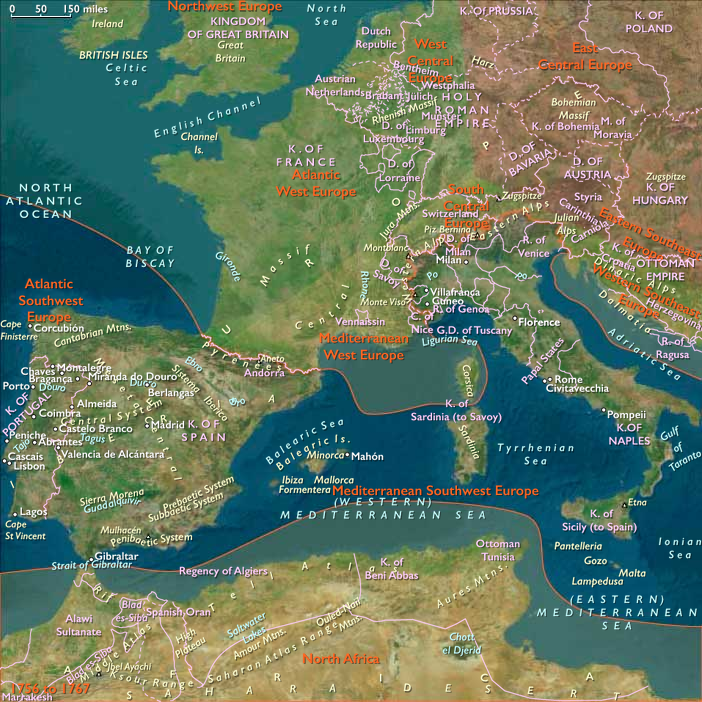
Southwest Europe
View →Subregions
