
Event
Rembrandt had begun in 1627 to accept…
Rembrandt had begun in 1627 to accept students, among them fifteen-year-old Gerrit Dou.
It is during Rembrandt's Leiden period (1625–1631) that Lastman's influence is most prominent.
It is also likely that at this time Lievens has a strong impact on Rembrandt's work as well.
Paintings are rather small, but rich in details (for example, in costumes and jewelry).
Religious and allegorical themes were favored, as are tronies, half-length figures not intended as specific portraits.
Rembrandt in 1626 had produced his first etchings, the wide dissemination of which would largely account for his international fame.
He had in 1629 completed Judas Repentant, Returning the Pieces of Silver and The Artist in His Studio, works that evidence his interest in the handling of light and variety of paint application, and constitute the first major progress in his development as a painter.
Rembrandt had been discovered in 1629, by the statesman Constantijn Huygens (the father of the famous Dutch mathematician and physician Christiaan Huygens), who had procured for Rembrandt important commissions from the court of The Hague.
As a result of this connection, Prince Frederik Hendrik will continue to purchase paintings from Rembrandt until 1646.

-
{# Image navigates to the detail page; the magnifying-glass chip is the only Fancybox lightbox trigger (kept a separate sibling — anchors can't nest). #}
 The North Atlantic Lands
World
-
{# Image navigates to the detail page; the magnifying-glass chip is the only Fancybox lightbox trigger (kept a separate sibling — anchors can't nest). #}
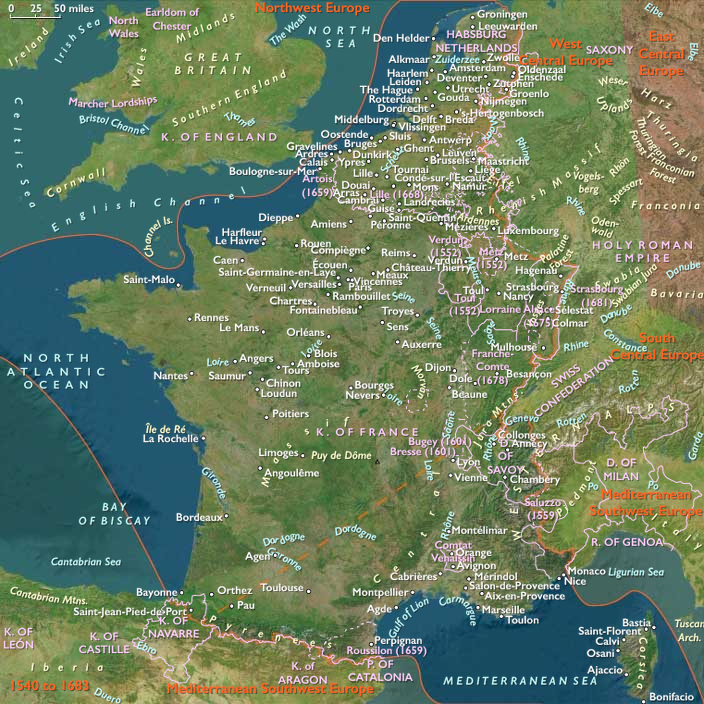 West Europe
Region
-
{# Image navigates to the detail page; the magnifying-glass chip is the only Fancybox lightbox trigger (kept a separate sibling — anchors can't nest). #}
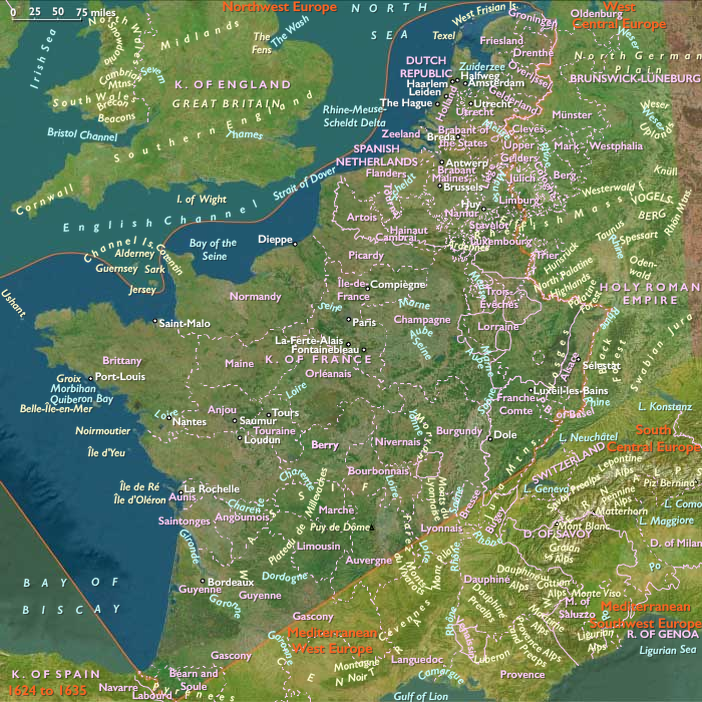 Atlantic West Europe
Subregion
