
Formation of the League of Cambrai Against …
Years: 1508 - 1508
December
Formation of the League of Cambrai Against Venice (1508)
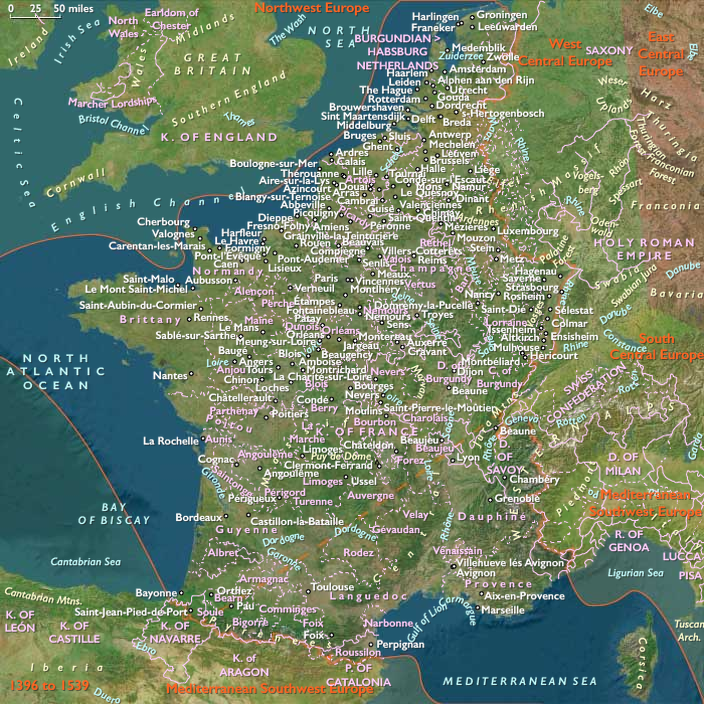
On December 10, 1508, representatives of the Papacy, France, the Holy Roman Empire, and Ferdinand of Spainconcluded the League of Cambrai, a powerful coalition aimed explicitly against the territorial and economic dominance of the Republic of Venice. Negotiated at Cambrai, the alliance was designed to dismantle Venice’s extensive territorial holdings in Italy and redistribute them among the participating powers, significantly reshaping the political balance within Atlantic West Europe and the Italian Peninsula.
Terms and Objectives
The agreement stipulated the systematic partitioning of Venetian territories, with each signatory receiving strategically significant lands:
- Holy Roman Emperor Maximilian I would recover Istria and gain control of Verona, Vicenza, Padua, and Friuli, significantly expanding imperial influence in northern Italy.
- France, under King Louis XII, aimed to integrate wealthy Lombard cities such as Brescia, Crema, Bergamo, and Cremona into its existing possessions centered around Milan.
- Ferdinand of Spain planned the seizure of strategic port city Otranto, consolidating Spanish influence in southern Italy.
- The Papacy, under Pope Julius II, sought to add Rimini, Ravenna, and surrounding territories to the Papal States, thereby expanding papal sovereignty.
This coalition represented an unprecedented diplomatic alliance among Europe's leading powers, united by their shared hostility toward Venetian economic dominance, political influence, and territorial expansion.
Political and Strategic Significance
The League of Cambrai dramatically underscored Europe's emerging power dynamics, illustrating the fluidity of alliances and the extent to which territorial ambition and economic interests drove diplomatic engagements. Venice, previously viewed as economically indispensable and diplomatically astute, suddenly faced existential threats from a broad European coalition, revealing the fragility of its power despite centuries of commercial strength and political resilience.
Consequences and Legacy
The League of Cambrai initiated the War of the League of Cambrai (1508–1516), a conflict that drastically altered Italy’s geopolitical landscape. Though initially successful in significantly weakening Venice, the League quickly unraveled due to internal rivalries among its members, allowing Venice to regain some of its lost territories. Nevertheless, the episode vividly demonstrated the shifting power dynamics in early 16th-century Europe and foreshadowed the era’s prolonged struggles for dominance, influencing diplomatic strategies and alliances for decades to come.
Locations
People
Groups
- Istria
- Papal States (Republic of St. Peter)
- Christians, Roman Catholic
- Aragón, Kingdom of
- Venice, (Most Serene) Republic of
- Aragon, Crown of
- France, (Valois) Kingdom of
- Holy Roman Empire
Topics
Commodoties
Subjects
Regions
Subregions

Related Events
Showing 10 events out of 39445 total
Years: 1508 - 1508
December
Locations
People
Groups
- Istria
- Papal States (Republic of St. Peter)
- Christians, Roman Catholic
- Aragón, Kingdom of
- Venice, (Most Serene) Republic of
- Aragon, Crown of
- France, (Valois) Kingdom of
- Holy Roman Empire
Topics
Commodoties
Subjects
Regions
Subregions