
Richard had rewarded those who had supported…
1400 CE
Richard had rewarded those who had supported him in 1397 against Gloucester and the Lords Appellant with a plethora of new titles, many of which had been placed under attainder upon Henry’s usurpation and accession, due to the complicity of their holders in the murder of the Duke of Gloucester.
In what will come to be known as the Epiphany Rising, a ring of leaders—John Montagu, 3rd Earl of Salisbury; John Holland, 1st Earl of Huntingdon (formerly Duke of Exeter); Thomas Holland, 3rd Earl of Kent (formerly Duke of Surrey); and Thomas le Despenser, 4th Baron le Despencer (formerly Earl of Gloucester).
Other members include Edward of Norwich, 1st Earl of Rutland (formerly Duke of Aumale), and Ralph Lumley, 1st Baron Lumley.
They hope to seize Henry during a tournament at Windsor, kill him, and restore Richard to the throne.
However, Edward of Norwich betrays the conspirators to Henry, who, thus forewarned, has failed to appear at Windsor and begun to raise an army in London.
The conspirators flee to the western counties and raise the standard of rebellion.
While attempting to seize Cirencester, Lumley is beheaded in a short but violent skirmish by the townsfolk and Salisbury and Kent are captured.
Held briefly in custody, they are abruptly beheaded without trial on January 7, 1400.
People
Commodities
Subjects
Regions
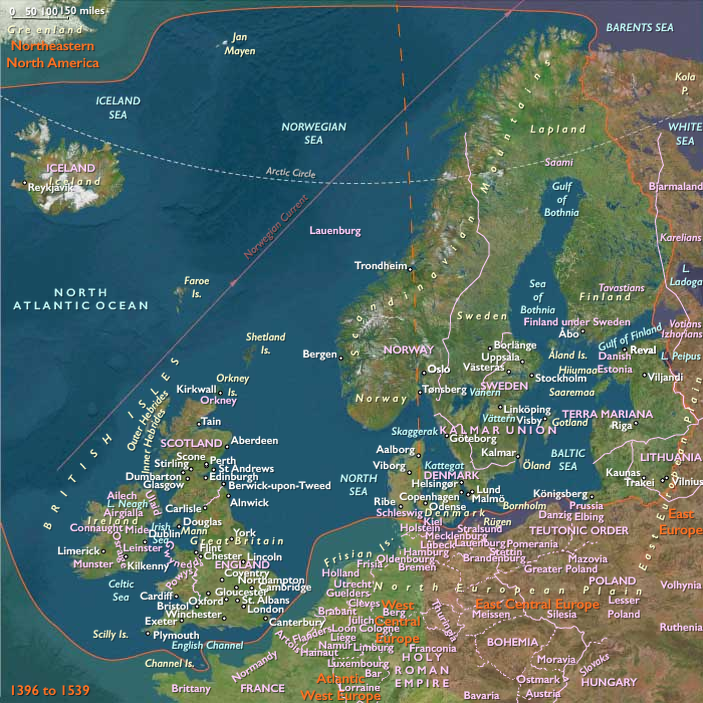
North Europe
View →Subregions
