Roger of Hoveden, in his Gesta Regis…
March 1190 CE
Roger of Hoveden, in his Gesta Regis Ricardi, claims that the rioting was started by the jealous and bigoted citizens, and that Richard punished the perpetrators, allowing a forcibly converted Jew to return to his native religion.
His Chancellor, Longchamp, institutes heavy fines against the Pudsey and Percy families, which enrich the treasury and hurt his political opponents at the same time.
Realizing that the assaults could destabilize his realm on the eve of his departure on crusade, Richard orders the execution of three of those responsible for the most egregious murders and persecutions, including rioters who had accidentally burned down Christian homes.
Angered by the riots and the loss of Crown property—i.e., the Jews—Richard on March 22 renews a general charter in favor of the Jews that had been first issued by Henry II.
The king distributes a royal writ demanding that the Jews be left alone.
The edict is loosely enforced, however, and the following March there will be further violence, including a massacre at York.
Locations
People
Groups
Commodities
Subjects
Regions
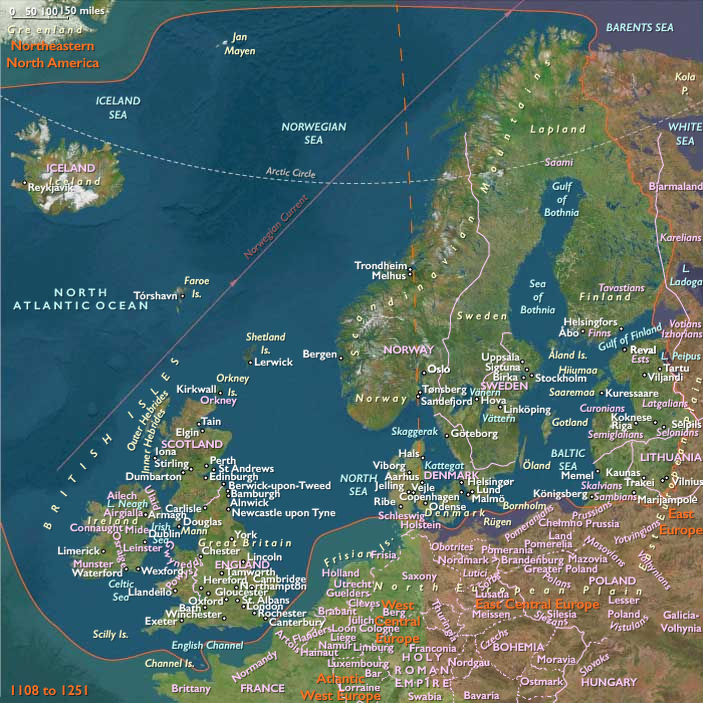
North Europe
View →Subregions