
Augustus and the Romanization of Gaul: The …
Years: 45BCE - 99
Augustus and the Romanization of Gaul: The Division into Provinces and Urban Development
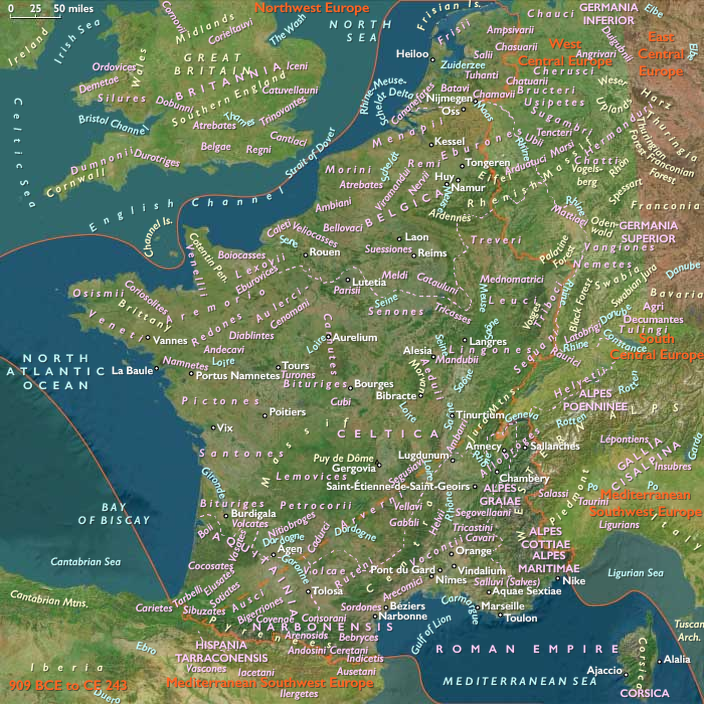
After the conquest of Gaul (58–50 BCE) and the final defeat of Vercingetorix at Alesia, Emperor Augustusformalized Roman control over the region, reorganizing it into provinces and initiating a process of urbanization and Romanization.
The Division of Gaul into Roman Provinces
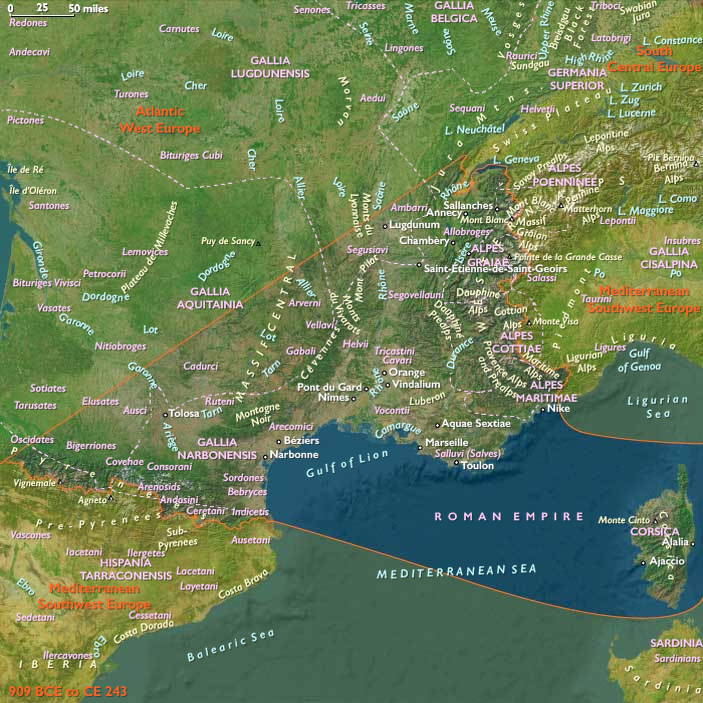
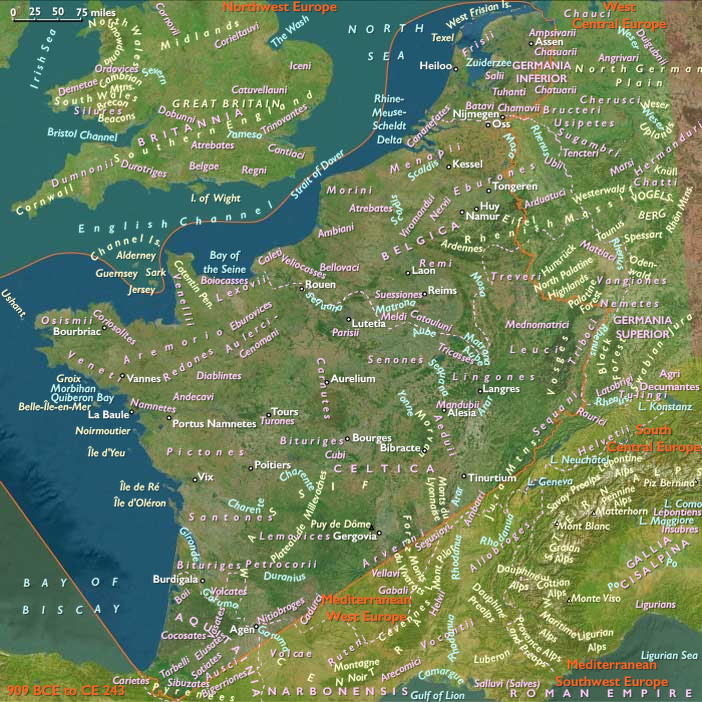
To effectively govern Gaul, Augustus divided the territory into four provinces:
- Gallia Narbonensis – The most Romanized region, previously a Roman province since 121 BCE. It included modern Provence, Languedoc, and parts of the Rhône Valley.
- Gallia Lugdunensis – Named after Lugdunum (modern Lyon), the political and administrative center of Roman Gaul.
- Gallia Aquitania – Covering the southwest, including modern-day Aquitaine.
- Gallia Belgica – Encompassing the northernmost regions, home to the Belgae and Germanic tribes.
This administrative division allowed Rome to consolidate its control over Gaul, facilitate tax collection, and integrate the region into the imperial economy.
The Urbanization of Gaul and the Foundation of Cities
During the Gallo-Roman period, many new cities were established, while existing settlements were transformed into Roman-style urban centers. These cities followed traditional Roman architectural layouts, featuring:
- Forums – The political and economic heart of the city, where public gatherings, commerce, and administration took place.
- Theaters and Amphitheaters – Providing entertainment through plays, gladiatorial combat, and public events.
- Circuses – Used for chariot racing, a popular Roman pastime.
- Thermal Baths – Essential for public hygiene, relaxation, and social interaction.
- Aqueducts and Roads – Ensuring efficient water supply and transportation, connecting cities to Rome’s vast road network.
Lugdunum: The Capital of Roman Gaul
- Lugdunum (modern Lyon), founded in 43 BCE, became the capital of the three Gauls (Gallia Lugdunensis, Gallia Aquitania, and Gallia Belgica).
- The city hosted the Concilium Galliarum, an annual assembly of Gallic leaders, symbolizing Rome’s control over Gaul while allowing a degree of local autonomy.
- Lugdunum was a major commercial, military, and administrative hub, benefiting from its strategic location at the confluence of the Rhône and Saône rivers.
The Legacy of Roman Gaul
- Roman rule brought stability and infrastructure, leading to economic prosperity and cultural integration.
- Latin gradually replaced Celtic languages, and Roman laws, customs, and governance structures became deeply ingrained in Gallic society.
- Many of these Gallo-Roman cities continued to thrive through the Middle Ages and into modern times, with cities like Lyon, Bordeaux, and Paris tracing their origins to this period of Romanization.
Augustus’ division of Gaul and the subsequent urbanization efforts were crucial in shaping the region’s Roman identity, ensuring that Gaul remained a vital part of the Roman Empire for centuries.
People
Groups
- Gauls
- Roman Republic
- Gallia Narbonensis (Roman province)
- Gallo-Roman culture
- Roman Principate (Rome)
- Gallia Aquitania (Roman province)
- Gallia Lugdunensis (Roman province)
- Gallia Belgica (Roman province)
- Roman Empire (Rome): Julio-Claudian dynasty
- Roman Empire (Rome): Flavian dynasty
- Roman Empire (Rome): Nerva-Antonine dynasty
Topics
Subjects
Regions
Subregions
Related Events
Showing 10 events out of 62463 total
Years: 45BCE - 99
People
Groups
- Gauls
- Roman Republic
- Gallia Narbonensis (Roman province)
- Gallo-Roman culture
- Roman Principate (Rome)
- Gallia Aquitania (Roman province)
- Gallia Lugdunensis (Roman province)
- Gallia Belgica (Roman province)
- Roman Empire (Rome): Julio-Claudian dynasty
- Roman Empire (Rome): Flavian dynasty
- Roman Empire (Rome): Nerva-Antonine dynasty
Topics
Subjects
Regions
Subregions