
The Weakening of Roman Power and the …
Years: 388 - 399
The Weakening of Roman Power and the Rise of the Franks in the Low Countries
By the mid-third century, Roman control in the Low Countries had begun to deteriorate. The abandonment of forts and military outposts was driven not only by the resurgence of Germanic tribes but also by environmental changes, as the encroaching sea likely disrupted regional economies and settlements. This combination of external pressures and economic decline accelerated the fragmentation of Roman authority.
A temporary recovery took shape by the late third century, as Rome sought to reassert control. One of the most significant efforts came under Julian, Caesar of Gaul, who between 355 and 360 CE waged several military campaigns in the Low Countries, briefly restoring strength to the Rhine frontier.
The Dual Role of the Franks: Raiders and Defenders
Despite these efforts, Frankish incursions into Roman territory continued. While some Franks raided Roman lands, others integrated into the imperial military, forming a complex and shifting relationship with Roman authorities.
- Major Roman armies remained positioned 100 miles (160 km) south and west of the Rhine River Valley, securing the frontier.
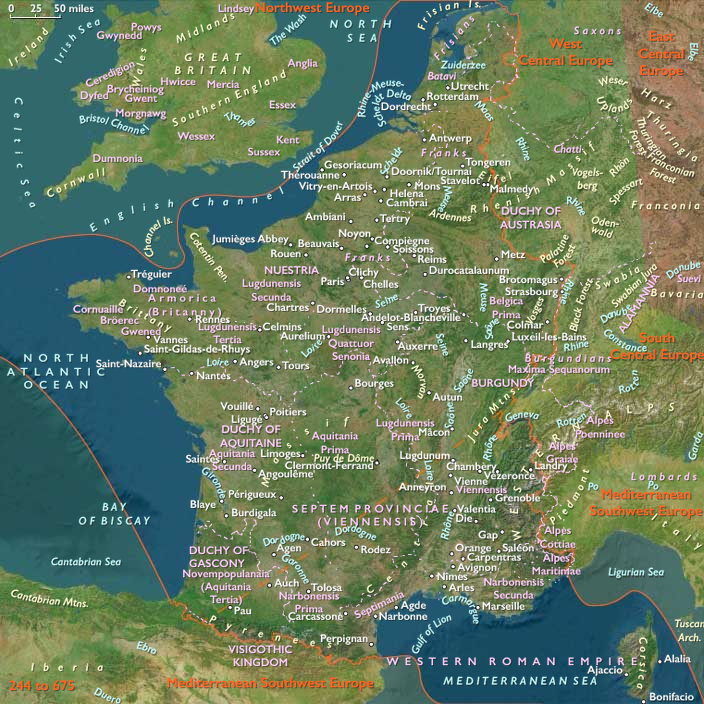
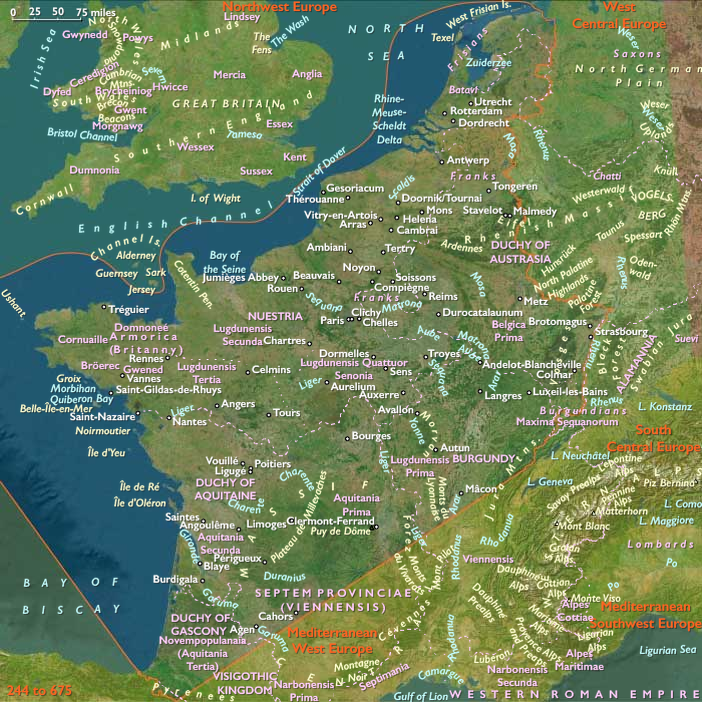
- Meanwhile, Frankish settlers occupied lands north and east of Roman strongholds, acting as a buffer state and providing intelligence to Roman commanders.
By the mid-fourth century, Frankish soldiers had risen to prominence within the Roman army, with figures such as Magnentius, Silvanus, and Arbitio wielding significant power. The historian Ammianus Marcellinus describes how both Frankish and Alamannic forces had adopted Roman military structures and tactics, making them formidable opponents—and, at times, valuable allies.
The Salian Franks and Their Foederati Status
A pivotal moment came in 358 CE, when Julian formalized an arrangement with the Salian Franks, allowing them to settle in northern Gaul—lands that had been depopulated over the previous century. In return, the Salian Franks became foederati (federated allies), obligated to defend Roman interests in the region.
This marked the beginning of a longer-term Frankish presence within Roman Gaul. Over time, their influence would grow, setting the stage for their eventual ascendancy as rulers of post-Roman Gaul, culminating in the reign of Clovis I and the foundation of the Frankish kingdom.
Locations
Groups
- Slavs, Proto-
- Franks
- Vandals (East Germanic tribe)
- Gallia Belgica (Roman province)
- Goths (East Germanic tribe)
- Alamanni (Germanic tribal alliance)
- Bulgars
- Gaul, Diocese of
- Gaul, Praetorian prefecture of
- Roman Empire: Valentinian dynasty (Rome)
- Hunnic Empire
- Roman Empire: Theodosian dynasty (Constantinople)
- Roman Empire, Western (Milan)
Topics
Subjects
Regions
Subregions
Years: 388 - 399
Locations
Groups
- Slavs, Proto-
- Franks
- Vandals (East Germanic tribe)
- Gallia Belgica (Roman province)
- Goths (East Germanic tribe)
- Alamanni (Germanic tribal alliance)
- Bulgars
- Gaul, Diocese of
- Gaul, Praetorian prefecture of
- Roman Empire: Valentinian dynasty (Rome)
- Hunnic Empire
- Roman Empire: Theodosian dynasty (Constantinople)
- Roman Empire, Western (Milan)
Topics
Subjects
Regions
Subregions