
Latin culture permeates southeastern Europe over the …
Years: 100 - 243
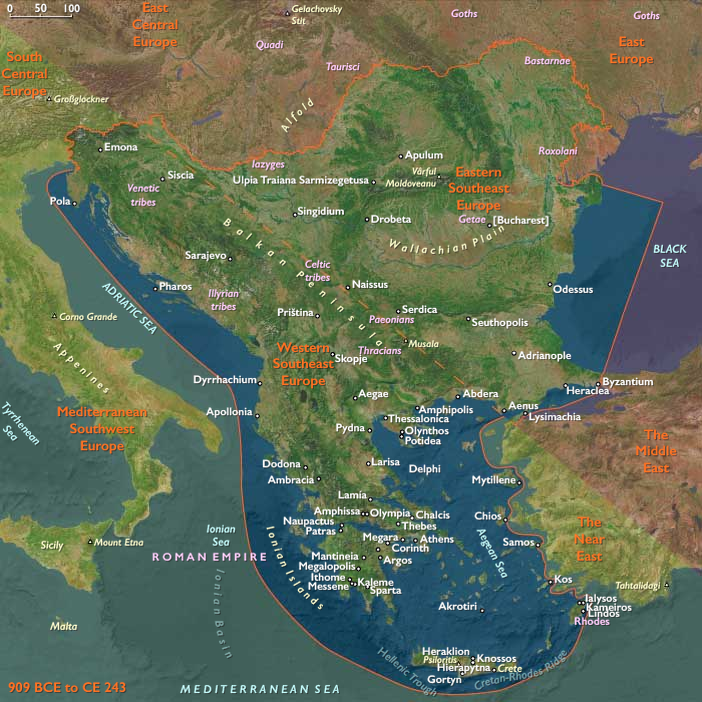
Latin culture permeates southeastern Europe over the next five hundred years.
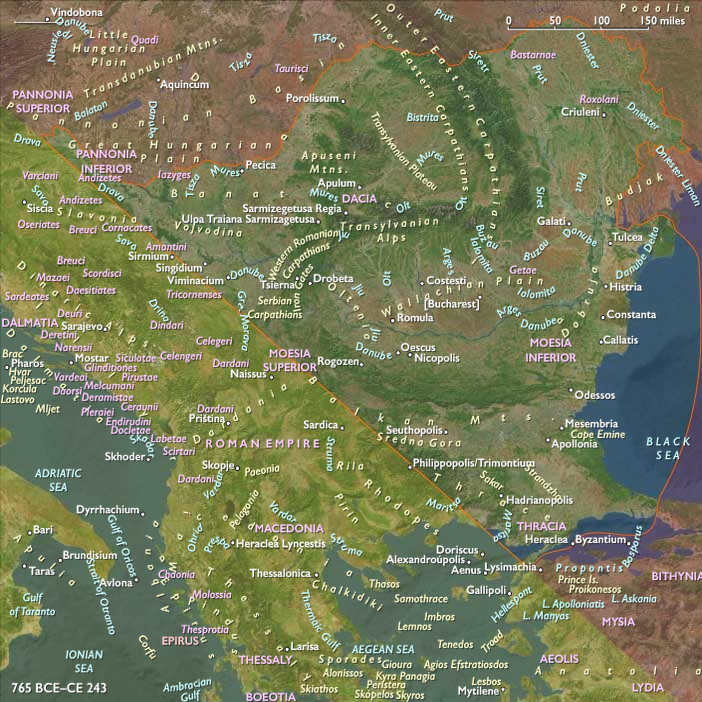
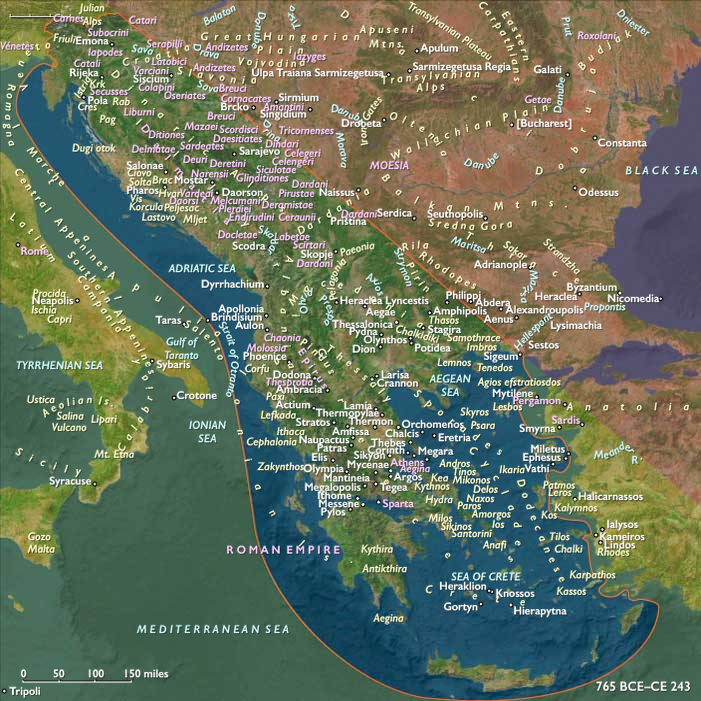
The Romans divide their western Balkan territories into separate provinces.
New roads link fortresses, mines, and trading towns.
The Romans introduce viticulture in Dalmatia, institute slavery, and dig new mines.
Agriculture thrives in the Danube Basin, and towns throughout the country blossom into urban areas with forums, temples, water systems, coliseums, and public baths.
In addition to gods of the Greco-Roman pantheon, Roman legionnaires bring the mystic cult of Mithras from Persia.
The Roman army also recruits natives of the conquered regions, and five sons of Illyrian peasants will rise through the ranks to become emperor.
The Illyrian, Celtic, and Thracian languages will all eventually die out, but the centuries of Roman domination will fail to create cultural uniformity.
Groups
- Polytheism (“paganism”)
- Veneti, Adriatic
- Thracians
- Celts
- Illyrians
- Macedonia, Roman
- Dalmatia (Roman province)
- Pannonia (Roman province)
- Moesia Inferior (Roman province)
- Moesia Superior (Roman province)
- Roman Empire (Rome): Nerva-Antonine dynasty
- Pannonia Superior (Roman province)
- Pannonia Inferior (Roman province)
- Roman Empire (Rome): Severan dynasty
- Roman Empire (Rome): Non-dynastic
Commodoties
Subjects
Regions
Subregions
Years: 100 - 243
Groups
- Polytheism (“paganism”)
- Veneti, Adriatic
- Thracians
- Celts
- Illyrians
- Macedonia, Roman
- Dalmatia (Roman province)
- Pannonia (Roman province)
- Moesia Inferior (Roman province)
- Moesia Superior (Roman province)
- Roman Empire (Rome): Nerva-Antonine dynasty
- Pannonia Superior (Roman province)
- Pannonia Inferior (Roman province)
- Roman Empire (Rome): Severan dynasty
- Roman Empire (Rome): Non-dynastic
Commodoties
Subjects
Regions
Subregions