Prussia's ultimatum had not reached Napoleon Bonaparte…
October 1806 CE
Napoleon can scarcely believe Prussia will be so foolish to take him on in a straight fight with hardly any allies at hand on its side, especially since most of his Grande Armée is still in the heart of Germany close to the Prussian border.
He drums up support from his soldiers by declaring that Prussia's bellicose actions had delayed their phased withdrawal back home to France to enjoy praise for the previous year's victories.
Once hostilities seem inevitable in September 1806, Napoleon unleashes all French forces east of the Rhine, deploying the corps of the Grande Armée along the frontier of southern Saxony.
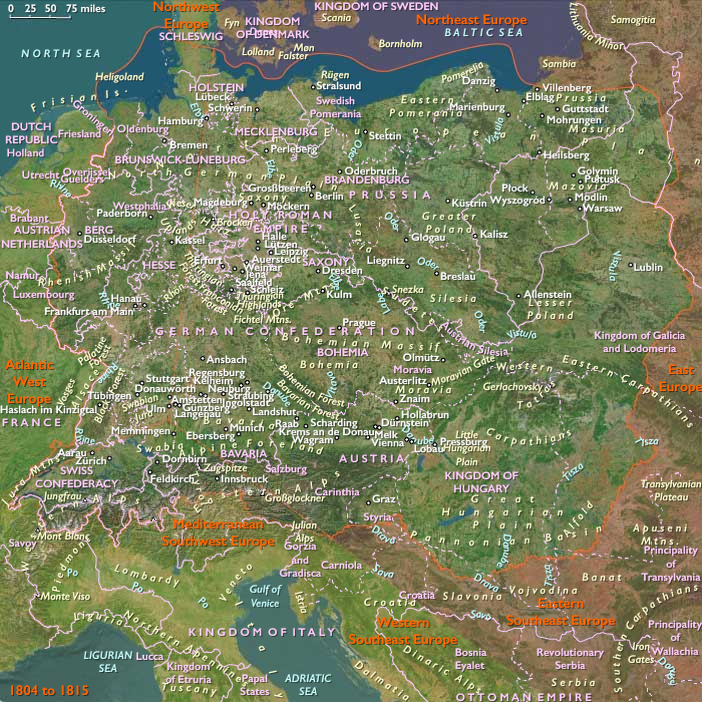
In a preemptive strike to catch the Prussians unaware, the Emperor has the Grande Armée march as a massive bataillon carré (battalion square) in three parallel columns through the Franconian Forest in southern Thuringia.
Each corps will be in mutual supporting distance of each other, both within the column and laterally to the other columns (once through the difficult passage of the forest), thus allowing the Grand Armée to meet the enemy at any contingency.
This strategy has been adopted due to Napoleon's lack of intelligence regarding the Prussian main army's whereabouts and uncertainty over his enemy's puzzling maneuvers in their march to face him.
The reason for this stems mainly from the mutual mistrust within the Prussian high command that had resulted in division among the Prussian commanders over which plan of action for the war will be adopted.
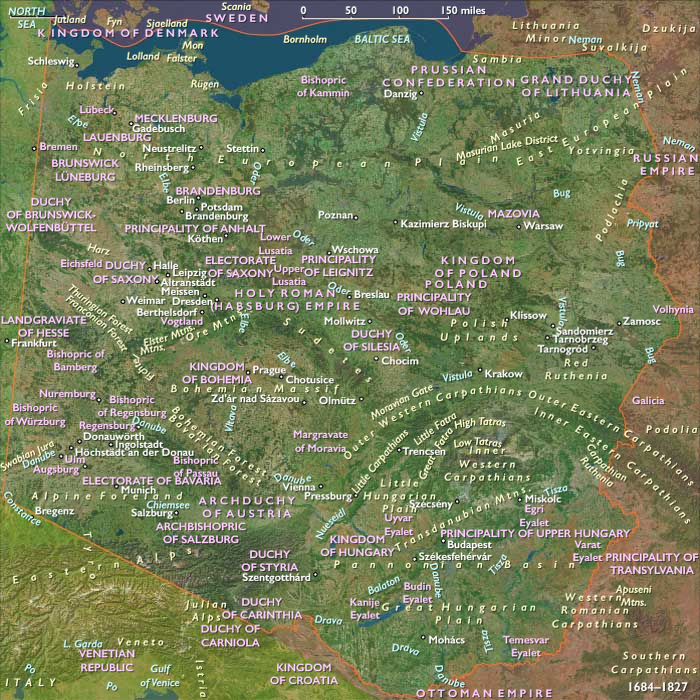
Despite the deficiency in pinpointing the main Prussian army's exact position, Napoleon correctly surmises their probable concentration in the vicinity of Erfurt and formulates a general plan of a thrust down the Saale valley, enveloping the left flank of where he believes the Prussians are located and thus cutting off their communications and line of retreat to Berlin.
Locations
Groups
Commodities
Subjects
Regions
Central Europe
View →Subregions