
Saint-Domingue has the largest and wealthiest free…
1789 CE
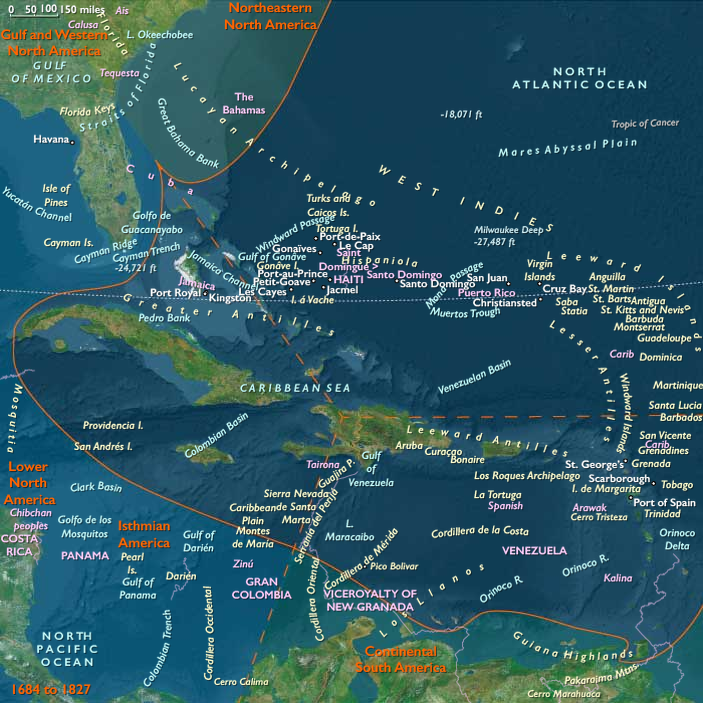
Saint-Domingue has the largest and wealthiest free population of color in the Caribbean, the gens de couleur (French, "people of color").
The mixed-race community in Saint-Domingue numbers twenty-five thousand in 1789.
First-generation gens de couleur are typically the offspring of a male, French slaveowner and an enslaved African woman chosen as a concubine.
In the French colonies, the semi-official institution of "plaçage" defines this practice.
By this system, the children are free people and can inherit property, thus originating a class of "mulattoes" with property and some with wealthy fathers.
This class occupies a middle status between enslaved Africans and French colonists.
Some Africans also enjoy status as gens de couleur.
As numbers of gens de couleur has grown, the French rulers have enacted discriminatory laws.
Statutes forbid gens de couleur from taking up certain professions, marrying whites, wearing European clothing, carrying swords or firearms in public, or attending social functions where whites were present.
However, these regulations do not restrict their purchase of land, and many have accumulated substantial holdings and become slave-owners.
By 1789, they own one-third of the plantation property and one-quarter of the slaves of Saint-Domingue.
Central to the rise of the gens de couleur planter class is the growing importance of coffee, which thrives on the marginal hillside plots to which they are often relegated.
The largest concentration of gens de couleur is in the southern peninsula, the last region of the colony to be settled, owing to its distance from Atlantic shipping lanes and its formidable terrain, with the highest mountain range in the Caribbean.
Locations
Groups
Topics
Commodities
Subjects
Regions
West Indies
View →Subregions
