
Filters:
The Fall of La Rochelle and Olivier …
Years: 1372 - 1372
The Fall of La Rochelle and Olivier de Clisson’s Brutal Reputation (1372)
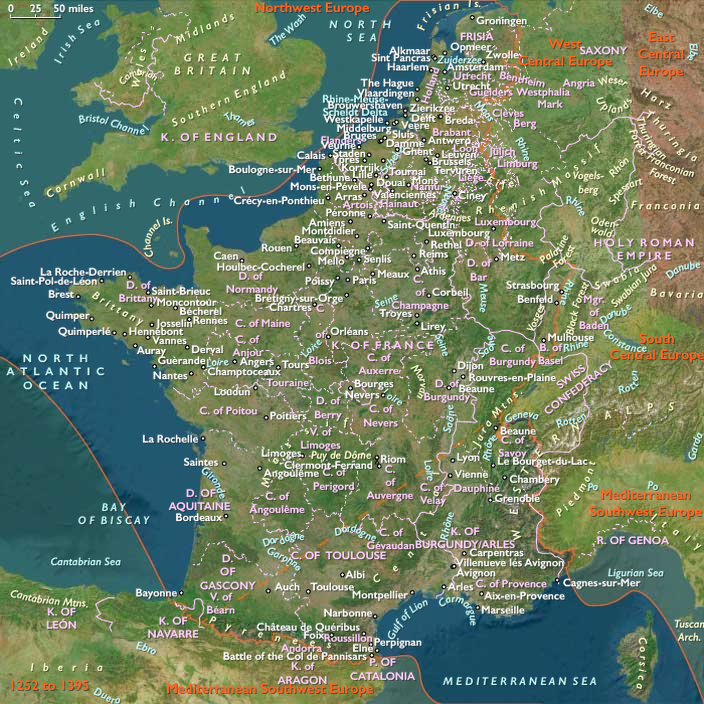
In 1372, as the French continued their reconquest of English-held territories, the strategically important port city of La Rochelle defected to the French cause. Rather than resisting French forces, the citizens themselves opened the gates, marking another significant loss for the English.
The People of La Rochelle Turn Against England
- La Rochelle, a major Atlantic port, was vital for English trade and military supply routes.
- Unlike other sieges, the city’s population revolted against English rule, preferring to submit to King Charles V and French forces.
- The city’s surrender without a fight ensured its protection, avoiding the destruction and bloodshed that had befallen other towns during the war.
English Brutality and Clisson’s Vengeance
- The English had a reputation for executing prisoners, especially those unable to pay ransom.
- At Moncontour and other locations, they had massacred captured soldiers instead of ransoming them.
- Olivier de Clisson’s own squire, captured in Benon, Saintonge, was tortured and killed by the English, fueling Clisson’s personal vendetta.
Clisson’s Reputation for Ruthlessness
- In retaliation, Clisson ordered the execution of fifteen English prisoners.
- He gained a fearsome reputation for mutilating enemy captives, reportedly cutting off arms and legs.
- This brutality led the English to nickname him "The Butcher", a title that even his ally Bertrand du Guesclin acknowledged, exclaiming:
- "God! The body of St. Benedict, the English are not wrong when they call you the Butcher!"
Impact and Consequences
- The fall of La Rochelle was a turning point, giving France control over a key Atlantic port and cutting off English supply lines to Aquitaine.
- Olivier de Clisson’s violent reprisals cemented his reputation as one of France’s most ruthless commanders, later leading to his appointment as Constable of France in 1380.
- The French counteroffensive continued, further pushing English forces into retreat and setting the stage for Charles V’s reconquest of western France.
The fall of La Rochelle in 1372 marked another devastating English loss, while Olivier de Clisson’s brutal methods reinforced the growing reputation of the French army as it steadily reclaimed territory.
Locations
People
- Bertrand du Guesclin
- Charles V of France
- Edward III of England
- Edward, the Black Prince
- John IV, Duke of Brittany
- Olivier de Clisson
- Robert Knolles
Groups
Topics
Subjects
Regions
Subregions

Years: 1372 - 1372
Locations
People
- Bertrand du Guesclin
- Charles V of France
- Edward III of England
- Edward, the Black Prince
- John IV, Duke of Brittany
- Olivier de Clisson
- Robert Knolles
Groups
Topics
Subjects
Regions
Subregions