
Filters:
Uncoordinated Violence and Regional Outbreaks …
Years: 1358 - 1358
Uncoordinated Violence and Regional Outbreaks
- The revolt lacked central leadership, with local peasant bands acting independently in different regions.
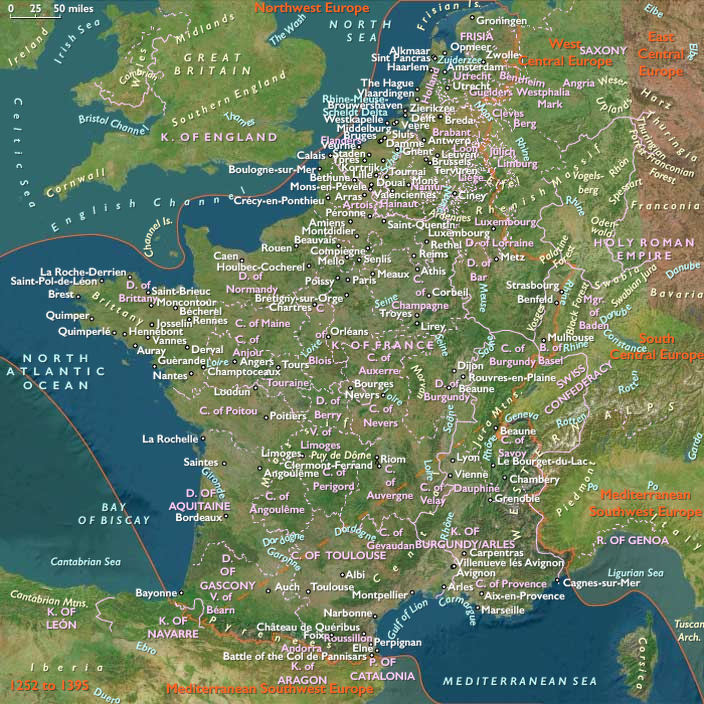
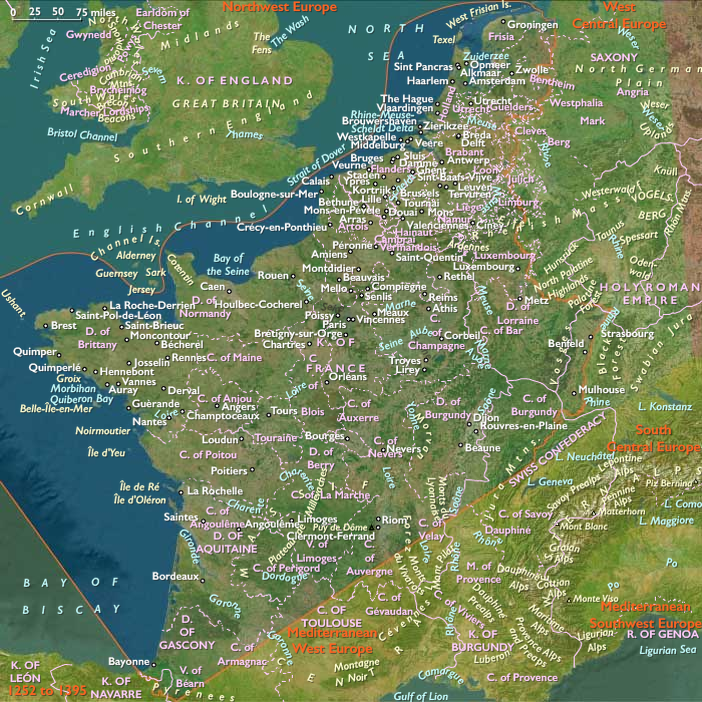
- The peasant army sacked Senlis and Montdidier, while outbreaks occurred in Rouen and Reims.
- In cities like Beauvais, Senlis, Paris, Amiens, and Meaux, the urban underclass and sections of the bourgeoisie sympathized with the peasants, as they too were suffering under the corrupt noble elite.
Froissart’s Account: A Noble Perspective on the Violence
- Jean Froissart, an aristocratic chronicler, portrays the rebels as "mindless savages," indiscriminately murdering noble families and destroying over 150 castles and manor houses.
- Some horrific episodes of violence were recorded, including the gruesome torture and execution of knights and their families.
Noble and Bourgeoisie Involvement
- Although a peasant uprising, a small number of knights and squires were involved, possibly out of personal grievances against certain lords.
- However, many later claimed (through letters of pardon) that they had been forced to participate, distancing themselves from the revolt after it was crushed.
Internal Instability: The Broader Context
- France was in deep crisis following King John II’s capture at Poitiers, with power devolving to the Dauphin Charles (later Charles V).
- The Dauphin faced multiple threats:
- The routiers (free companies)—mercenary bands looting the countryside.
- The plotting of Charles the Bad of Navarre, a dangerous rival.
- The continued threat of an English invasion.
- The Dauphin only consolidated power in July 1358, after Paris fell under the control of Étienne Marcel, a high bourgeois merchant leader, who had briefly aligned with the Jacquerie.
Locations
People
Groups
- Navarre, Kingdom of
- Normandy, Duchy of
- Christians, Roman Catholic
- England, (Plantagenet, Angevin) Kingdom of
- France, (Valois) Kingdom of
Topics
Commodoties
Subjects
Regions
Subregions
Years: 1358 - 1358
Locations
People
Groups
- Navarre, Kingdom of
- Normandy, Duchy of
- Christians, Roman Catholic
- England, (Plantagenet, Angevin) Kingdom of
- France, (Valois) Kingdom of
Topics
Commodoties
Subjects
Regions
Subregions