
A series of more than thirty increasingly…
June 1886 CE
A series of more than thirty increasingly strong earthquakes are felt in the Rotorua area shortly after midnight on the morning of June 10, 1886, and an unusual sheet lightning display is observed from the direction of the Mount Tarawera volcano.
At around 2:00 AM, a larger earthquake is felt and followed by the sound of an explosion.
By 2:30 AM, Mount Tarawera's three peaks have erupted, blasting three distinct columns of smoke and ash thousands of meters into the sky.
At around 3.30 am, the largest phase of the eruption commences; vents at Rotomahana produce a pyroclastic surge that destroys several villages within a six kilometer radius, and the famous Pink and White Terraces, natural geologic wonders of New Zealand, appear to be obliterated.
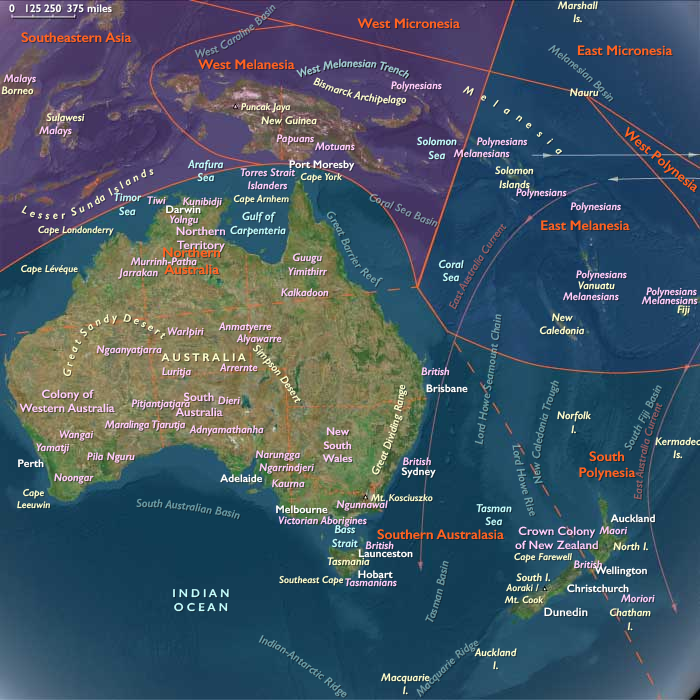
The eruption is heard clearly as far away as Blenheim and the effects of the ash in the air are observed as far south as Christchurch, over eight hundred kilometers south.
In Auckland, the sound of the eruption and the flashing sky is thought by some to be an attack by Russian warships.
Although the official contemporary death toll is one hundred and fifty-three, exhaustive research by physicist Ron Keam only identified one hundred and eight people killed by the eruption (including seven Europeans).
Much of the discrepancy is due to misspelled names and other duplications.
Allowing for some unnamed and unknown victims, he estimates that the true death toll is one hundred and twenty at most.
The eruption also buries many Māori villages, including Te Wairoa (which has now become a tourist attraction), and the world famous Pink and White Terraces are lost.
A small portion of the Pink Terraces will be rediscovered under Lake Rotomahana one hundred and twenty-five years later.
Approximately twocubic kilometers of tephra had been ejected, more than Mount St. Helens will eject in 1980.
Many of the lakes surrounding the mountain have their shapes and areas dramatically altered, especially the eventual enlargement of Lake Rotomahana, the largest crater involved in the eruption, as it refills with water.
The rift created during the eruption extends seventeen kilometers across the mountain, Lake Rotomahana and through the Waimangu Volcanic Rift Valley.
Locations
Groups
Regions
Australasia
View →Subregions
