
Political reform movements in both Upper and…
October 1837 CE
Political reform movements in both Upper and Lower Canada, largely influenced by American and French republicanism, have grown since the War of 1812.
The colonial legislatures set out by the Constitutional Act have become dominated by two wealthy elites: the Family Compact in Upper Canada and the Château Clique in Lower Canada.
Scots-born William Lyon Mackenzie, founder and publisher of the Colonial Advocate since 1824, had become a leader in the Reform party through his newspaper’s strong, often scurrilous attacks on the Family Compact.
Elected in 1828 to the Legislative Assembly of Upper Canada, Mackenzie had visited the United States the following year, returning to York a great admirer of U. S. institutions.
The moderate reformers, such as Canadian lawyer Robert Baldwin, elected MP for the town of York at twenty-five in 1829, and Louis-Hippolyte Lafontaine, elected to the Legislative Assembly of Lower Canada in 1830, argue for a more representational form of government that they call "responsible government.”
By "responsible," the reformers mean that such a government would be ultimately responsible to the will of the subjects of the colonies, not to the British legislature or monarchy.
The radical reformers, such as Mackenzie and Louis-Joseph Papineau, the leader of the reformist Patriote movement, demand equality or a complete break from British rule and the establishment of a republic.
Locations
Groups
Commodities
Regions
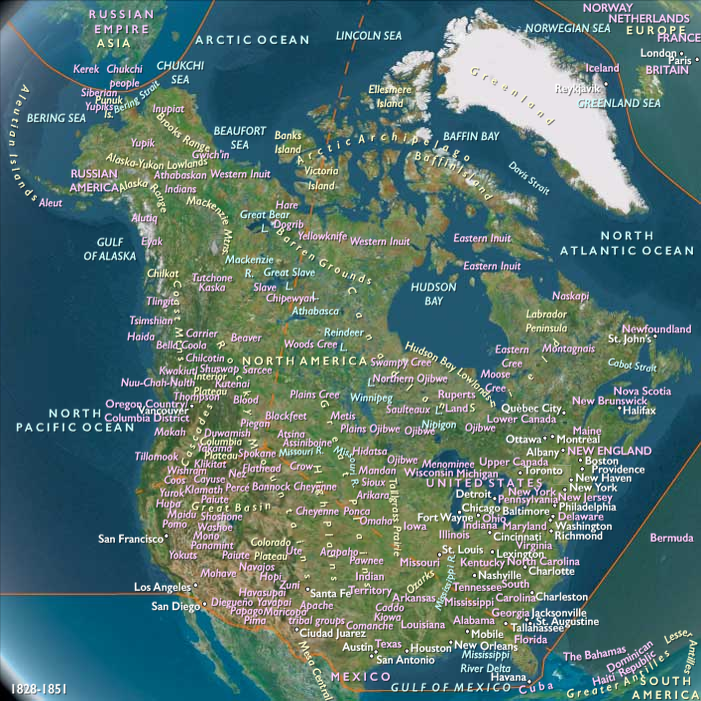
Northern North America
View →Subregions
