
Major-General Pratt had begun operations in December…
January 1861 CE
The principal defenses are Kairau and Huirangi, skillfuly engineered lines of rifle-pits, trenches and covered walkways.
Backed with heavy artillery and a force of nine hundred men, Pratt had advanced from Waitara on December 29 towards the Matarikoriko pā, between Puketakauere and the Waitara River, before building a redoubt on the old Kairau pā under heavy day-long fire from bush-covered rifle pits one hundred and fifty meters away.
Both sides had exchanged heavy fire the next day, with British troops expending seventy thousand rounds of rifle ammunition and one hundred and twenty rounds of shot and shell and suffering three deaths and twenty wounded.
The pā had been captured on December 31 after being abandoned, and a stockade and blockhouses have been built on the site for a garrison of sixty.
A second redoubt, No.2, was built in eleven hours on January 14, five hundred meters past the Kairau redoubt and garrisoned by one hundred and twentyy men with artillery.
Four days later, Pratt and a force of one thousand had moved out another four hundred meters to build Redoubt No.3, which had been garrisoned with three hundred men and made the headquarters of the 40th Regiment.
At 3.30 am on January 23, 1861, No.3 Redoubt is stormed by a force of one hundred and forty warriors of Ngati Haua, Ngati Maniapoto, Waikato and Te Atiawa, led by Rewi Maniopoto, Epiha Tokohihi and Hapurona.
Fierce fighting at close quarters, involving rifles, bayonets, shotgun, hand grenades and tomahawks, take place over the newly built parapet and in the boundary trench and last until daylight when British reinforcements arrive from Redoubt No.1.
British losses in the fight are five killed and eleven wounded.
Māori losses are estimated at fifty.
Locations
People
Groups
Topics
Commodities
Regions
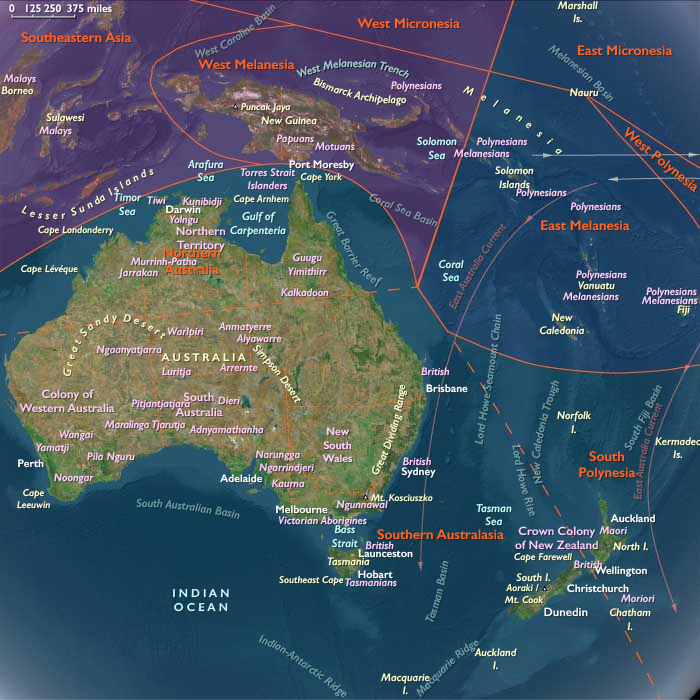
Australasia
View →Subregions
