The Houses of Parliament in London had…
1828 CE to 1839 CE
Indirectly, this legislation is one of the reasons for the collapse of Oyo.
Britain had withdrawn from the slave trade while it was the major transporter of slaves to the Americas.
Furthermore, the French had been knocked out of the trade during the French Revolution beginning in 1789 and by the Napoleonic wars of the first fifteen years of the nineteenth century.
Between them, the French and the British had purchased a majority of the slaves sold from the ports of Oyo.
The commercial uncertainty that followed the disappearance of the major purchasers of slaves had unsettled the economy of Oyo.
Ironically, the political troubles in Oyo had come to a head after 1817, when the transatlantic market for slaves had once again boomed.
Rather than supplying slaves from other areas, however, Oyo itself had become the source of slaves.
Locations
Groups
Igbo people
View →
Hausa Kingdoms, the
View →
Hausa people
View →
Yoruba people
View →
Ijaw people
View →
Kano (Hausa city state)
View →
Zaria (Zazzau), Hausa City-State of
View →
Katsina (Hausa city state)
View →
Gobir (Hausa city state)
View →
Benin Empire
View →
Ibibio people
View →
Bonny, Ijo city-state of
View →
Oyo Empire
View →
Calabar, Efik state of
View →
Dahomey, Kingdom of
View →
Khasso, Fulani Jihad State
View →
Aro Confederacy
View →
Fouta Djallon (Futa Jallon) Fulani Jihad State
View →
Fouta-Toro, or Futa Toro, Fulani Jihad State of
View →
Elem, Ijo city-state of
View →
Britain (United Kingdom of Great Britain and Ireland)
View →
Fulani Empire
View →
Nupe, Emirate of the
View →
Sokoto, Kingdom of
View →
Macina (Masina), Fulani Jihad State of
View →
France, constitutional monarchy of
View →
Zaria, Emirate of
View →
Oyo, Yoruba Kingdom of
View →
Commodities
Regions
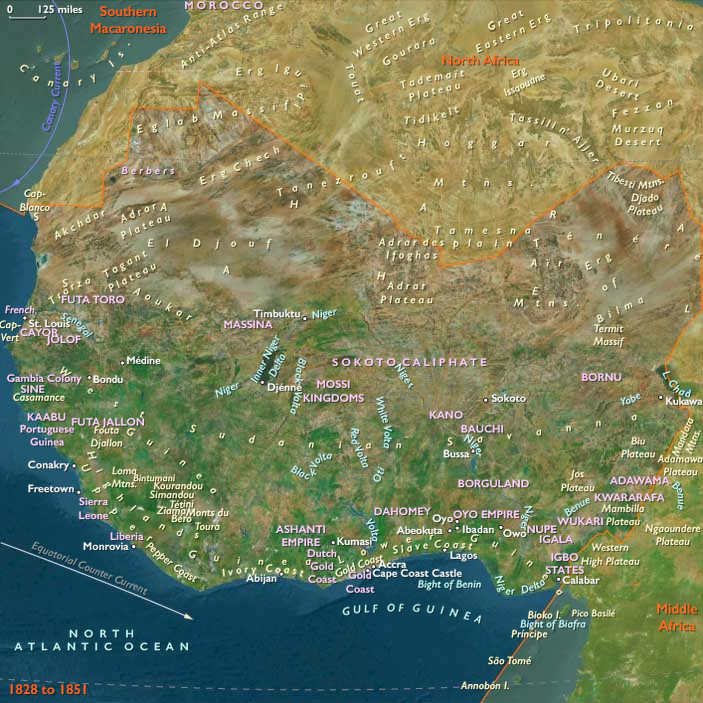
West Africa
View →Subregions