Event
Subcontinental South America (676–819 CE): Enduring Southern…
Subcontinental South America (676–819 CE): Enduring Southern Lifeways
Geographic Parameters
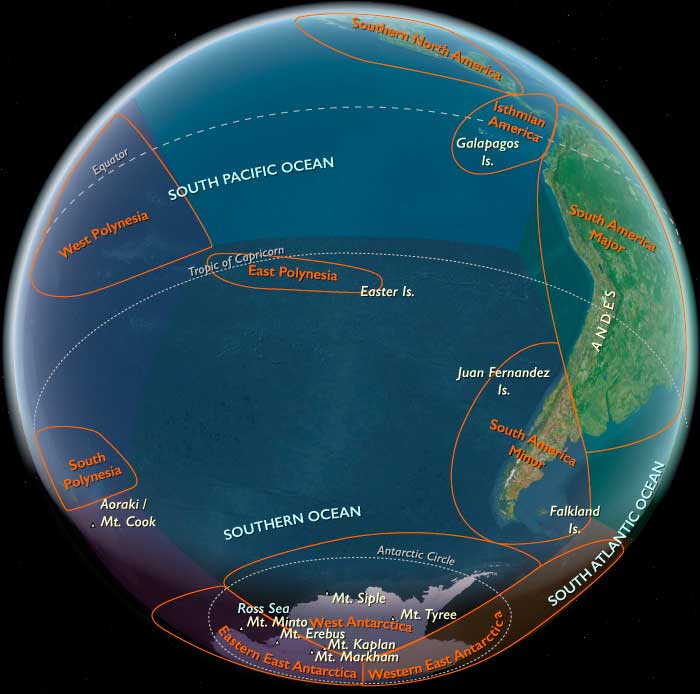
The subregion continued to include southern Chile, southern Argentina, Tierra del Fuego, the Strait of Magellan, the Beagle Channel, the Patagonian archipelagos, and the southern Pacific and Atlantic coastlines.
Environmental Continuity
The immense environmental diversity of the far south continued to dominate the landscape. Forested fjords, glacial mountains, windswept plains, braided rivers, rocky coastlines, and cold marine ecosystems remained the enduring framework within which human societies lived.
Human Adaptation
Communities preserved highly mobile seasonal lifeways that had developed over many centuries. Maritime peoples continued navigating protected channels and island systems, while inland hunters maintained flexible movements across Patagonia's open grasslands. Settlement remained dispersed, temporary, and closely integrated with local ecological conditions.
Economy and Exchange
Regional exchange persisted through seasonal gatherings linking coastal and inland communities. Marine foods, hides, shell ornaments, pigments, obsidian, and crafted tools continued to circulate across complementary ecological zones while preserving decentralized social organization.
Technology and Material Culture
Portable technologies remained exceptionally well adapted to southern environments. Canoes, harpoons, bolas, bows, hide shelters, and cold-weather clothing reflected accumulated ecological knowledge rather than technological transformation.
Legacy of the Division
By CE 819, Subcontinental South America remained one of the least centralized yet most environmentally specialized inhabited landscapes of the historical atlas. Seasonal mobility, ecological expertise, and enduring cultural traditions allowed its societies to flourish within one of Earth's most demanding environments while leaving the landscape itself overwhelmingly dominant.

-
{# Image navigates to the detail page; the magnifying-glass chip is the only Fancybox lightbox trigger (kept a separate sibling — anchors can't nest). #}
 The Ends of the Earth
World
-
{# Image navigates to the detail page; the magnifying-glass chip is the only Fancybox lightbox trigger (kept a separate sibling — anchors can't nest). #}
 South America
Region
-
{# Image navigates to the detail page; the magnifying-glass chip is the only Fancybox lightbox trigger (kept a separate sibling — anchors can't nest). #}
 Subcontinental South America
Subregion