Australasia (820 – 963 CE): Songline Countries,…
820 CE to 963 CE
Australasia (820 – 963 CE): Songline Countries, Eel Cities, and the Unpeopled Bird Isles
Geographic and Environmental Context
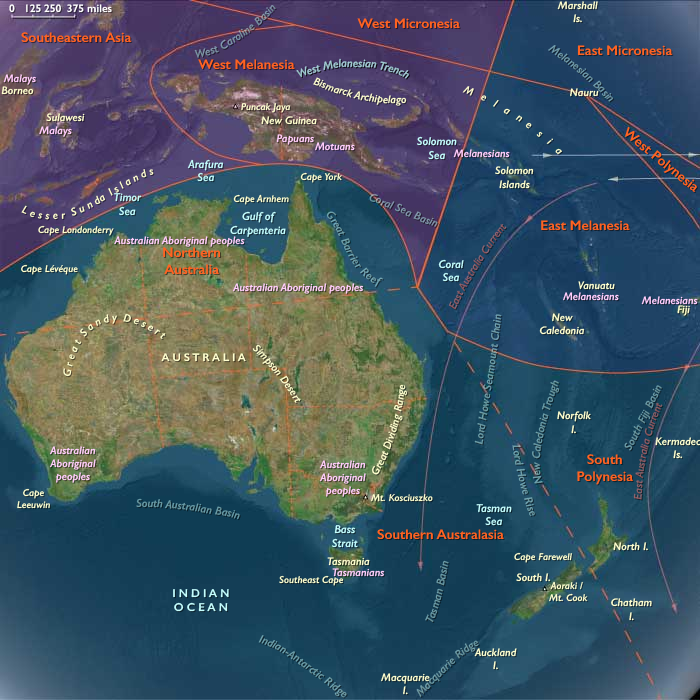
Australasia in this age spanned three contrasting realms at the ocean’s southern edge:
-
South Polynesia: the cool-temperate fringe of Te Ika-a-Māui (Aotearoa/North Island north), Rēkohu (Chathams), Norfolk, and the Kermadec Ridge—all uninhabited, wind-scoured, and seabird-rich.
-
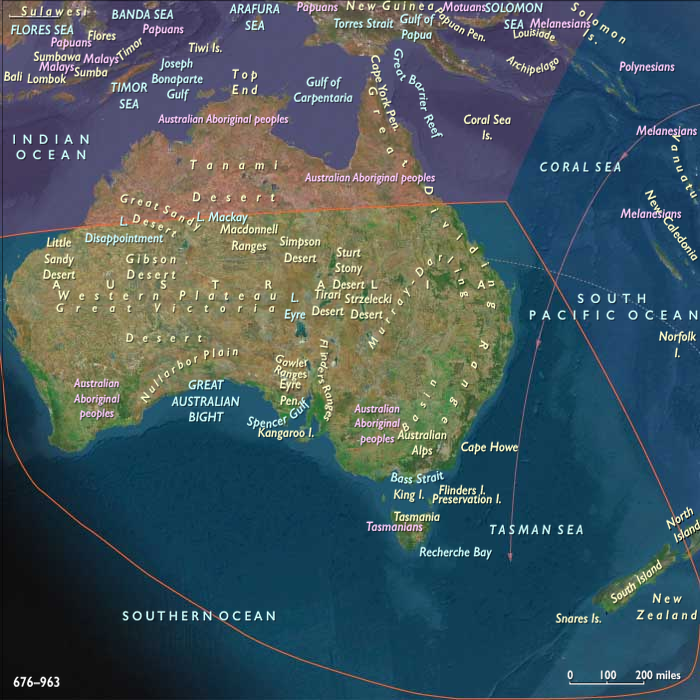
Southern Australasia: central–southern Australia and Tasmania—temperate woodlands, river plains, and coastal wetlands engineered by Aboriginal nations; New Zealand’s South Island and the subantarctic groupsremained untouched refugia.
-
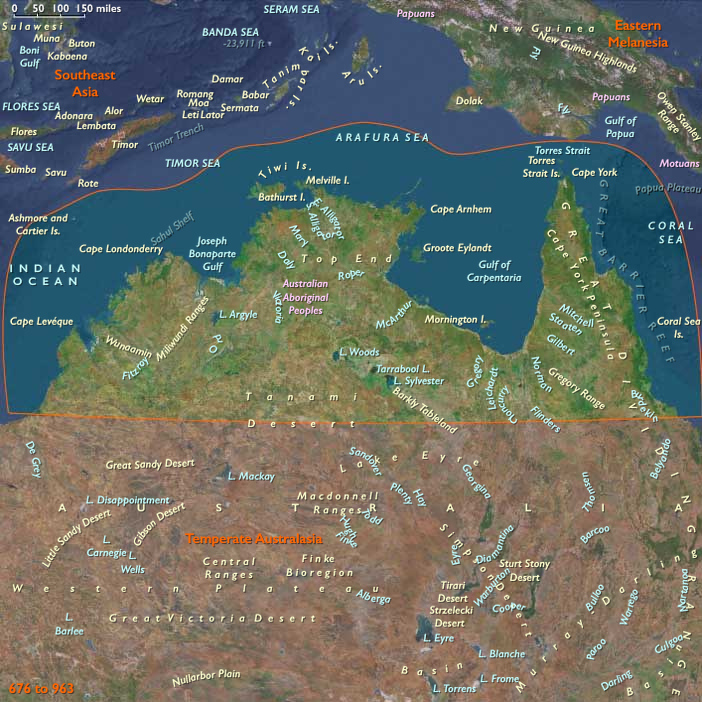
Northern Australia: monsoon savannas, sandstone plateaus, and mangrove coasts from Cape York across Arnhem Land to the Kimberley, alive with saltwater economies and songline law.
Together they formed a latitudinal braid: unpeopled bird kingdoms to the southeast, kin-governed agro-aquatic landscapes across southern Australia and Tasmania, and monsoon-timed saltwater countries in the north.
Climate and Environmental Shifts
Late-Holocene conditions prevailed, shading into the Medieval Warm Period by c. 950:
-
South Polynesia: strong westerlies, frequent lows, and cool, wet regimes; slightly milder, more stable seasons late in the period over Norfolk–Kermadecs.
-
Southern Australia/Tasmania: cool-temperate variability structured Murray–Darling and coastal schedules.
-
Northern Australia: stable wet–dry monsoon pulses; occasional cyclones reshaped coasts without destabilizing subsistence systems.
Across the region, predictable seasonality underwrote ecological abundance and cultural continuity.
Societies and Political Developments
-
South Polynesia: no confirmed permanent settlement (820–963). Any exploratory landfalls by central-East Polynesian voyagers left no secure archaeological signature; the islands remained outside sustained voyaging circuits.
-
Southern Australasia (Australia & Tasmania): Aboriginal nations—Gunditjmara, Ngarrindjeri, Yorta Yorta, Noongar, Palawa, and many others—organized by kinship, totems, and songline law. Ceremonial gatherings along rivers, coasts, and wetlands renewed alliances, law, and exchange. In western Victoria, Gunditjmara ran one of the world’s oldest aquaculture complexes at Budj Bim, coordinating labor for weirs, races, and storage ponds. Palawa lifeways in Tasmania followed coastal–inland seasonal circuits.
-
Northern Australia: Nations including Bininj/Mungguy, Yolŋu, Tiwi, Yanyuwa, Garawa, Wardaman, Jawoyn and Kimberley groups sustained moiety-based responsibilities across land, water, and ceremony. Songlines mapped travel, law, and subsistence; diplomacy moved through dance, song, body painting, and gift exchange.
Economy and Trade
-
South Polynesia: no local economy; region sat on the downwind horizon of central Polynesian spheres, oceanographically primed for later settlement.
-
Southern Australasia: wide-reach exchange of ocher, stone, shells, fiber, timber, smoked fish, and—centrally—smoked eels from Budj Bim as a prestige resource. Seasonal feasts redistributed fish, shellfish, and marsupial meats, binding riverine and coastal hubs into resilient networks.
-
Northern Australia: coastal clans harvested fish, shellfish, turtle, dugong; floodplains yielded magpie geese, eggs, barramundi, turtles, waterlilies; savannas provided kangaroo, wallaby, emu, yams, fruits, seeds. Exchange moved ocher (Kimberley/Arnhem quarries), stone axes, shells, resins, ceremonial objects over hundreds of kilometers.
Subsistence and Technology
-
Landscape engineering (south): fire-stick farming created biodiverse mosaics; Budj Bim eel aquacultureintegrated stone weirs, races, and ponds; Murray–Darling and coastal rivers bristled with fish traps and weirs. Toolkits featured ground-edge axes, spear-throwers, digging sticks, nets, bark containers, ocher pigments. In Tasmania, bone points, reed rafts, and fire-carrying supported mobility.
-
Saltwater technologies (north): stone fish traps, woven nets, bark canoes, drying/smoking for storage; woomeras, boomerangs, barbed spears for hunting; coolamons, fiber nets, bark vessels for gathering and transport. Ongoing rock-art production (Arnhem Land X-ray, Kimberley figurative) documented both spiritual law and practical knowledge.
-
South Polynesia baselines: absent humans, soil fertility loops ran on guano; vast burrow-nesting seabird colonies; forests of podocarp–broadleaf (Aotearoa North), pisonia/palm on Norfolk–Kermadecs; moa, adzebill, parrots (kākā), with bats the only land mammals.
Movement and Interaction Corridors
-
South Polynesia: the Kermadec–Norfolk–Northland arc offered intermittent “weather windows”; Chathams lay in colder, stormy flows—rich but challenging.
-
Southern Australasia: the Murray–Darling basin functioned as a continental hub of ceremony and trade; coastal voyaging bridged estuaries and islands; Bass Strait crossings linked Tasmania’s channels and islets.
-
Northern Australia: songlines crisscrossed Country from Arnhem to Kimberley and Gulf; coastal voyaging tied Tiwi and Wessel islands to mainland kin; overland routes carried ocher and axes immense distances.
Belief and Symbolism
-
South Polynesia: no attested ritual geography in this age; later names and genealogies (Aotearoa, Rēkohu) had not yet been inscribed on the land.
-
Southern & Northern Australia: Dreaming law governed relations among people, species, and places. Rainbow Serpent and other Ancestral Beings shaped rivers, wetlands, and coasts; rock art, engraved grounds, carved trees, song-and-dance encoded law, subsistence, and history; totemic affiliations and taboos regulated harvest and stewardship.
Adaptation and Resilience
-
Portfolio economies—eel wetlands + woodland tubers + marsupial hunts + shellfish (south); saltwater & floodplain harvests + savanna hunting (north)—spread risk across seasons and ecologies.
-
Fire management sustained habitat diversity, travel corridors, and food security.
-
Ceremonial redistribution and kin obligations balanced local shortfalls.
-
In South Polynesia, ecological resilience persisted in the absence of commensals and fire, preserving naïve avifaunas and intact soil systems.
Long-Term Significance
By 963 CE, Australasia presented a triptych of frontiers:
-
An unpeopled South Polynesia—a lattice of bird-islands and fish-rich shelves, oceanographically primed for later waka arrivals along the Kermadec–Norfolk–Aotearoa–Rēkohu arc.
-
A southern Australian–Tasmanian heartland of engineered Country—Budj Bim eel cities, fish-trap rivers, and fire-managed plains sustained by law, ceremony, and exchange.
-
A northern saltwater world where songlines and fire orchestrated monsoon economies, rock art, and diplomacy across reefs, wetlands, and stone country.
These foundations—pre-settlement ecological baselines to the southeast and millennia-old custodial systems across Australia—set the stage for the transformative voyaging pulses and continuing Aboriginal stewardship that would shape the ages to come.
Groups
Subjects
Regions